
Beyond the Toba Cataclysm: Rethinking Planetary Vulnerability
Arjun Vedanta
- 0
- 6 minutes read
Recalibrating Planetary Catastrophe
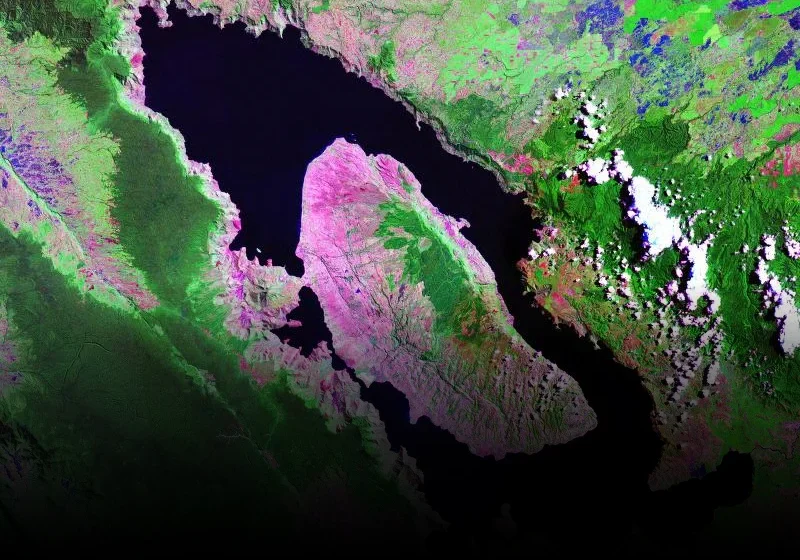
A barely noticeable half-degree dip in global temperature for less than two years: that’s the revised legacy of what was long considered humanity’s closest brush with extinction due to a natural disaster. For decades, the Mount Toba super-eruption, which unleashed thousands of cubic kilometers of magma from what is now Sumatra some 74,000 years ago, loomed large in paleoclimate studies as the event that plunged Earth into a prolonged volcanic winter, nearly wiping out our species. This catastrophic vision, often termed the ‘Toba Catastrophe Theory,’ provided a chilling benchmark for planetary fragility, a testament to how swiftly extreme environmental shocks could unravel complex ecosystems and push human populations to the brink.
However, new research spearheaded by geoscientist Jinheum Park from Johannes Gutenberg University in Mainz, Germany, fundamentally upends this narrative. Park and his team, analyzing sediment records painstakingly extracted from the bottom of a small crater lake on the Kenya-Tanzania border, discovered that the actual climatic disruption was astonishingly brief and remarkably mild. The impact, according to their rigorous findings, lasted under two years and resulted in a mere half-degree Celsius cooling, a fraction of the ‘massive cooling’ previously hypothesized to have threatened our ancestors’ survival.
This isn’t merely an academic correction in a niche field; it’s a profound re-evaluation of Earth’s capacity to absorb extreme perturbations. If the single biggest volcanic eruption in the last 2.6 million years caused such a muted global effect, the very framework for understanding planetary resilience, and by extension, humanity’s vulnerability to abrupt environmental shifts, demands immediate scrutiny. The tech press, often fixated on immediate digital disruptions, frequently misses these deeper, geological revelations that reshape our foundational understanding of systemic risk and the planetary operating system itself.
The Mechanics of Muted Impact
The core mechanism behind this surprising planetary resilience lies in the intricate physics of atmospheric science. Volcanic eruptions inject vast quantities of sulfur dioxide into the stratosphere, which then oxidizes to form sulfate aerosols. These tiny, reflective droplets typically scatter incoming solar radiation back into space, leading to a cooling effect. The conventional wisdom dictated that bigger eruptions, spewing exponentially more sulfur dioxide, would naturally lead to proportionally greater and longer-lasting cooling—a linear projection of impact based on output.
Park’s research, however, highlights a critical, non-linear threshold in this relationship: “Bigger sulfate aerosols settle quickly, because they are heavier,” he explained. This rapid gravitational settling drastically limits their residence time in the upper atmosphere, rendering them far less effective at scattering sunlight over extended periods. Mount Toba, which ejected magma roughly a thousand times more voluminous than Mount Pinatubo’s 1991 eruption, may have simply overwhelmed the atmosphere’s capacity to sustain a long-term aerosol veil. It’s a geological equivalent of trying to fill a bathtub with a firehose, only to find the drain opens wider as the water level rises.
This self-mitigating feedback loop within Earth’s atmospheric systems presents a compelling paradox. What appears on the surface as an apocalyptic expulsion of material might, at a certain scale, trigger intrinsic mechanisms that inadvertently dampen its own global consequences. It forces us to reconsider the simplistic linearity often assumed in early climate modeling and disaster projections, suggesting that our planet possesses intrinsic buffers that activate under extreme stress. Understanding these complex, non-linear responses is crucial for accurate risk assessment and predictive modeling across various scientific disciplines.
Resilience, Risk, and Our Models
The revised Toba story carries significant implications beyond mere paleoclimate reconstruction, reaching directly into contemporary debates on geoengineering and anthropogenic climate change. If a supervolcano — a truly immense natural force operating at a scale that dwarfs human intervention — struggled to initiate a prolonged global winter, it fundamentally raises questions about the feasibility and effectiveness of intentional stratospheric aerosol injection as a climate intervention strategy. The sheer scale and sustained delivery required to achieve a controlled, persistent cooling effect might be far more complex and costly than current geoengineering models suggest, precisely because of these rapid settling dynamics and other atmospheric feedback loops.
Moreover, the Toba findings compel us to critically differentiate between massive, short-duration natural shocks and the sustained, systemic pressures of anthropogenic climate change. While Mount Toba was an external, albeit immense, jolt to the system, the ongoing climate crisis is a continuous, cumulative alteration driven by human activity. Different feedback loops and tipping points might apply, and the resilience demonstrated against a brief, intense volcanic event does not necessarily translate to resilience against decades or centuries of accumulating greenhouse gases. One might wonder if these findings, while scientifically robust, inadvertently offer a convenient narrative for those keen to downplay the fragility of our planetary systems in the face of anthropogenic climate shifts.
Perhaps the incentive here is not merely academic curiosity, but a deeper societal need to understand the true bounds of Earth’s self-healing capacity, which inevitably informs our perceived urgency regarding current environmental challenges. The Mount Toba findings do not absolve us of responsibility for carbon emissions, nor do they diminish the very real threats of climate change. Instead, they offer a tantalizing glimpse into a planet potentially more resilient to certain types of shocks than we initially gave it credit for – provided we respect its fundamental operating principles and don’t push it beyond its myriad, complex thresholds. The profound challenge remains to refine our climate modeling to incorporate these often-surprising natural feedback mechanisms, ensuring our understanding of future risk is built on solid, nuanced science, rather than historical overstatements or present-day anxieties alone.
