
August 2026: The Tech Mediation of Our Celestial Wonders
- Tech
Arjun Vedanta
- 0
- 5 minutes read
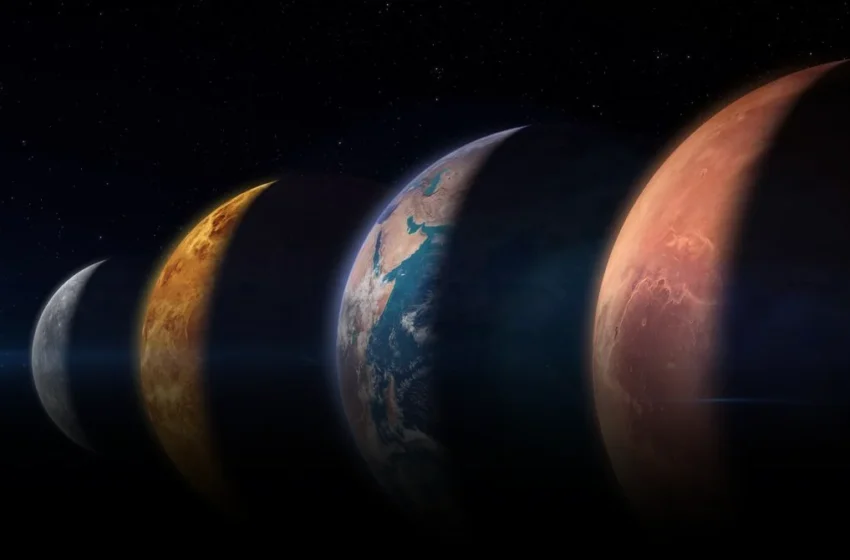
The Curated Cosmos of August 2026
August 12, 2026, promises a breathtaking confluence of celestial phenomena: the peak of the Perseid meteor shower, a rare total solar eclipse, and an alignment of six planets. Yet, for millions, the ‘view’ will be less about the raw, unadorned sky and more about meticulously rendered pixels on a screen. This isn’t merely about what’s unfolding in the heavens; it’s a profound commentary on the escalating role of technology in mediating humanity’s connection to the cosmos, fundamentally shifting our very experience of wonder.
From advanced stargazing applications predicting the Perseids’ exact radiant point and optimal viewing times, to global space agencies like NASA and the European Space Agency (ESA) live-streaming the total solar eclipse from its narrow path across Spain, Portugal, Iceland, and Greenland, technology now pre-processes and packages the universe for us. We are fed precise trajectories, intricate details, and even urgent warnings about eye protection. While undeniably convenient, this pervasive digital curation introduces a significant paradox: it superficially democratizes access while simultaneously filtering and standardizing the experience itself.
The shift is subtle but significant. The raw, often serendipitous awe of personal discovery is increasingly supplanted by the reliable, high-definition stream. Instead of individually scanning a vast night sky for a fleeting meteor, we might follow an augmented reality overlay on a smartphone, or simply watch a broadcast. This isn’t just a different way to see; it’s a different way to feel. Is watching a pixelated stream truly “experiencing” the cosmos, or is it merely consuming content, distancing us from the raw, unmediated spectacle?
The New Amateur Astronomer’s Toolkit and its Market
Beyond passive consumption, the amateur astronomy and astrophotography scene thrives, driven by a booming market for increasingly affordable and sophisticated optical engineering. Dedicated telescopes, advanced digital sensors, and even AI-powered image stacking software transform casual observers into active documentarians. This technological frontier extends to specialized accessories, such as computerized mounts that automatically track celestial objects or apps that precisely calculate optimal planetary alignment observation windows.
Companies like Celestron, Meade, and a host of software developers building platforms for everything from data processing to star chart integration benefit immensely from this enthusiasm. The pursuit of the perfect astro-shot – a crisp capture of the moon’s craters, a vivid nebula, or the fleeting corona of a total solar eclipse – fuels a robust market for gear that moves far beyond simple binoculars. These high-profile celestial events are not just scientific milestones; for commercial ventures in optics, software, and even nascent space tourism, they are prime marketing opportunities, driving upgrades and new purchases under the guise of enhancing “experiential tech” and citizen science initiatives.
This dynamic creates a new class of celestial participation, where the line between observer and creator blurs. Citizens can contribute to scientific data sets, share their own stunning images online, and engage in global communities dedicated to specific celestial phenomena. However, the requirement for increasingly specialized equipment, often costing thousands, highlights an uncomfortable truth: while digital broadcasts offer universal exposure, genuine engagement at higher levels remains gated by economic access to advanced technological tools.
The Peril of Perfect Mediation
The core challenge lies in what we gain versus what we inadvertently lose through this pervasive technological mediation. While technology offers unparalleled access to distant celestial ballets, it risks eroding the unique, immediate, and often imperfect magic of direct observation. Consider the total solar eclipse sweeping across a sliver of the Iberian Peninsula: an event unseen there for over a century. For those standing under its path, it will be an intensely local, visceral, and communal experience.
No live stream, however high-definition, multi-angled, or interactive, can truly replicate the sudden, eerie twilight that descends mid-day, the precipitous drop in temperature, the bizarre behavior of local wildlife, or the collective gasp of a crowd as the Sun’s corona flares into view. These are sensory inputs that transcend data points on a screen. We are inadvertently creating a two-tiered system: those who experience the cosmos directly, in all its raw, unpredictable glory, and those who consume it through an increasingly sophisticated, often commercialized, digital lens.
The global reach of digital feeds, while an astounding feat of data streaming and connectivity, inadvertently diminishes the unique, local communion with the heavens that once defined humanity’s relationship with the sky. As we prepare for the wonders of August 2026, it is crucial to remember that the most powerful technology for experiencing the universe may still be the human eye, unfettered, gazing directly upwards, allowing for an unmediated wonder that no pixel can truly replicate. The sky, after all, is not a broadcast; it is an experience.
