
Black Sea Drone Attack Exposes NATO’s Asymmetric Tech Headache
- Military Technology
Arjun Vedanta
- 0
- 5 minutes read
F-16 Cannons Against Expendable Drones
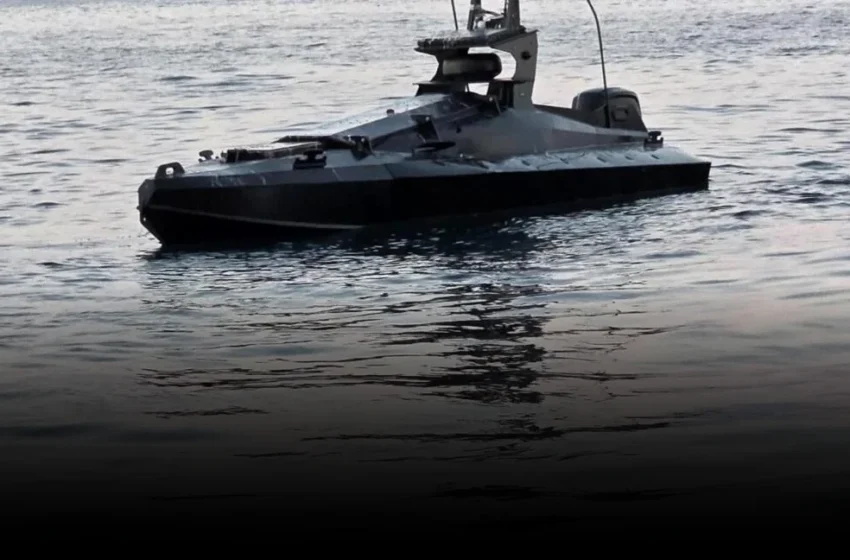
Two Romanian F-16 fighter jets, multi-million dollar pieces of advanced aerospace engineering, recently opened fire on a drone boat near a critical natural gas platform in the Black Sea. The August 20 incident, where the drone — suspected to be Russian and laden with explosives — was first spotted just hundreds of meters from the Neptun Deep project, is more than a fleeting skirmish. It underscores a profound and escalating technological asymmetry: the deployment of conventional, high-value military hardware against cheap, expendable, yet highly effective unmanned systems targeting economic lifelines.
Defense Minister Radu Miruță confirmed the action, stating the military scrambled the jets to protect the platform and its several hundred workers involved in installation. Army specialists later conducted a controlled detonation. This was not a test of aerial supremacy; it was a tactical response to an asymmetric threat. Silicon Valley often obsesses over AI’s potential in abstract terms, but this is AI and automation weaponized, not in a data center, but in a kinetically contested zone. It shifts the discussion from theoretical ethical frameworks to immediate, material consequences for European energy security.
The Neptun Deep project, set to make Romania the largest gas producer in the European Union by 2027, represents a significant stride towards energy independence for the bloc. Its strategic importance makes it a prime target for destabilization. The very act of a NATO member scrambling advanced fighter jets to neutralize a basic drone boat, while necessary, highlights a dangerous precedent. It forces militaries to expend disproportionate resources against threats designed for attrition.
The Proliferation of Low-Cost Lethality
This incident is not isolated. It’s a stark reminder of how accessible and effective low-cost, uncrewed platforms have become in modern warfare and hybrid aggression. The Black Sea, already a flashpoint for geopolitical tension, is rapidly becoming a testing ground for these capabilities. Ukraine’s successes in adapting commercial drones for military use, both aerial and maritime, have accelerated this trend, demonstrating that ingenuity often trumps raw financial investment in the field.
What the Silicon Valley press often misses is the direct and immediate implications for critical infrastructure. For too long, the conversation around national security and technology has focused on cybersecurity, data breaches, and state-sponsored hacking. While vital, these digital threats are now complemented, and sometimes amplified, by physical vectors enabled by readily available drone technology. The distinction between kinetic warfare and economic sabotage is increasingly blurred by these platforms.
This isn’t merely about Russia targeting a Romanian asset; it’s about Moscow probing the resolve and technological response capabilities of the entire European energy complex. The incentive for such attacks is clear: to sow uncertainty, increase insurance premiums for offshore operations, and ultimately, undermine the energy diversification efforts that are key to reducing reliance on Russian hydrocarbons. It’s a low-cost, high-leverage move designed to extract a heavy price without a clear declaration of war.
A Shifting Doctrine for European Security
The response to the Black Sea drone is a canary in the coal mine for NATO. How does an alliance designed for conventional deterrence and large-scale warfare adapt to a constant barrage of swarming, expendable, and difficult-to-detect threats? The current doctrine relies heavily on expensive, multi-role platforms like the F-16, a necessity when other counter-drone systems—like close-in weapon systems or specialized electronic warfare—are not readily available or effective against maritime targets.
This reliance exposes a structural gap in defense procurement and strategic planning. While NATO members, including Romania, are investing heavily in modernizing their air forces and navies, the specific capabilities for countering ubiquitous, low-cost autonomous systems are still maturing. The cost-benefit analysis of deploying an F-16 for a drone interception is inherently skewed. It’s a sharp observation: relying on premium assets to defeat bottom-tier threats is financially unsustainable and militarily inefficient in the long run.
The episode demands a re-evaluation of how European nations protect critical infrastructure. This means accelerated development and deployment of dedicated counter-drone technologies—both kinetic and electronic—and a more robust, integrated approach to maritime security across the Black Sea littoral states. This isn’t just about hardware; it’s about new doctrines, faster intelligence sharing, and potentially, a reconsideration of engagement rules in what is becoming a persistently contested economic zone. The next drone might not be so easily intercepted, and the stakes for Europe’s energy future are far too high to ignore this evolving threat.
