
Boom Supersonic’s Dual-Track Ambition: A Risky Bet on AI Energy and Supersonic Flight
- Tech
Arjun Vedanta
- 0
- 10 minutes read
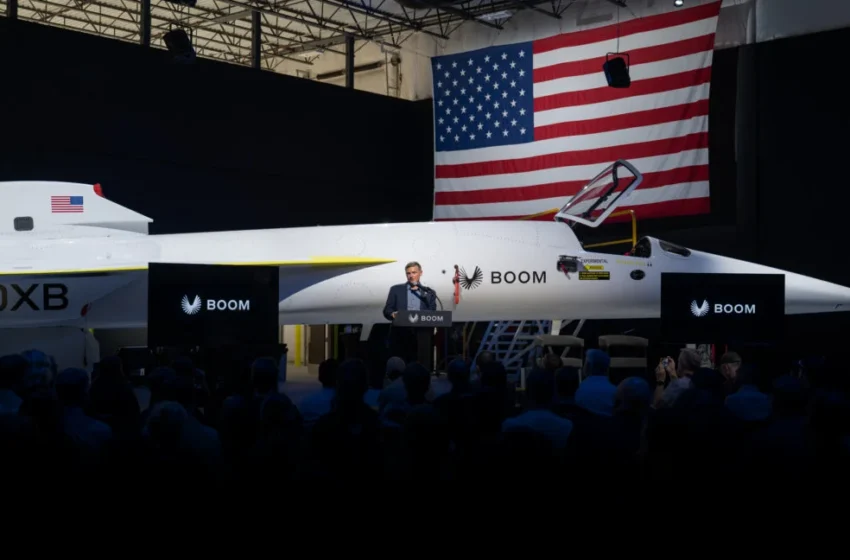
The Supersonic Dream Hits Turbulence as Boom Pivots to AI Power
Boom Supersonic is strategically diversifying into manufacturing gas turbines for artificial intelligence data centers, a significant pivot that introduces considerable uncertainty for its long-promised Overture supersonic airliner, especially as key industry figures voice skepticism over its 2029 delivery target. This dual-track ambition signals a high-stakes recalibration for a company once solely focused on a return to supersonic commercial travel, raising critical questions about resource allocation and market focus in a fiercely competitive tech landscape.
Boom Supersonic, under CEO Blake Scholl, initially captured global imagination with its vision of bringing supersonic air travel back to the masses through its Overture airliner. The company’s recent announcement of a new Colorado factory, however, dedicates capacity to gas turbines for AI data centers, alongside Scholl’s declaration for a “renaissance in energy and in supersonic flight.” This strategic shift comes amidst public doubts from partners like United Airlines CEO Scott Kirby, who, in an October 2026 podcast interview with Monica Langley for Office Hours: Business Edition, cast a shadow over the Overture’s ambitious 2029 target, suggesting a longer development timeline. For American tech professionals and enthusiasts, this development is critical, as it intertwines the future of high-speed air travel with the burgeoning demands of AI infrastructure, highlighting the profound pressures and opportunities shaping US innovation.
The Supersonic Dream Hits Turbulence
Boom Supersonic’s initial promise of a return to commercial supersonic flight with the Overture airliner resonated deeply within the US aerospace sector. The prospect of dramatically reduced travel times—cutting routes like New York to London down to a mere 3.5 hours—offered a glimpse into a future of accelerated global connectivity. United Airlines notably placed early orders, signaling confidence in Boom’s potential to deliver a new generation of high-speed aircraft capable of cruising at speeds up to Mach 1.7.
However, the path to supersonic commercial viability has always been fraught with immense engineering, financial, and regulatory challenges. These include overcoming the sonic boom’s impact, optimizing fuel efficiency for sustainable operation, and meeting stringent Federal Aviation Administration (FAA) noise and emissions standards. United Airlines CEO Scott Kirby openly voiced his skepticism regarding Boom’s official 2029 delivery timeline for the Overture, stating unequivocally in an October 2026 podcast, “’29 is their official timeline. It’s not going to happen in ‘29—it’s going to take longer.” This direct assessment from a crucial early customer underscores the significant hurdles Boom faces in bringing the Overture from concept to reality, raising questions about the company’s ability to navigate the complex development cycle within its projected timeframe.
Fueling the AI Surge: Boom’s New Frontier
Amidst the challenges facing its aerospace ambitions, Boom Supersonic has made a calculated pivot toward a burgeoning sector: providing energy solutions for AI data centers. The company’s decision to dedicate a new Colorado factory to manufacturing gas turbines for this purpose underscores the overwhelming demand for robust, reliable power in the AI era. As AI models grow in complexity and scale, the energy requirements of the data centers that house them are skyrocketing. Traditional grid infrastructure often struggles to meet these localized, intensive demands, creating a lucrative market for specialized, on-site power generation.
Boom CEO Blake Scholl’s call for a “renaissance in energy” signals the company’s intention to contribute to this critical infrastructure need. The shift allows Boom to leverage its existing expertise in propulsion and turbine technology, potentially adapting it for stationary power generation. This market is highly competitive, with established players and innovative startups vying to offer efficient and sustainable solutions, from advanced natural gas turbines to various microgrid systems. For Boom, success in this arena hinges on its ability to design and produce turbines that are not only highly efficient but also scalable and economically viable for a rapidly expanding, demanding US data center market.
A Double-Edged Sword: Resource Strain and Investor Confidence
Pursuing two distinct, highly capital-intensive, and technologically complex ventures simultaneously—supersonic flight and advanced energy generation—presents a significant strategic dilemma for Boom Supersonic. Each project demands substantial research and development investment, specialized engineering talent, and extensive manufacturing capabilities. Diverting resources to one inevitably impacts the other, creating a delicate balancing act that could strain the company’s finances and focus.
The skepticism from early backers, explicitly mentioned in the context of both ventures having investors question timelines or pull out entirely, is a critical indicator of this strain. Investor confidence is paramount for a startup operating in such high-risk, long-timeline sectors. Any perceived dilution of focus or significant delays can deter potential funders and impact valuation. The table below illustrates some of the fundamental challenges inherent in Boom’s dual strategy:
| Challenge Aspect | Overture Supersonic Airliner | AI Data Center Gas Turbines |
|---|---|---|
| Development Cost | Extremely High (R&D, advanced materials, certification) | High (design, manufacturing, scaling for industrial use) |
| Regulatory Hurdles | FAA certification, noise abatement, emissions standards, global airspace integration | Environmental compliance, grid integration, safety regulations |
| Market Acceptance | Niche market, high operational costs, environmental concerns, public perception | High demand, competitive landscape, reliability, efficiency, modularity |
| Timeline Risk | High (complex R&D, certification delays, partner skepticism) | Moderate to High (new market entry, scaling production, established competitors) |
| Core Competency | Aerodynamics, lightweight structures, advanced propulsion, aerospace systems integration | Power generation, materials science for high-temperature applications, industrial manufacturing |
Navigating these distinct sets of challenges requires a deep bench of expertise and robust financial backing. For Boom, the synergy between aerospace propulsion and stationary power generation might exist at a fundamental engineering level, but the market dynamics, regulatory environments, and customer bases are vastly different. This strategic stretch could either create a diversified, resilient company or dilute its efforts to the point where neither venture reaches its full potential, particularly as investor patience wears thin.
What This Means for the Future of US Innovation
Boom Supersonic’s strategic pivot offers a fascinating case study in the dynamics of US technological innovation, particularly the interplay between ambitious hardware projects and the gravitational pull of high-growth sectors like artificial intelligence. On one hand, it could be viewed as a pragmatic adaptation to market realities, leveraging existing engineering capabilities to tap into the exploding demand for AI infrastructure. The insatiable energy appetite of AI data centers, projected to grow exponentially, represents a undeniable opportunity for any company that can reliably deliver power solutions.
On the other hand, this diversification raises concerns about focus and the long-term viability of highly ambitious, non-AI-centric projects. Will the allure of the AI boom, with its faster potential returns and more immediate market demand, overshadow the long, arduous, and costly road to supersonic flight? The shift highlights a broader trend: the immense financial and intellectual capital now flowing into AI infrastructure could inadvertently draw resources away from other transformative technologies, potentially slowing progress in areas like sustainable aviation, advanced robotics, or space exploration.
Ultimately, Boom’s success or failure in balancing these two ambitious paths will provide critical insights into the resilience of American innovation. Can a single company effectively innovate across such disparate, high-stakes fields? Or does the market demand a singular, unwavering focus for truly disruptive breakthroughs? The outcome for Boom Supersonic will not only dictate its own future but also serve as a barometer for how US tech companies prioritize and execute on the next generation of complex hardware solutions.
Key Takeaways for Tech Professionals:
- Boom Supersonic is strategically diversifying into AI data center energy solutions, manufacturing gas turbines amidst growing skepticism regarding its Overture supersonic airliner’s 2029 delivery.
- The pivot addresses a rapidly expanding market for AI infrastructure power but introduces new competitive and technical challenges distinct from aerospace.
- Simultaneously pursuing two capital-intensive projects risks diluting focus, straining financial resources, and impacting investor confidence.
- The outcome will offer critical insights into the viability of ambitious hardware ventures and the overwhelming pull of AI infrastructure demands within the US tech landscape.
What is Boom Supersonic’s Overture airliner?
Boom Supersonic’s Overture is a planned commercial supersonic jet designed to carry passengers at speeds exceeding Mach 1, aiming to reintroduce faster-than-sound air travel. The company initially targeted a 2029 delivery for its first aircraft.
Why is Boom Supersonic pivoting to AI data center energy?
The company is developing gas turbines for AI data centers to address the escalating power demands of artificial intelligence infrastructure. This diversification seeks to tap into a high-growth market while potentially leveraging its engineering expertise, as CEO Blake Scholl called for a “renaissance in energy.”
How has United Airlines reacted to Boom’s Overture timeline?
United Airlines CEO Scott Kirby, an early customer for the Overture, has publicly expressed doubts about Boom’s official 2029 delivery timeline. Kirby stated in an October 2026 podcast that the aircraft “is not going to happen in ‘29—it’s going to take longer.”
What are the main challenges for Boom Supersonic’s dual strategy?
Boom faces the dual challenges of immense capital requirements and complex technical hurdles for both supersonic flight and robust energy solutions. This simultaneous pursuit risks stretching resources, potentially delaying both projects and impacting investor confidence amidst an already skeptical market environment.
