
Concorde’s Eclipse Chase: A Prophecy of Tech’s Unseen Costs
- Tech
Arjun Vedanta
- 0
- 5 minutes read
The 74-Minute Triumph, and Its Heavier Price Tag
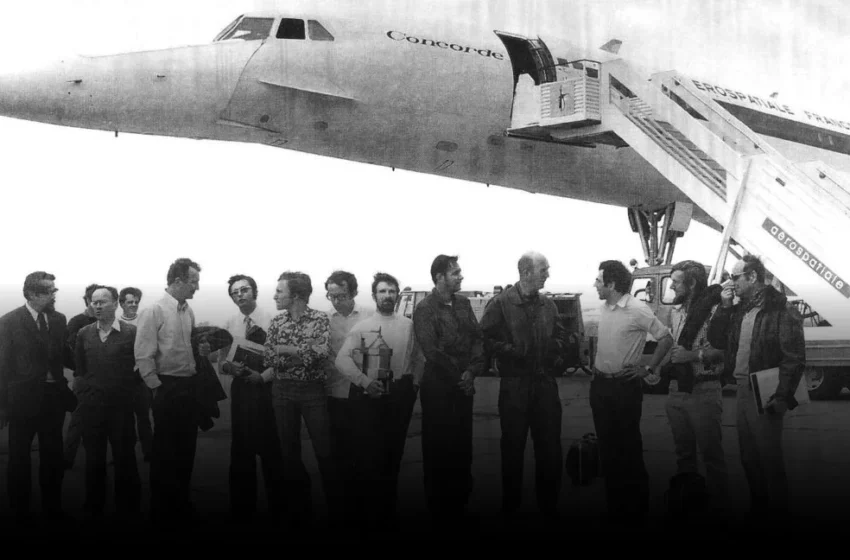
Eight scientists, aboard the Concorde 001 prototype in June 1973, extended a total solar eclipse’s visibility to an unprecedented 74 minutes, a feat that dwarfs the typical 7.5 minutes observable from the ground. It was an engineering spectacle, a triumph of raw speed over the celestial ballet of the moon’s shadow. Yet, the enduring image of that mission – a painted map on the prototype’s nose, preserved in the National Air and Space Museum of France – carries a weight far beyond scientific record-setting. It serves as a stark, early parable for the modern technology industry: the relentless pursuit of peak performance often ignores the profound, unexamined trade-offs that ultimately define an innovation’s legacy.
The original report marvels at the sheer duration of observation, contrasting it with the brief spectacle an upcoming August 12 eclipse will offer Europe. What it misses is how this singular achievement, born from the very pinnacle of aerospace ambition, became emblematic of Concorde’s entire lifespan: an expensive, environmentally fraught marvel deployed for niche applications, ultimately unable to justify its existence within a broader commercial or ecological framework.
Supersonic Science, Superfluous Costs
The 1973 eclipse chase was more than a publicity stunt; it offered invaluable data for astronomers studying the sun’s corona and Earth’s upper atmosphere. The ability to maintain totality for so long allowed for extended photographic and spectroscopic observations, unattainable by ground-based or balloon-borne instruments of the era. The Concorde, flying at more than twice the speed of sound, effectively outran the shadow, creating an artificial extension of a rare cosmic event. This kind of scientific utility was precisely the grand vision that underpinned the Anglo-French supersonic transport project: using cutting-edge technology to unlock new frontiers.
However, the question that inevitably follows such a spectacular demonstration, especially in hindsight, is one of proportionate return. Was the scientific yield from these 74 minutes truly commensurate with the immense resources, the decades of research and development, and the operating costs of maintaining such a bespoke platform for a handful of missions? For every moment of scientific enlightenment, there were hundreds of thousands of pounds spent on fuel and logistics. This skeptical observation is not to diminish the scientific contribution, but to highlight a recurring pattern in ambitious technological projects: the dazzle of the achievement often obscures the true economic and environmental calculus.
The Echo of Sonic Booms and Economic Realities
The Concorde, despite its undeniable elegance and speed, was ultimately a commercial failure. Its operational lifespan, which concluded in 2003, was plagued by challenges directly stemming from its hyper-performance design. The sonic booms, a direct consequence of its supersonic capabilities, restricted its flight paths almost exclusively to oceanic routes, limiting its market appeal. Its fuel consumption was exorbitant, a factor that became increasingly problematic with oil crises and growing environmental consciousness. The noise it generated on takeoff and landing was a constant source of public complaint, restricting airport access and flight times.
The incentive behind Concorde’s creation was less about pure commercial viability and more about national prestige and technological leadership. For France and Britain, it was a symbol of post-war ingenuity and a defiant challenge to American aerospace dominance. But this pursuit of national pride, while understandable, often sidestepped pragmatic considerations. Manufacturers and governments pressed forward, knowing the aircraft’s inherent limitations, because the symbolic capital of being ‘first’ or ‘fastest’ outweighed sober economic projections. This is a crucial lesson that resonates today: the rationale for an announcement or a new product launch is rarely just about innovation; it’s frequently about market positioning, investor confidence, or national technological bragging rights, often at a cost that is conveniently deferred.
A Cautionary Tale for an AI-Driven World
The Concorde’s story, from its unique scientific application to its commercial demise, offers a profound reflection on the structural implications of unrestrained technological ambition. It illustrates that progress is not merely about achieving new heights of speed or complexity, but about understanding the holistic impact of those achievements. We live in an era captivated by artificial intelligence, quantum computing, and sustainable aviation. Each of these fields promises revolutionary advancements, yet each also presents its own set of potential sonic booms: massive energy consumption, ethical dilemmas, and unforeseen social dislocations. Will the developers and policymakers of today heed the Concorde’s quiet warning?
The challenge for our intelligent, skeptical readers is to look past the breathless announcements of breakthroughs. Instead, we must scrutinize the full lifecycle of these innovations, asking not just what they *can* do, but what they *will* cost—environmentally, socially, and economically. The Concorde proved that reaching unmatched speeds for 74 minutes could yield invaluable insights, but it also showed that if the means to that end are unsustainable, the triumph, however spectacular, will inevitably be temporary and ultimately relegated to a museum piece, an object lesson in what *not* to repeat.
