
Defcon’s Open Hardware Challenge to Global Silicon Trust
- Cybersecurity
Arjun Vedanta
- 0
- 4 minutes read
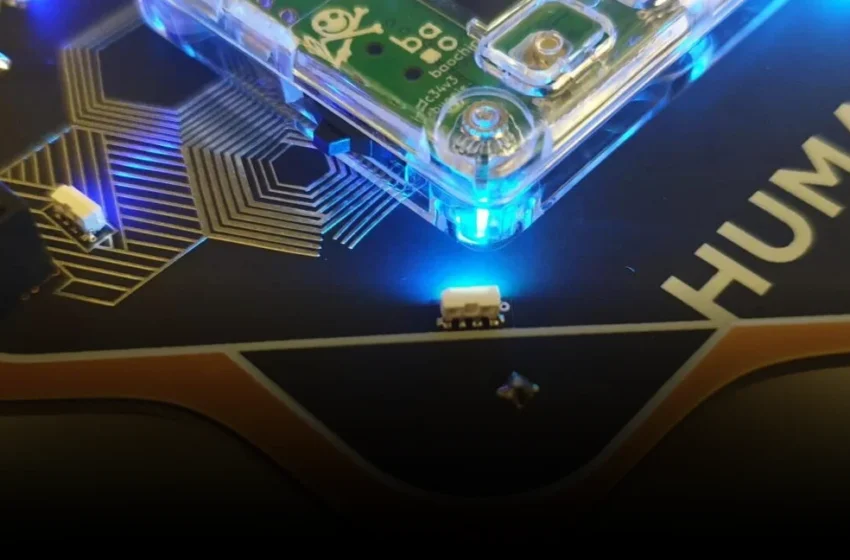
A Manifesto in Copper and Code
The annual Defcon badge has always been more than a trinket; it’s a cryptographic puzzle, an engineering marvel, a hacker’s calling card. This year, however, the physical token morphs into something far more significant: a bold, tangible statement on hardware security and the pervasive lack of trust in the global computing supply chain. It’s a subtle but potent shift, moving from the traditional hacker ethos of exposing vulnerabilities to actively engineering a path toward silicon integrity.
Andrew “bunnie” Huang, the legendary hardware hacker known for exposing Xbox vulnerabilities and pioneering open hardware projects, is not just designing a badge; he’s architecting a challenge. The core of this year’s Defcon souvenir is an innovative open-source chip, a visible and verifiable component meant to demystify the black boxes at the foundation of our digital lives. For years, the security community has grappled with the insidious threat of compromised silicon and inscrutable firmware, where vulnerabilities can be baked in at the manufacturing stage, far from public scrutiny.
This badge, then, is a response: a proof-of-concept that verifiable, transparent hardware is not merely a theoretical ideal but an achievable engineering reality, pushing back against the opaque practices that define much of the chip industry. It forces a conversation about accountability at the deepest layers of our technology infrastructure, far removed from the easily patched software exploits that dominate headlines.
The New Front Line of Trust
Defcon’s pivot from pure vulnerability research to proactive hardware solutions reflects a growing consensus among security professionals that the software layer, for all its complexity, is only as secure as the chips it runs on. Why is this announcement happening now, and who benefits from this framing? For Defcon, it’s about reinforcing its position as a vanguard of security thought, not just a carnival of exploits; for Huang, it’s the culmination of years advocating for open, auditable hardware.
The incentive is clear: to establish a trusted computing base from the ground up, moving the fight against digital compromise to the lowest possible level. This initiative is a pointed reminder that while we obsess over AI ethics and data privacy, the very processors running these systems often remain an unexamined vulnerability, built on a foundation of proprietary secrets and fragmented supply chains.
This is a strategic shift. Instead of merely demonstrating *how* systems can be broken, Defcon is now showcasing *how* they can be fundamentally made more robust. It’s an acknowledgement that the battle for digital security has irrevocably moved into the supply chain integrity of our microprocessors and components, an area where traditional software fixes are entirely inadequate.
Beyond The Badge: A Global Call for Silicon Transparency
The ambition here extends far beyond a collectible item for attendees. What Defcon and Huang are subtly signaling is a pathway for broader industry change, particularly for sectors reliant on verifiable hardware, such as defense, critical infrastructure, and even consumer electronics increasingly exposed to supply chain attacks. This push for open hardware design and firmware attestation directly confronts the traditional, closed-door methodology of major semiconductor manufacturers, challenging them to consider greater transparency and audibility in their offerings.
While noble, the immediate impact of a conference badge, however sophisticated, on the entrenched, multi-billion dollar semiconductor industry’s opaque practices remains a distant aspiration rather than an imminent revolution. Yet, as a powerful collective statement from the hacker community, it adds significant weight to the long-standing calls for greater silicon verification and supply chain integrity, creating a tangible demand for change that vendors will find increasingly difficult to ignore, especially as geopolitical tensions amplify concerns over hardware provenance and national security. This isn’t just about a clever circuit board; it’s about shifting the entire conversation around global trust in technology, from software vulnerabilities to the very atoms of computing power.
