
Waymo’s Santa Monica Setback Reveals Autonomous Tech’s Unseen Infrastructure Choke Point
- AI Infrastructure
Arjun Vedanta
- 0
- 5 minutes read
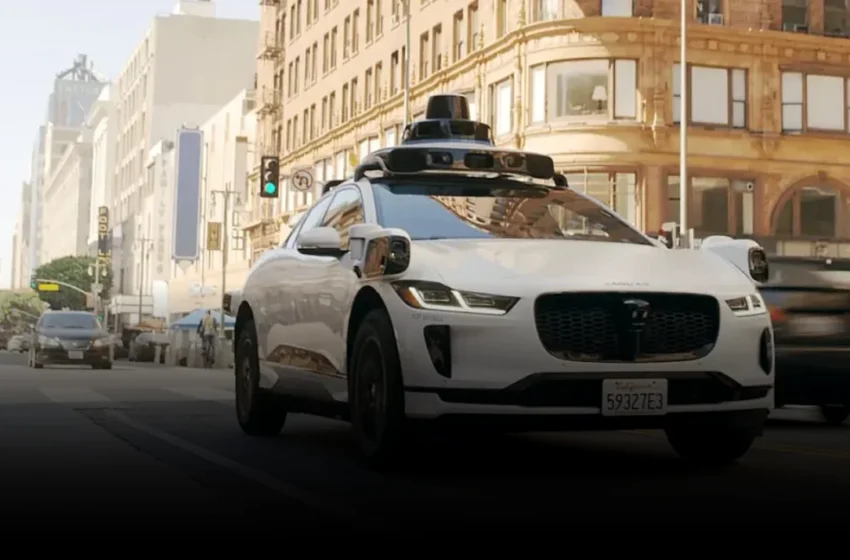
The Local Nuisance, A Global Precedent
The Los Angeles Superior Court’s preliminary injunction against Waymo in Santa Monica, ordering the autonomous vehicle giant to cease overnight charging operations, is far more than a parochial spat over noise and traffic. It is a stark, tangible warning sign of the pervasive infrastructure and public acceptance challenges that will inevitably plague large-scale autonomous vehicle deployments globally.
For years, the discourse around self-driving cars has fixated on their software prowess, sensor arrays, and safety records. Yet, the friction now emerging in Californian suburbs, where residents complain of incessant light pollution, vehicle sounds, and traffic congestion around Waymo’s charging facilities, pivots the conversation sharply. A local judge, Bradley S. Phillips, has deemed these concentrated operations a ‘public nuisance,’ underscoring a fundamental conflict between a technology company’s operational efficiency and the public’s right to peace.
Silicon Valley’s insistence on treating urban environments as blank canvases for technological disruption consistently underestimates the deeply ingrained social fabric and existing infrastructure. This isn’t merely a NIMBY (Not In My Backyard) phenomenon; it’s the predictable consequence of shoehorning high-intensity industrial operations into residential-adjacent zones without adequate forethought or community integration.
The Invisible Burden of Centralized Electric Fleets
Autonomous vehicle companies, like Waymo, operating commercial electric fleets, require significant, reliable charging infrastructure. The current operational model often involves centralized depots where vehicles return for charging, maintenance, and diagnostics. This concentration is economically rational from the perspective of fleet management and resource utilization. However, when these hubs are located within or adjacent to densely populated areas, the externalities become acute.
The complaints from Santa Monica residents regarding a ‘constant stream of vehicles’ causing ‘light and sound pollution’ and ‘undue traffic congestion’ illustrate the unseen burden. Unlike a few personal electric vehicles charging discreetly overnight, a commercial fleet generates activity around the clock. Imagine dozens of vehicles arriving, maneuvering, and departing, accompanied by the hum of charging equipment, the glare of headlights, and the occasional beeps of reverse signals – continuously. This isn’t just an inconvenience; it represents a significant degradation of the local quality of life.
The incentive for Waymo to consolidate its charging infrastructure is clear: it minimizes real estate costs, streamlines maintenance, and optimizes dispatch for its automated last-mile logistics. This operational framing, however, subtly externalizes costs onto local communities in the form of environmental and noise pollution. It exposes a blind spot in how advanced technological services are planned for urban integration, often prioritizing internal corporate efficiency over the holistic well-being of the civic environment they inhabit.
Beyond the Software Stack: A Hardware and Civic Reckoning
This Santa Monica injunction is not an isolated incident; it’s a canary in the coal mine for the wider deployment of autonomous transport. If even a relatively affluent and tech-friendly city like Santa Monica pushes back, what does this portend for the broader rollout across diverse urban landscapes globally? The scalability challenge for autonomous vehicles extends far beyond improving the perception stack or the driving algorithms.
The real bottleneck, often overlooked by reporters fixated on sensor fusion and AI advancements, lies in the physical world: where do these robotaxis charge? Where do they park? How do they integrate into existing traffic flows without creating new choke points? This isn’t just about regulatory hurdles, but about fundamental urban planning and public-private friction.
The promise of smart cities hinges on seamless integration, but this incident highlights how disruptive even seemingly benign infrastructure, like a charging station, can become. Alternative strategies, such as highly distributed charging networks integrated into existing parking structures or even inductive charging lanes, are technically feasible but immensely more complex and costly to implement. Until such solutions are scaled, companies like Waymo will continue to face resistance wherever their efficient, centralized models clash with the immutable realities of urban living.
The autonomous vehicle industry must move past a singular focus on the vehicle itself and engage deeply with the city as a system. This means embracing collaborative urban planning, investing in infrastructure that respects existing community dynamics, and understanding that public acceptance is built not just on safety, but on seamless, unobtrusive integration into daily life. The injunction serves as a stark reminder: the future of mobility isn’t just about making cars smarter; it’s about making them better neighbours.
