
Do You Inherit More Than Genes From Your Dad? A Mouse Study Rewrites the Rules of Fitness.
- Tech
Arjun Vedanta
- 0
- 7 minutes read
The Runner, The Father, and the RNA Enigma
There are days when I think I’ve seen it all in biotech. Another AI breakthrough, another CRISPR variant, another company promising to extend human lifespan to a number that feels suspiciously like marketing copy. Then something genuinely new, genuinely baffling, lands on my desk, and it reminds me why I started this gig in the first place.
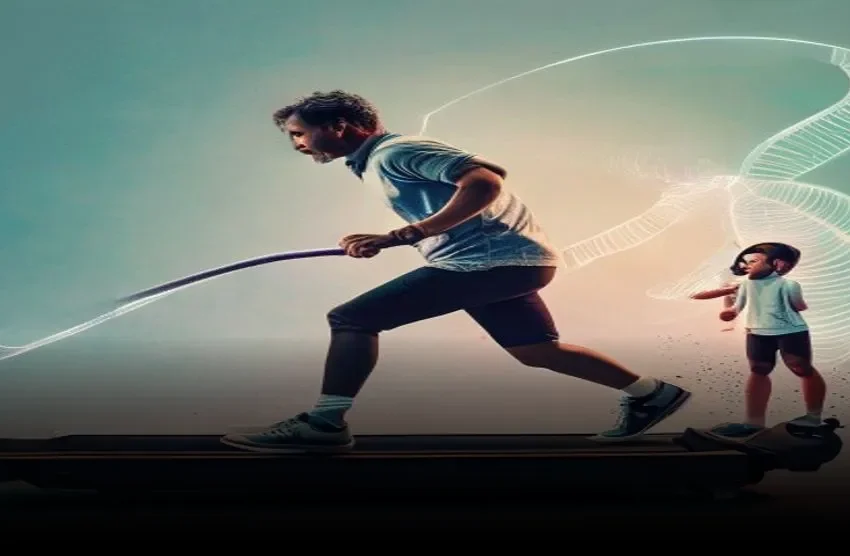
Case in point: A bright afternoon in Jiangsu, China, where biochemist Xin Yin and his team at Nanjing University are essentially running a miniature rodent Olympics. They’re putting mice on treadmills, watching them run. These aren’t just any mice; they’re littermates, born from the same genetic stock, yet some are born athletes. They run farther, produce less lactic acid, perform better. The kicker? Their superior fitness seems to stem from their fathers’ exercise habits before they were even conceived.
“I was very surprised when I first saw the data,” Yin said. I can imagine. It’s a finding that rattles the cages of traditional genetics, suggesting that perhaps a father’s sweat equity could be passed down in ways we’re only just beginning to grasp. It’s not about genes, the ones that make up the double helix, at all. It’s about something else entirely.
Beyond the Double Helix: A Silent Inheritance
For decades, we’ve operated on the principle that inheritance largely comes down to DNA sequences—the A, T, C, G code passed down from generation to generation. But what Yin’s work, and a growing body of research, points to is something called epigenetic inheritance. Think of it as annotations on the genetic script, instructions that tell genes when and how to express themselves, without changing the script itself.
The specific culprit in this mouse study, researchers believe, is RNA. Not the large messenger RNAs (mRNA) that carry genetic instructions, but smaller, regulatory molecules—specifically, microRNAs (miRNAs) found in the father’s sperm. These tiny molecules, some just 22 nucleotides long, don’t carry genes. Instead, they act like dimmer switches, influencing how genes are turned on or off in the offspring. When the father mice exercised, it changed the profile of these miRNAs in their sperm, and these changes were then passed on, making their pups fitter.
What I find fascinating here is the sheer elegance of it. It’s an environmental signal, a lifestyle choice, translating into a biological outcome in the next generation, all without touching the core genetic code. We’ve seen similar signals with diet and stress, but exercise affecting athletic performance? That’s a new twist.
The Mechanics of Memory (and Mouse Models)
The implications are substantial. These miRNAs, carried within the sperm, essentially serve as a biological memory of the father’s physiological state. Upon fertilization, they become part of the zygote, potentially influencing early development and setting the stage for metabolic pathways, muscle development, and even endurance levels. The mouse model, for all its lab-controlled purity, offers a compelling, if simplified, look into this complex mechanism.
(And yes, the ethical questions about human application are already piling up in my inbox.)
From Bench to Bedside: The Perilous Path to Human Translation
This is where my cynical journalist hat comes on. As intriguing as mouse studies are, the leap to humans is often a chasm. Human epigenetics are astronomically complex, influenced by a lifetime of environmental exposures, diet, stress, and, yes, exercise. Replicating a tightly controlled lab experiment on a population level is a monumental task. The ‘personalized medicine’ hype cycle of the early 2010s promised grand breakthroughs based on our individual genetic makeup, and while progress has been made, it’s been slower and far more nuanced than many VCs predicted.
Still, the underlying science here is solid enough to demand attention. The global epigenetics market, valued at around $1.5 billion in 2022 and projected to reach over $3.6 billion by 2030, isn’t just driven by academic curiosity. Companies like Epigenomics AG, New England Biolabs, and Illumina are investing heavily, not just in gene sequencing but in understanding these regulatory layers. This mouse study adds another dimension to that burgeoning field.
The real problem, if you ask me, isn’t whether this happens in humans. It almost certainly does, in some form. It’s how we measure it, how we interpret it, and what we *do* with that information. Imagine a future where your pre-conception lifestyle isn’t just about your health, but about your child’s innate predispositions. What responsibilities does that impose? Who tracks this data? What if certain lifestyle ‘choices’ lead to a perceived biological disadvantage for offspring?
The economics are brutal here too. Will insurance companies eventually factor in parental health biomarkers beyond genetics? Will there be ‘pre-conception health optimization’ clinics selling expensive lifestyle packages to prospective parents? We’ve already seen the push for expensive pre-implantation genetic diagnostics. This feels like the next logical, if ethically fraught, frontier.
The Hidden Costs and the Future of Health Responsibility
The notion of a father’s exercise habits influencing his offspring’s fitness is a powerful one. It extends the concept of parental responsibility beyond nutrition during pregnancy and postnatal care, pushing it into the pre-conception phase with a new biological underpinning. But let’s be honest about this: it also opens a Pandora’s Box of potential societal pressures and judgments.
For instance, if a father’s lifestyle choices can biologically ‘pre-program’ offspring towards certain health outcomes, what about the hidden incentives? Or the privacy risks involved in collecting such intimate biological data? We’ve watched companies try to monetize every aspect of our health, from sleep trackers to genetic ancestry kits. This kind of data—predictive, pre-conception, and intergenerational—would be immensely valuable, and potentially, dangerous, in the wrong hands.
Nobody’s talking about the real problem — which is not just *what* we can discover, but *how* society will react to that knowledge. The ghost of eugenics, however subtle, always hovers when we start talking about optimizing human traits, even beneficial ones like fitness. This isn’t just biology; it’s a social and ethical minefield that future health tech will have to navigate very, very carefully.
So, does your kid take after your dad’s RNA? Maybe. But the bigger question might be: should we know? And if we do, what then?
