
The Silent Giant: Alaska’s 500-Meter Tsunami and the Tech That Missed It
- Tech
Arjun Vedanta
- 0
- 8 minutes read
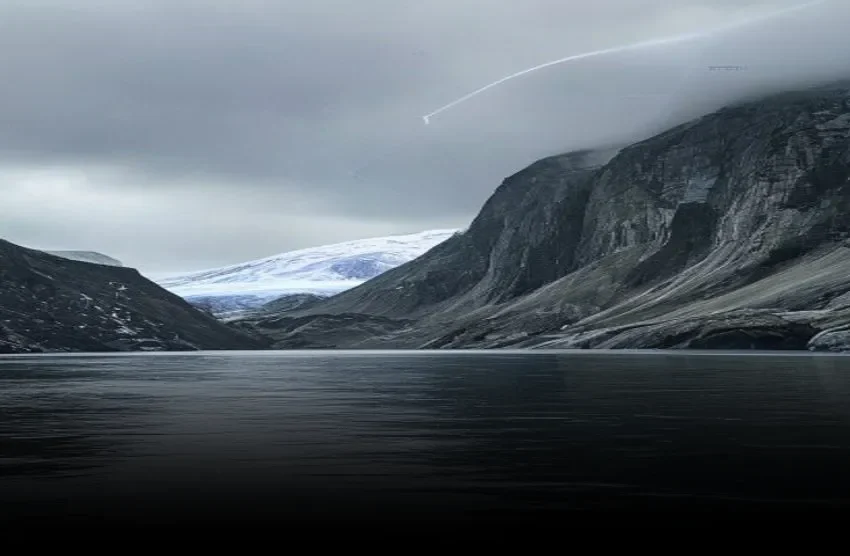
The Unseen Wave: Alaska’s 500-Meter Wake-Up Call
The sheer audacity of it. Imagine waking up to a geological event that, by all rights, should have made global headlines, scarred a landscape, and taken lives. Instead, it slipped by, a whisper in the early morning Alaskan quiet. What I find fascinating here isn’t just the raw power—a colossal wedge of rock, 63.5 million cubic meters strong, plunging into Tracy Arm fjord—but the near-perfect anonymity of it all. This wasn’t some distant seismic rumble; this was a 481-meter-high wave, the second highest ever recorded on Earth. A wall of water that, had it happened a few hours later, would have undoubtedly crashed into tourist boats and glacial sightseers.
A near miss. A phrase that often implies luck, but sometimes, it’s just a delay. We’re talking about an event on August 10, 2025, that created an initial 100-meter breaking wave, tearing across the fjord at speeds exceeding 70 meters a second. Think about that velocity, the kinetic energy unleashed. When it slammed into the opposite shoreline, it surged up nearly half a kilometer. And yet, almost nobody heard about it. No injuries. No fatalities. It happened at 5:26 am. That matters.
It’s this kind of quiet, monumental event that really gets under my skin. Because it highlights not just nature’s unpredictable might, but our own often-spotty radar for the truly transformative. For all our advanced satellite networks and AI-powered predictive models, sometimes the biggest data points are still missed, or at least, under-appreciated. This isn’t just a story about a big wave; it’s a story about what we don’t see, and what happens when we do see it, but only in retrospect.
When the Earth Moves: The Tech That Watches (and Fails To)
Anatomy of a Megatsunami: What We Know.
Let’s be honest about this: earthquake-generated tsunamis are scary enough, typically reaching runup heights of a few tens of meters. But landslide tsunamis? They’re different beasts entirely. More localized, yes, but exponentially more violent. We’ve seen this before, of course. The infamous 1958 Lituya Bay tsunami, for instance, set the record at 530 meters. What happened in Tracy Arm fjord fits this profile: millions of tons of rock, a confined body of water, a sudden displacement, and boom—a wave of incomprehensible scale. Since 1925, scientists have documented 27 such events globally with runups exceeding 50 meters. The mechanics are brutal.
The Silent Sentinels and Their Limits.
This is where the tech journalist in me starts asking questions. In an era where we map the moon in high-definition and track supply chains from space, how does a near-record-breaking geological event like this go largely unheralded until a research paper drops? We have the tools, theoretically. Satellite radar interferometry, or InSAR, can detect ground deformation down to millimeter precision, ideal for monitoring unstable slopes in glacier-fed fjords. We’ve got LiDAR scanning, drone surveys, seismic networks, even AI models designed to crunch historical data and identify potential failure points. Yet, Tracy Arm wasn’t broadly flagged.
The reality on the ground—or, more accurately, in the remote, ice-scoured fjords of Alaska—is far less Hollywood. Deploying and maintaining a comprehensive sensor network in such harsh, inaccessible terrain is an operational nightmare. Powering those sensors, ensuring reliable data transmission via satellite uplinks or fiber, protecting them from the elements, and then processing the sheer volume of data in near real-time? That’s an infrastructure challenge that few are willing to fully fund. We can spot millimeter changes on stable land, sure, but persistent, high-resolution InSAR coverage for every potentially unstable slope in a vast, cloudy, glacial region like Alaska is an astronomical undertaking. And the economics are brutal. It’s often a reactive science, not a proactive one, which, if you think about it, is the whole point of these massive warning systems.
Beyond the Fjord: The Uncomfortable Truths of Risk and Readiness
The Data We Don’t Use, and the Data We Lack.
What I find genuinely unsettling is not that these events happen, but how we choose to integrate them—or not—into our collective understanding and preparedness. This Tracy Arm event, a “near-miss” for human impact, is invaluable data for geoscientists. It helps refine computational models that simulate fluid dynamics and geological stress, allowing for better predictions of future events. But these models, even with access to exascale computing resources, are only as good as their input data. We’re talking about bathymetric data of fjord bottoms, geotechnical properties of unstable rock masses, and continuous, multi-temporal monitoring of slope movement. Much of that data simply doesn’t exist at the resolution or frequency needed across all vulnerable areas.
Nobody’s talking about the real problem — which is that our planet is literally changing beneath our feet, and often, the tech we could use to monitor it is either too expensive, too niche, or deemed unnecessary until disaster strikes. Climate change, with its accelerating glacial melt and permafrost thaw, is increasing the frequency of these landslide instabilities. We’re trading one natural phenomenon for another, potentially more dangerous, one. The hidden cost? It’s not just the immediate damage, but the opportunity cost of not investing in comprehensive risk mapping. It’s the future economic impact on a multi-billion dollar adventure tourism industry that relies on a perception of pristine safety in these remote corners of the world.
The Human Element: When Data Meets Dollars.
Here’s my subtle contrarian observation: for all the breakthroughs in remote sensing and AI, the deployment of actionable, ubiquitous warning systems for events like the Tracy Arm tsunami remains frustratingly limited. We celebrate technological marvels in space exploration or consumer gadgets, but the unsexy, expensive work of Earth-based hazard monitoring often takes a back seat. It’s a classic tech hype cycle problem: the flashy new algorithm gets funding, but the tedious, long-term data collection and infrastructure build-out for critical public safety? Less so. The global annual spend on natural disaster recovery far outstrips investment in prevention and early warning systems. This pattern needs to shift.
Consider the ripple effects. A single, well-placed megatsunami in a major shipping lane or near critical energy infrastructure could have cascading effects that would dwarf the local impact. While there’s no immediate privacy risk here, the broader discussion around platform dependency for critical infrastructure monitoring is relevant. If only a few private satellite providers or data analytics firms hold the keys to this crucial intelligence, what are the implications for national security or equitable access to critical safety data? It’s a thought worth pondering.
Lessons From the Edge: What Tracy Arm Really Taught Us
This silent Alaskan behemoth in Tracy Arm fjord, this 481-meter near-miss, is more than a geological footnote. It’s a sharp reminder that raw power doesn’t always announce itself with fanfare. It’s a testament to the fact that even with unparalleled technological prowess, we are still playing catch-up with our dynamic planet. The imperative now isn’t just about documenting past events with ever-finer detail. It’s about deploying the tech we have—and developing what we need—to build resilient systems that anticipate, rather than merely react to, nature’s most formidable acts.
The lessons are stark. We need more than just smart algorithms; we need smart policy. We need sustained investment in remote infrastructure, in open data initiatives that integrate geological, climatic, and hydrological information, and in public-private partnerships that make real-time hazard assessment a global priority, not a regional afterthought. Because the next 500-meter wave might not be so polite as to wait for everyone to be asleep.
