
Epic’s AI-Coded Launcher Challenges Steam: A New Era for Software Development Efficiency
Arjun Vedanta
- 0
- 9 minutes read
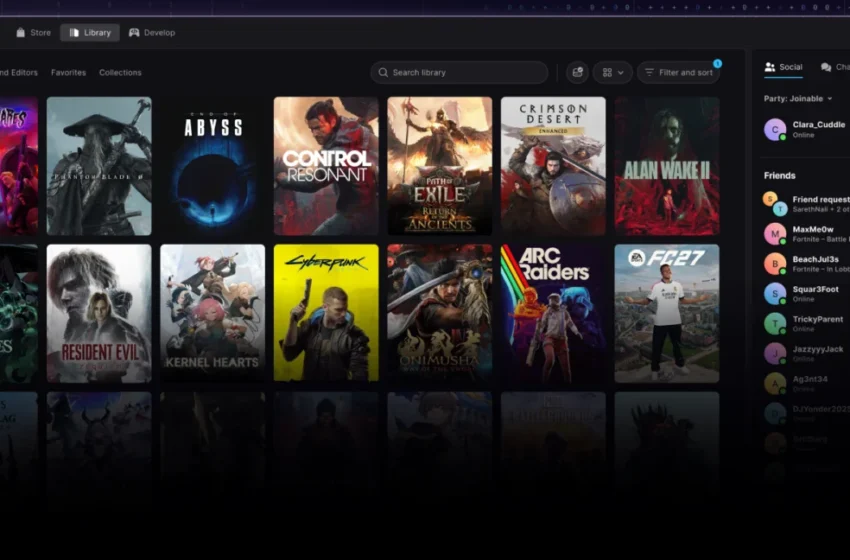
Epic Games has launched a public preview of a new Epic Games Launcher, claiming it is significantly faster and more responsive than its predecessor and even Valve’s Steam, developed from scratch using AI-assisted “vibe coding.” This strategic move by Epic not only intensifies the competition in the PC gaming platform space but also signals a major shift in how US tech companies might approach software engineering, leveraging generative AI to streamline development cycles and challenge established incumbents.
For nearly eight years, Epic Games has been on a mission to carve out market share against Steam, primarily through aggressive game exclusives and a developer-friendly revenue split. However, the existing Epic Games Launcher has often faced criticism for its performance and user experience. The introduction of this new launcher, built with a completely fresh codebase, represents a fundamental re-evaluation of Epic’s technical foundation and its commitment to offering a genuinely superior user experience to American gamers.
What Exactly is “Vibe Coding” and How Did AI Help?
The term “vibe coding,” while somewhat tongue-in-cheek, describes a profound shift in Epic’s development methodology. According to Epic Games Store General Manager and VP Martin Keely, the team “started from scratch” for the new launcher. Crucially, they used AI “as a tool to write and review new features and new capabilities from the ground up in a different tech stack than what we had previously.”
This approach isn’t about replacing human developers but augmenting their capabilities. The AI acted as an advanced assistant, accelerating the process of generating new code, identifying potential issues, and ensuring compatibility within the new technology stack. This meant the development team could focus on high-level design and feature implementation rather than getting bogged down in repetitive coding tasks or the complexities of adapting old code.
Keely clarified that this AI integration “made us more efficient and allowed a small team to rewrite the code base and be able to launch it faster across platforms.” This efficiency gain is critical. Rather than incrementally patching or refactoring legacy code, Epic embraced a greenfield development strategy, using AI to rapidly build a modern, optimized foundation. This allows for a clean break from technical debt, a common challenge in long-standing software projects.
The Strategic Play: Why Epic Needs This Edge Over Steam
Epic’s rivalry with Valve’s Steam platform is well-documented. While Epic has leveraged its deep pockets and the success of games like Fortnite to secure exclusive titles, a consistently smoother, faster, and more responsive launcher could be a significant differentiator in attracting and retaining users.
Consider the typical American PC gamer’s experience: frequent updates, extensive game libraries, and the desire for minimal friction. A clunky, slow launcher can quickly become a deterrent, pushing users back to more established or performant alternatives. By claiming its new launcher is “way faster and more responsive” than the current one and faster than Steam, Epic is directly addressing a key pain point for users and a long-standing competitive disadvantage.
The focus on speed and responsiveness isn’t just about convenience; it’s about user retention and ecosystem lock-in. If accessing games, browsing the store, and managing downloads is genuinely a superior experience on Epic, it strengthens the platform’s appeal. This could be particularly impactful for new PC gamers or those not deeply entrenched in the Steam ecosystem.
Benefits of the New Epic Games Launcher (Preview)
The shift in Epic’s development strategy and the resulting product promise several key advantages:
| Feature/Aspect | Old Epic Games Launcher (Implied) | New Epic Games Launcher (Preview) |
|---|---|---|
| Development Method | Traditional programming with existing codebase | “Vibe coding” (AI-assisted), built from scratch |
| Performance | Slower, less responsive, potential for technical debt | “Way faster and more responsive” |
| Codebase | Existing, likely accumulated technical debt | Completely rewritten in a new tech stack |
| Team Efficiency | Standard development pace | Small team achieved faster rewrite due to AI |
| Platform Support | Windows, Mac | Windows, Mac, with Linux version planned |
Broader Implications for US Software Development
Epic’s success with AI-assisted development could set a powerful precedent for the wider US tech industry. The notion that a “small team” can rapidly rewrite a significant application from the ground up using AI tools has profound implications for:
- Startups: Smaller teams could achieve disproportionately large output, accelerating time-to-market and increasing competitive viability against larger, more established players.
- Legacy System Modernization: Many US enterprises struggle with outdated software. AI could offer a viable path for wholesale rewrites rather than costly, incremental updates.
- Talent Utilization: Developers might shift from mundane coding to more complex architectural design, AI prompt engineering, and critical code review, optimizing human expertise.
- Competitive Landscape: Industries dominated by older, less agile software could see new entrants rapidly challenge incumbents by leveraging AI for development speed.
This isn’t just about Epic Games; it’s about a future where generative AI fundamentally alters the cost, speed, and scale of software engineering. US companies across various sectors, from finance to healthcare, could explore similar methodologies to optimize their development pipelines and launch innovative products faster.
The Future of AI in Tech: Beyond Just Game Launchers
The Epic Games Launcher story is a microcosm of a much larger trend: the increasing integration of AI into every facet of technology creation. From AI-powered code copilots assisting individual developers to AI systems generating entire software architectures, the tools are becoming more sophisticated and capable.
What Epic has demonstrated is a practical application of AI at a project-wide scale, moving beyond simple code suggestions to orchestrating a complete rewrite. This kind of “vibe coding”—or more formally, AI-orchestrated development—is likely to become a standard practice, particularly as large language models (LLMs) and other AI tools become even more adept at understanding context, identifying patterns, and generating robust, maintainable code.
Conclusion
Epic Games’ new AI-coded Launcher represents more than just an update to a gaming platform; it’s a bold statement about the future of software development and a direct challenge to the status quo. For American tech professionals and enthusiasts, this development highlights several critical takeaways:
- AI is Transforming Development: Epic’s “vibe coding” showcases AI’s potential as a powerful tool for accelerating major software rewrites and boosting team efficiency.
- Heightened Platform Competition: A truly faster and more responsive Epic Games Launcher could finally provide a tangible, non-exclusive reason for US gamers to prefer Epic over Steam.
- Blueprint for US Tech: The methodology used by Epic could serve as a model for other US companies looking to modernize legacy systems, increase product velocity, and enable smaller teams to compete effectively.
- Focus on User Experience: Ultimately, this move underscores Epic’s commitment to improving the core user experience, which is crucial for long-term growth and market penetration.
FAQ
What is the new Epic Games Launcher?
The new Epic Games Launcher is a public “Preview” build that Epic Games has developed from scratch, claiming it’s significantly faster and more responsive than its previous version and Valve’s Steam, with a new look and an upcoming Linux version.
How did AI help develop the new launcher?
Epic Games used AI as a “tool to write and review new features and new capabilities from the ground up,” a process they playfully called “vibe coding.” This allowed a small team to efficiently rewrite the entire codebase in a new tech stack, accelerating development and enabling cross-platform support.
What are the main benefits of the new Epic Games Launcher?
The primary benefits include a “way faster and more responsive” user experience, a completely rewritten codebase free of previous technical debt, increased development efficiency allowing for a faster launch across Windows and Mac, and planned support for Linux.
