
Europe’s Space Ambition Stalls: Ariane 6 Upgrade Halt Reveals Deeper Market Misread
- Space
Arjun Vedanta
- 0
- 6 minutes read
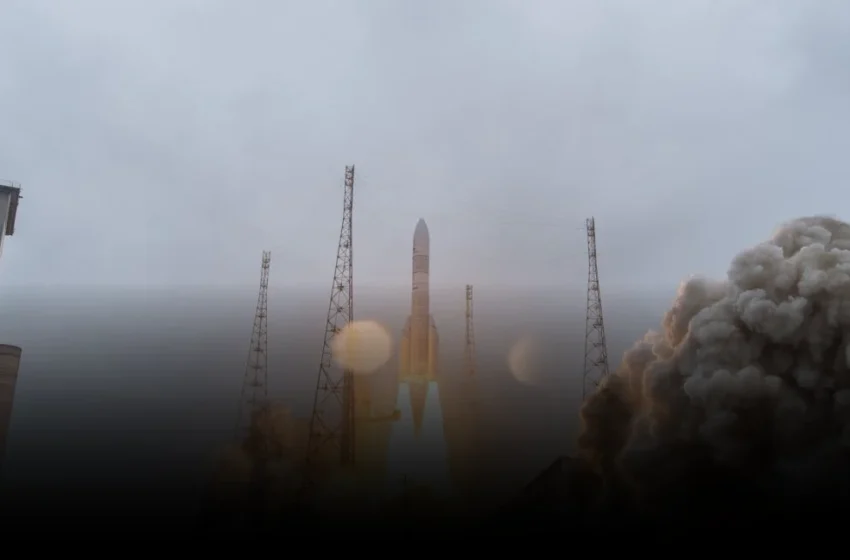
Europe’s Ariane 6 rocket has just notched eight successful missions in two years, reliably ferrying payloads exceeding 20 metric tons to low-Earth orbit with an enviable zero-failure record. Yet, this technically robust performance, praised for its smoother rollout than troubled US counterparts like Blue Origin’s New Glenn or ULA’s Vulcan, is now shadowed by a stark reality: the cancellation of its planned upgrades due to prohibitive costs. This isn’t merely a budget cut; it’s an admission that Europe’s current approach to space access is increasingly uncompetitive, locking the continent into a precarious future for its independent orbital ambitions.
This decision exposes a deeper European strategic vulnerability: a persistent reliance on past design philosophies that prioritize government-led development and technical reliability over the rapid cost-efficiency and commercial agility now dominating the global launch market. While technically proficient, the Ariane 6 embodies a strategic misstep, one that prioritizes a legacy model in a market fundamentally reshaped by disruptive innovation.
The Cost of a ‘Smooth’ Debut
The Ariane 6’s largely successful debut, marked by eight flawless launches, should be a point of pride for European rocket scientists and planners. Indeed, it is. The vehicle’s capacity to deploy more than 20 metric tons into LEO is significant, demonstrating robust engineering and meticulous mission execution.
However, the accompanying announcement — that planned upgrades are now off the table due to "high costs" — pulls back the curtain on a deeper, more systemic issue. The smoothness of Ariane 6’s initial operations, while technically commendable, masks a more fundamental miscalculation: valuing predictable, incremental iteration over disruptive innovation.
The rocket itself is an expendable design, inherently carrying higher operational costs per launch compared to reusable designs that dominate the headlines and increasingly, the contracts, for high-volume low-Earth orbit deployments. This strategic choice, made years ago in a different market context, now forces Europe to contend with a paradox: a technically sound rocket that is simply too expensive to evolve, let alone compete on cost-per-kilogram. It raises the skeptical question of whether technical perfection at a steep price is truly a win when the commercial space market is rapidly redefining value and demanding continuous cost reduction. Europe’s commitment to an expendable architecture at the outset of Ariane 6’s design meant it was, in some ways, already fighting yesterday’s war.
When Public Stewardship Clashes with Commercial Speed
Europe’s space ambitions have long been characterized by grand, collaborative projects, spearheaded by organizations like the European Space Agency and Arianespace. This model, often seen as a testament to multinational cooperation, emphasizes meticulous design, rigorous testing, and national strategic independence.
But this centralized, consortium-based approach struggles to compete with the velocity and aggressive cost-per-kilogram metrics now driven by venture-backed, vertically integrated private entities like SpaceX. While government-backed space programs often excel at monumental science missions or national security launches, the commercial launch market demands aggressive pricing, rapid iteration, and the ability to pivot quickly to meet customer demand — elements not easily fostered within traditional bureaucratic structures.
The incentive behind persistently highlighting Ariane 6’s initial reliability and "smooth rollout" is clear: this official narrative serves to justify decades of significant public investment, subtly deflecting from the uncomfortable truth that Europe’s space access strategy is increasingly misaligned with global commercial realities. The continent chose a path of public stewardship, aiming for guaranteed access to orbit. What it got was a reliable ride that the market no longer wants to pay for, especially as competitors like Rocket Lab push the boundaries of small-to-medium lift capabilities with unprecedented commercial efficiency and lower price points, eating into potential market share.
Geopolitical Stakes and Orbital Dependence
The implications of an uncompetitive launch vehicle extend far beyond balance sheets, touching directly upon Europe’s broader strategic autonomy in a rapidly militarizing and commercializing space domain. Europe’s ability to independently launch its own satellites — for Earth observation, secure navigation, critical communications, or defense — is a cornerstone of its sovereign power.
If its indigenous options become too costly, Europe faces two unpalatable choices: either continue to pay a premium, draining public funds and making its own satellite services less competitive globally, or become increasingly reliant on external launch providers. This reliance could shift the balance of power to nations, or even private companies, with whom Europe shares a complex geopolitical relationship.
This isn’t just about commercial bids for geostationary transfer orbit or low-Earth orbit contracts; it’s about the ability to control its own destiny in an increasingly contested domain. The inability to efficiently upgrade and compete with next-generation reusable rockets from the US or even emerging players in Asia means Europe risks being priced out of its own orbital access, or worse, finding itself with fewer choices for critical missions, potentially creating dependencies on services that could be leveraged for political ends. The cancellation of Ariane 6 upgrades isn’t merely an economic decision; it’s a quiet acknowledgment that Europe’s long-term space strategy, once a beacon of technological prowess and independent access, now grapples with the uncomfortable reality of falling behind in the global race for affordable and agile access to space, fundamentally eroding its ambition to be a major player in the final frontier.
