
China’s Reusable Rocket Ascent: A Geopolitical Leap, Not Just Tech Catch-Up
- Space
Arjun Vedanta
- 0
- 4 minutes read
Beyond the Booster: A New Era of Space Economics
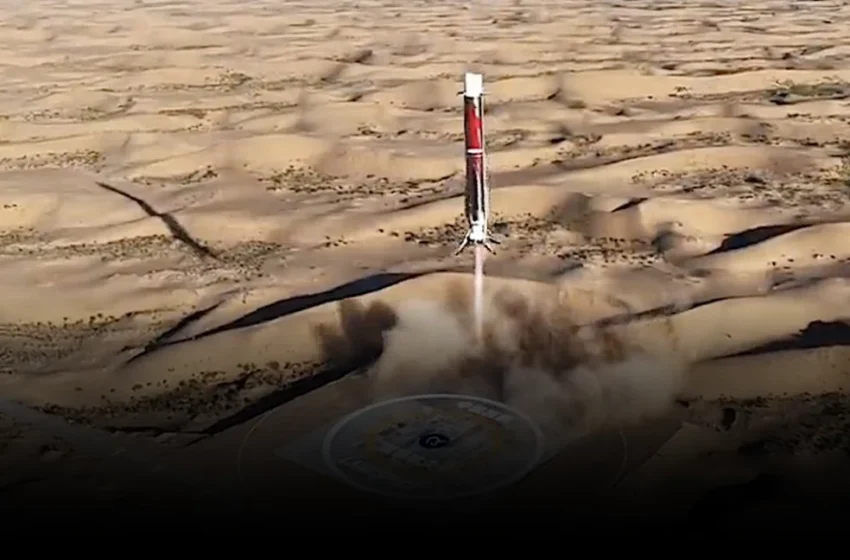
The two successful booster landings by Chinese firms within weeks are not merely engineering achievements; they represent a fundamental recalculation of global space power, exposing a blind spot in how the West assesses Beijing’s technological ambition. While Silicon Valley obsesses over its next funding round, China is quietly—and then demonstrably—rewriting the economics of space access. It took a decade for a second American company, Blue Origin, to match SpaceX’s 2015 orbital-class booster recovery. China accomplished a similar feat with its second operator in just over a month.
This speed matters. Reusability slashes launch costs, transforming a multi-billion dollar satellite industry from an exclusive club into a high-frequency commodity market. For nations and companies alike, cheaper, more frequent access to low Earth orbit means everything from enhanced communications and precise navigation to rapid deployment of Earth observation systems. This is not just about better rockets; it is about reshaping the foundational cost structures of the entire global space economy. China’s dual-track approach, involving both state-backed behemoths like China Aerospace Science and Technology Corporation (CASC) and a growing cohort of so-called commercial entities, ensures a robust, diversified effort to capture this new economic frontier.
The Silicon Valley Echo Chamber and Beijing’s Silent Ascent
For all the breathless coverage of ‘private’ space companies, the blurred lines between state and commercial in China are routinely glossed over, obscuring the true strategic implications. Western analysts and journalists, particularly those entrenched in the Silicon Valley ecosystem, tend to frame China’s progress primarily as a race to catch up with American pioneers like SpaceX, or aspiring players like Rocket Lab, Stoke Space, Relativity Space, and Firefly Aerospace. The comfortable narrative of China playing catch-up, however, crumbles under the weight of empirical evidence. These recent landings are not merely technical mimicry; they signal the maturation of independent design and operational capabilities.
The focus on Western timelines, predicting a third US reusable rocket operator by 2027, overlooks the sheer volume of parallel efforts in China. There, a similar number of companies are working on reusable launch vehicles, often with significant implicit or explicit state backing. To cast China’s space strategy solely as an attempt to replicate SpaceX is to fundamentally misinterpret its ambition and operational model. The timing of these announcements, carefully orchestrated within China’s broader strategic communication, serves to project an image of self-sufficiency and rapid technological parity, directly undermining narratives of Western technological superiority.
Geopolitical Orbit: What Reusability Really Means for Global Influence
The ability to launch cheaper and more frequently holds profound geopolitical implications. It transforms space from a domain of exclusive access into a battleground for influence and control. A nation that can launch its own satellites, its own space stations, and eventually its own deep space missions with reduced dependency on foreign partners gains significant strategic autonomy. This capacity extends beyond peaceful exploration; it encompasses military applications, such as rapid replenishment of reconnaissance satellites or the deployment of advanced communication arrays, vital for asserting power projection globally.
These developments are not just about China building its own capabilities, but about its ability to offer competitive launch services to other nations, particularly those in the Global South, thereby expanding its diplomatic and economic influence. The rise of multi-pronged Chinese launch capabilities fundamentally challenges the Western-dominated space order, creating a truly multipolar environment for orbital access. It forces a recalibration of national security postures and strategic alliances, as the West can no longer assume a comfortable lead in fundamental space infrastructure. The era of a singular, dominant force in space launch is over; a new, intensely competitive dynamic has firmly taken hold.
