
F-Droid 2.0: A Quiet Rebellion Against Mobile Walled Gardens
- Software
Arjun Vedanta
- 0
- 4 minutes read
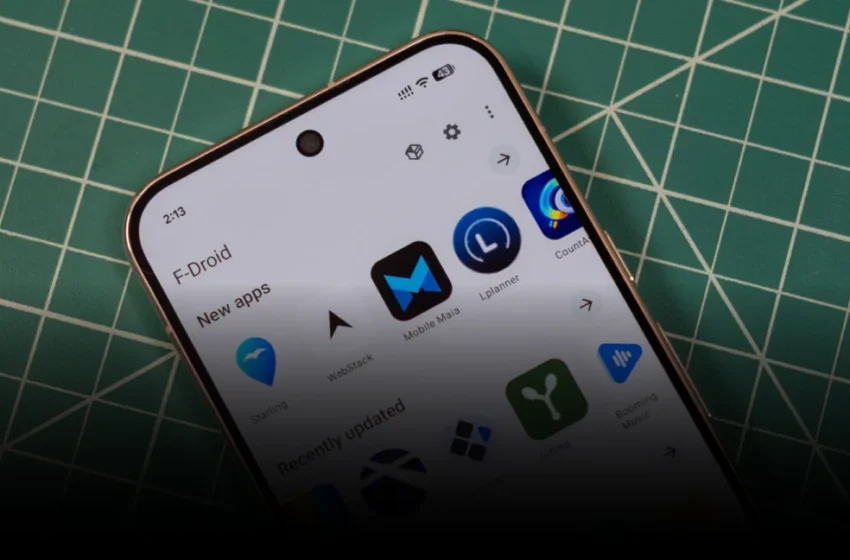
The Decadal Divide: F-Droid’s Modern Face in a Monopolized Market
A decade. That is the span of time between significant updates for F-Droid, the community-driven bastion of free and open-source Android applications. Its latest iteration, F-Droid 2.0, rolling out now, is more than a mere refresh; it is a calculated recalibration in an era where mobile ecosystems are increasingly dominated by two hegemonic players. This update inadvertently highlights the escalating tension between platform walled gardens and the persistent, if often overlooked, demand for user control and digital sovereignty within the mobile ecosystem.
For years, F-Droid users have navigated an interface that felt frozen in time, a necessary penance for principled access to applications free from proprietary tracking and corporate oversight. The new client, rebuilt from scratch in
The new client, rebuilt from scratch in Kotlin Compose, brings the store up to modern Android standards, promising a much more responsive experience and optional Material theming. The interface, too, has been significantly cleaned, making core functions intuitive while relegating less frequent options to overflow menus. This technical modernization signals an intent beyond mere maintenance; it’s an effort to make the philosophical choice of FOSS palatable, perhaps even attractive, to a broader, digitally aware demographic.
Beyond the UX: Why F-Droid’s Principles Matter Now More Than Ever
The core appeal of F-Droid has never been its aesthetic polish but its unwavering commitment to transparency and user freedom. In an app landscape where the Google Play Store and Apple App Store act as gatekeepers, collecting vast troves of user data, F-Droid stands as a stark counterpoint. It explicitly avoids tracking user taps or installs, thereby removing the algorithmic suggestions and targeted advertisements that are the lifeblood of mainstream app monetization.
This is not merely a technical detail; it is a philosophical declaration. The F-Droid team’s incentive, in pushing such a substantial update now, is to keep the flame of open-source and user freedom alive on mobile, attracting more developers and users by modernizing its facade without betraying its foundational commitment to privacy and transparency. They aim to reinforce its unique value proposition to a growing segment of privacy-conscious users who are increasingly aware of the insidious nature of surveillance capitalism embedded within their daily digital tools.
Yet, here is the sharpest observation: how much can a single, even well-executed, open-source app store truly dent the gravitational pull of incumbent ecosystems that control both hardware and defaults, particularly when the average user prioritizes convenience over principles? For every informed user seeking digital sovereignty, there are thousands who will opt for the pre-installed, frictionless path, accepting the trade-off of data for ease of access.
The Enduring Role of Niche Alternatives in a Centralized World
F-Droid has amassed thousands of open-source applications over its lifespan, far more than its initial sparse offerings. The 2.0 update aims to make this extensive library more discoverable, easier to install, and more pleasant to browse. This is a crucial step for an ecosystem that thrives on community contribution and adoption.
Still, F-Droid will likely remain a niche player, a haven for developers, privacy advocates, and those willing to step outside the dominant digital frameworks. It cannot, and perhaps does not aim to, become a mainstream competitor to the Google Play Store. Its true value lies not in market share, but in its existence as a proof of concept: that alternatives are possible, that user choice is paramount, and that a decentralized, privacy-respecting mobile experience is not just a pipe dream. It serves as a constant, quiet critique of the status quo, reminding the wider tech world that a different path is always available for those who seek digital autonomy.
