
Google’s Glittery Distraction: AI Icons and a Brand Identity Crisis
- Artificial Intelligence
Arjun Vedanta
- 0
- 4 minutes read
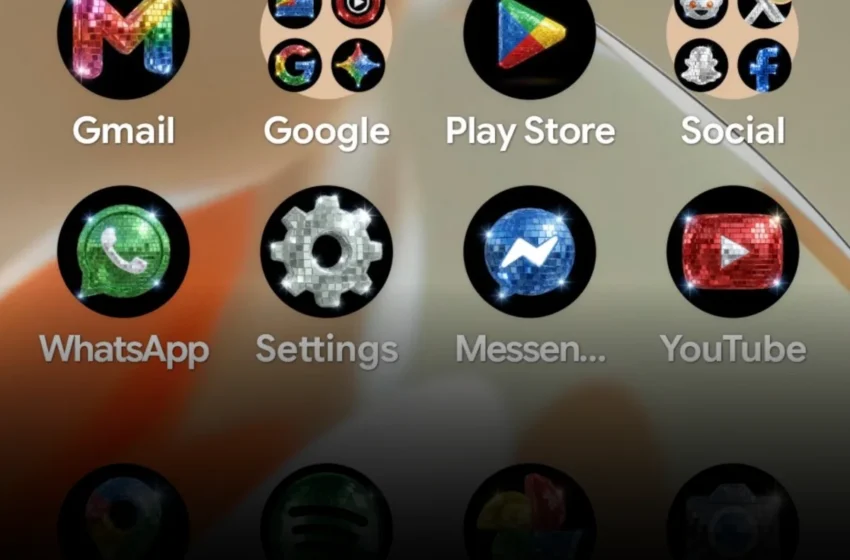
The Whimsical Facade of Pixel Customization
Sameer Samat, Android’s ecosystem head, threw the disco ball question into the X feed on May 19, 2026: “Should we make this icon pack happen on Android??” Three days later, it was real, a custom set of Pixel icons shimmering with faux glitter. Spotify had already weathered a backlash for its own 20th-anniversary glitter bomb, prompting the streamer to meekly remind users, “Alright, we know glitter is not for everyone.” Yet, Google leaned into the absurdity, with Samat even posting, “Are y’all sure you still want this?” alongside a screenshot of a fully bedazzled Pixel.
The surface-level incentive is clear: participate in a viral moment, appear nimble, perhaps even human. This playful response attempts to tap into a reported “Zillennial” embrace of whimsy as a “playful response to a difficult world,” as The New York Times recently noted. It’s a deliberate pivot from the often-staid, functionalist design common across much of Android, creating a momentary splash that feels more like a PR stunt than a meaningful design evolution.
Generative AI’s Subtle Advance into UI/UX
Beneath the sparkling veneer lies a more consequential development: these disco icons are part of Pixel’s “relatively new custom icons feature,” powered by AI-generated styles. Rolled out in March’s Pixel Drop, this feature allows users to choose from templates like “Scribbles,” “Treasure,” and “Easel,” a significant expansion from mere color-matching. Google isn’t just manually designing a new icon pack; it’s deploying generative AI to offer ephemeral visual trends as a customizable option.
This is where the apparent frivolity becomes strategically opaque. Is Google using a meme-driven opportunity to collect valuable data on how users interact with AI-generated visual elements? By integrating AI into something as low-stakes as app icons, the company is subtly conditioning users to expect and accept artificial intelligence as the invisible hand guiding their daily interface. This slow drip of AI into the mundane is a classic platform play, making advanced capabilities feel like a natural, unremarkable part of the experience.
For a company that has often struggled with design consistency and the infamous fragmentation of its Android ecosystem, turning over aesthetic decisions to generative AI, especially for such fleeting trends, feels less like innovation and more like abdicating design responsibility under the guise of customization. It’s a convenient way to appear dynamic without committing to a coherent, lasting design language.
Beyond the Kitschy Icon: A Platform Identity Question
Google’s foray into disco-themed icons, mediated by AI, raises a critical question about its long-term UI/UX strategy and brand identity in a fiercely competitive landscape. While Apple is renowned for its meticulously curated aesthetic, Google’s approach, particularly with Android, often appears more experimental, sometimes even contradictory. This “whimsical” AI-driven customization could be seen as an attempt to carve out a distinct niche, embracing personalization at scale via generative AI where human designers would struggle to keep up with viral trends.
The larger implication is how Google intends to position Android’s user experience in an increasingly AI-first world. Are we heading towards an operating system where every visual element, every interaction, is dynamically generated and personalized by AI? This disco ball moment, as trivial as it seems, is a small but telling indicator of Google’s broader platform strategy: to make AI so integrated, so seemingly fun and responsive, that its underlying power becomes an unquestioned part of the digital furniture. It’s not just about a temporary visual gag; it’s about shaping expectations for an AI-powered future where the company itself can play a perpetual game of “are y’all sure you still want this?” without ever really waiting for an answer.
