
Starship V3’s ‘Success’ Redefines Spaceflight Progress – For Whom?
- Tech
Arjun Vedanta
- 0
- 5 minutes read
The Shifting Goalposts of Orbital Success
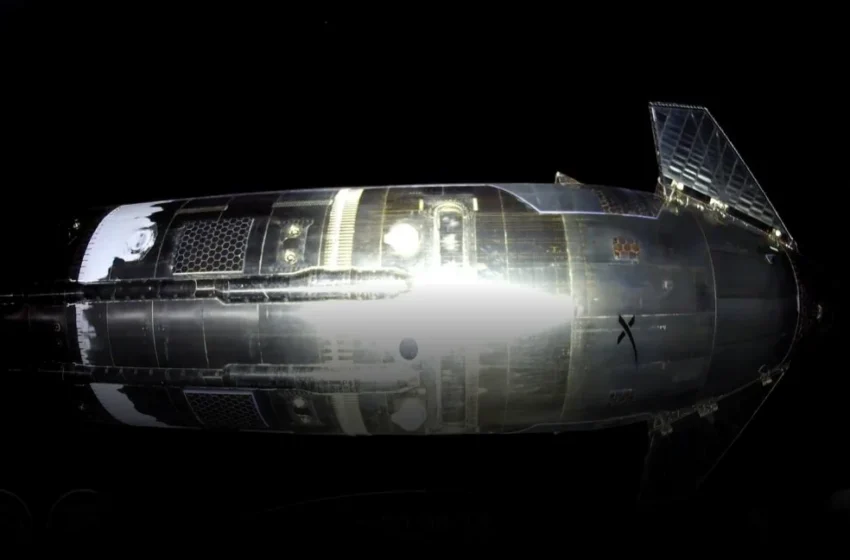
A rocket splashing down on target after a maiden flight is not typically described as ‘mostly successful.’ Yet, this curious qualifier framed much of the commentary following the first test flight of SpaceX’s upgraded Starship V3 and its Super Heavy booster. The mammoth 408-foot-tall vehicle, propelled by 33 methane-fueled engines, did indeed clear the launch tower from Starbase, Texas, and perform an hour-long flight before a controlled splashdown in the Indian Ocean. From an engineering standpoint, this represents a significant step forward from the initial flights of V1 and V2 in 2023 and 2025, both of which famously disintegrated during launch.
But the persistent caveat of ‘mostly successful’ is not a simple reporting nuance; it reflects a deeper, strategic redefinition of what constitutes progress in the private space sector. For traditional aerospace, a successful test flight implies full mission parameters met, critical systems validated, and a clear path to operational status. Here, we see a company effectively moving the finish line, normalizing iterative public failures as ‘learning opportunities’ while simultaneously claiming victory for what, by historical standards, might still be considered a partial accomplishment. To laud this as ‘mostly successful’ isn’t merely an optimistic spin; it’s a calculated semantic maneuver that subtly lowers the bar for what constitutes meaningful progress in arguably the most unforgiving engineering discipline.
The implications for future orbital mechanics and ultimate payload capacity are obscured by this framing. While the article notes V3 ‘fared better,’ it avoids specific technical details that would allow an independent assessment of actual mission objectives met versus those still outstanding. This selective transparency, while understandable for a private enterprise, complicates the public’s understanding of genuine advancement versus well-managed public relations.
Engineering by Public Iteration vs. Traditional Aerospace
SpaceX’s ‘fail fast, learn faster’ philosophy has undeniably accelerated development cycles, fundamentally challenging the decades-long, meticulously planned projects characteristic of national space agencies like NASA or ESA. Traditional aerospace, burdened by layers of bureaucracy, risk aversion, and taxpayer accountability, rarely, if ever, tests its nascent technologies with the world watching and a live commentary track. Their failures are typically confined to test stands or the drawing board, their breakthroughs announced with a quiet confidence borne of extensive internal validation.
This public iteration model, however, carries inherent risks. While it generates tremendous public engagement and fosters a sense of shared journey, it also normalizes significant technical setbacks in a field where failure can mean catastrophic loss of life and billions in investment. SpaceX, ever the master of narrative control, understands that maintaining momentum and investor confidence hinges not just on raw technical achievement, but on the public perception of continuous, albeit incremental, ‘progress.’ This dynamic puts immense pressure on regulatory oversight bodies, which must balance safety concerns with the stated desire to foster rapid innovation in commercial spaceflight.
The contrast extends to resource allocation. Traditional programs often see budgets balloon after a single failure, necessitating lengthy investigations and redesigns. SpaceX, conversely, seems to absorb partial failures as part of the operating cost of speed, quickly rolling out the next version. This approach, while efficient for the company, demands a different kind of public trust—one that accepts that the path to Mars might be paved with very public, very large, almost-successes.
Beyond the Hype: The Real Stakes for Starship
The ultimate vision for Starship extends far beyond sending satellites into orbit. It’s the cornerstone of humanity’s ambition for lunar bases, Mars colonization, and even high-speed terrestrial logistics. For these monumental goals, ‘mostly successful’ is a problematic foundation. Deploying massive constellations of satellites or transporting hundreds of people to another planet requires not just ‘better’ performance, but near-perfect, repeatable reliability. The true promise of Starship — full and rapid reusability for sustained heavy-lift capability — remains the ultimate, yet elusive, metric of success.
The casual acceptance of ‘mostly successful’ today for a test flight risks setting a dangerous precedent for the future. If Starship becomes the primary transport for the Artemis program’s human lunar landing, or for establishing an early Mars colony, every component, every system, every flight parameter will need to be beyond ‘mostly successful.’ The stakes will be measured not in hardware, but in human lives and the future of species-level expansion.
The challenge for those of us observing this grand experiment from outside the Silicon Valley bubble is to parse the genuine engineering triumphs from the strategic public relations. Starship V3’s flight was undoubtedly progress, but precisely how much, and what that progress truly unlocks for the future of space exploration, remains a question obscured by a convenient linguistic ambiguity. The reality is that the definitive success of Starship will not be measured by the spin applied to a test flight, but by its ability to reliably and safely open new frontiers.
