
Hyperscalers’ Energy Gambit: Trading Agile for Industrial Scale
- AI Infrastructure
Arjun Vedanta
- 0
- 6 minutes read
The Industrial Pivot and Its Price Tag
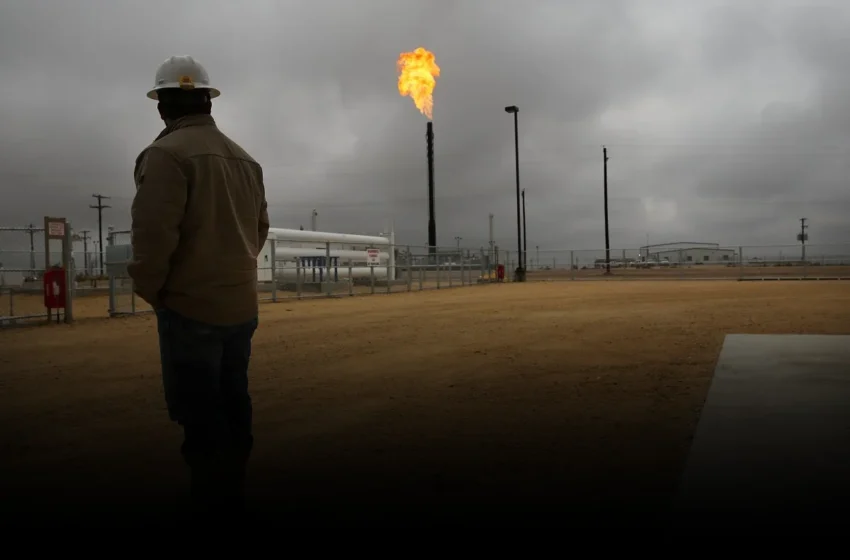
The titans of cloud computing and AI, long lauded for their capital efficiency and digital dexterity, are now planting billions into the ground, literally. Amazon, Google, Meta, and Microsoft, the very companies that define the modern digital economy, are making unprecedented investments in physical natural gas power plants across the U.S. This pivot marks a profound, largely unremarked shift in their fundamental business models, transforming them from agile software and service providers into heavy industrial players with direct exposure to volatile physical energy markets.
Consider the scale: Meta announced plans for a 7.5-gigawatt natural gas plant in Louisiana. Amazon countered with a 7.6-gigawatt facility in Texas, while Microsoft and Google each committed to their own gigawatt-scale gas power stations in the Lone Star State. These are not minor infrastructure upgrades; they are monumental capital expenditures, plunging hyperscalers into a sector historically far removed from their core competencies. This sudden embrace of fossil fuels runs counter to years of carefully curated public images built on renewable energy procurement and carbon footprint reduction.
This industrial pivot arrives precisely as energy research firm Noreva issues a stark warning. According to their analysis, natural gas prices could triple in some U.S. regions in the coming years. While current prices hover between $2 and $4.50 per million BTUs, Noreva anticipates spikes above $10 per million BTUs in certain hubs, driven by an unprecedented collision of hyperscaler demand, constrained supply growth, and surging liquefied natural gas (LNG) exports. Peter Gardett, CEO of Noreva, succinctly put it: “I think everyone in the energy markets has been lulled into a sense that gas prices can’t go up.”
Such a price surge would dramatically alter the economics of these new, self-powered data centers. Fuel accounts for roughly half the cost of electricity from a large power plant. A doubling or tripling of natural gas costs could make hyperscalers’ AI operations far more expensive, potentially driving up the per-token cost of AI inferences or forcing them back onto the public grid, escalating electricity prices for everyone else. This move paradoxically undermines their carefully cultivated green narratives, risking considerable reputational damage for the perceived short-term acceleration of AI compute.
A Global Market, Local Risks
The incentives driving this shift are clear: the insatiable demand for AI processing power. Generative AI models, with their vast computational needs, require staggering amounts of electricity, and securing a dedicated, reliable, and initially cheap energy source has become paramount. Hyperscalers were initially drawn to regions like West Texas and Louisiana by the promise of abundant, inexpensive natural gas, often a byproduct of oil extraction with limited local pipeline infrastructure to move it.
This dynamic is rapidly changing. Gardett notes that the domestic gas market is now inextricably linking to global energy markets, particularly through new pipelines funnelling gas towards export terminals. This means local supply gluts that once kept prices low are now subject to international pricing pressures and geopolitical events. The “AI demand pull” adds another layer of upward pressure, ensuring that regional price differentials will become more extreme and prolonged.
The immediate, critical need for AI compute capacity leaves hyperscalers with few short-term alternatives. They are compelled to secure power by any means necessary, even if it entails accepting unprecedented exposure to energy market volatility and associating more directly with fossil fuel infrastructure. This prioritisation of immediate compute access over long-term energy transition goals represents a significant strategic gamble.
As Gardett observed, these companies are “doing things that are not normal for an off-taker to do.” They are taking on direct commodity risk, a domain typically reserved for utilities or energy trading desks, not software and cloud providers. The long-term stability suggested by current futures contracts, while seemingly a reasonable bet, does not fully account for the confluence of new demand, export market connectivity, and diminishing easy supply growth. The implicit assumption that these tech giants can simply absorb or out-innovate commodity price fluctuations fundamentally misunderstands the brutal realities of the energy sector.
Beyond the Balance Sheet: Reputational and Regulatory Exposure
The financial implications are only one facet of this new industrial reality. Hyperscalers are also exposing themselves to significant reputational and regulatory risks. Already, public sentiment against data centers is hardening, with 80% of consumers reportedly concerned about their impact on utility bills, largely due to electricity consumption. Should natural gas prices soar as predicted, leading to increased costs for heating or other energy needs, the public backlash against data centers’ fossil fuel consumption could intensify dramatically.
This deeper entrenchment in the fossil fuel world also invites increased regulatory scrutiny. Governments worldwide are pushing for decarbonisation, and major tech companies actively investing in gigawatt-scale gas plants present a challenging narrative. Their existing climate pledges and Environmental, Social, and Governance (ESG) commitments will come under intense pressure, potentially leading to investor divestment or stricter operating conditions. The risk of stranded assets also looms large; should renewable energy generation or advanced nuclear power become significantly cheaper and more widely available, these massive gas plant investments could quickly become liabilities.
Furthermore, this diversification into heavy industry dilutes the very identity that made these companies Wall Street darlings: their agility, scalability, and perceived detachment from legacy industrial complexities. Peter Gardett’s observation — “On future Alphabet earning calls, you will hear them talk about the correlation between natural gas pricing and Google results, which is strange, but that’s where we are” — perfectly encapsulates the unexpected intertwining of digital services with volatile commodity markets. This is not merely a supply chain adjustment; it is a fundamental redefinition of what a hyperscaler is and the array of risks it now navigates.
