
MacBook Pro OLED: Apple’s Display Bet and the Touchscreen Question
Arjun Vedanta
- 0
- 10 minutes read
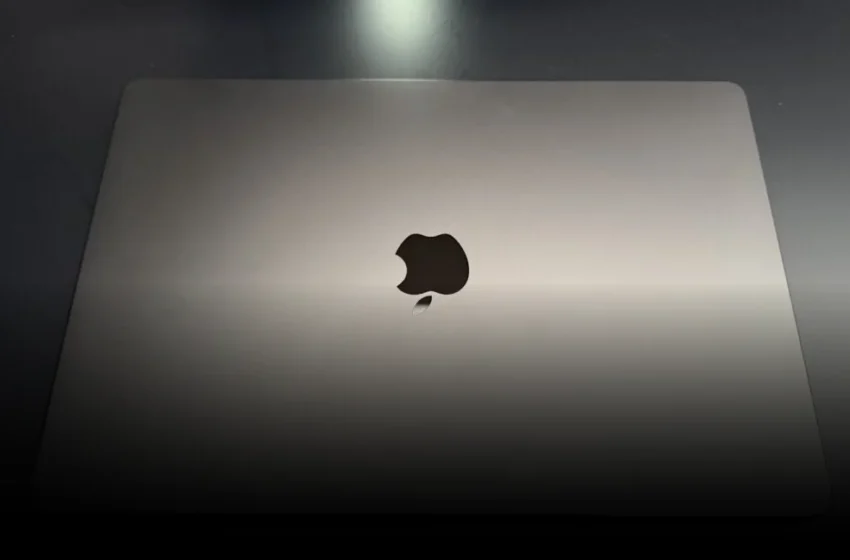
Apple Embraces OLED for MacBook Pro, Signals Strategic Shift
The introduction of a new MacBook Pro model featuring a stunning OLED display and a noticeably lighter design signals Apple’s clear intent to push the boundaries of premium laptop user experience, while the possibility of a touchscreen interface, as indicated by the initial hands-on title, would represent a monumental shift for macOS. This evolution directly impacts American creative professionals and mainstream users, setting new benchmarks for visual quality and portability in the competitive US tech market.
A brief hands-on session with the updated 14-inch MacBook Pro highlighted two immediate takeaways: an “outstanding OLED display” and a lighter chassis. While the source noted the design wasn’t a radical departure from previous iterations, these two advancements alone point to significant internal engineering and a strategic pivot in Apple’s approach to its professional laptop line. For years, Mac users have coveted the vibrant contrasts and deep blacks offered by OLED technology on devices like the iPhone and iPad, and its arrival on the MacBook Pro could redefine expectations for visual fidelity on a desktop-class machine.
The Visual Leap: Why OLED Matters for American Users
Apple’s move to OLED on the MacBook Pro is more than just an incremental upgrade; it’s a profound enhancement of the visual experience. OLED (Organic Light Emitting Diode) technology offers individual pixel control, meaning each pixel can emit its own light or turn off completely. This capability translates into several critical advantages over traditional LCD or even Apple’s current Mini-LED Liquid Retina XDR displays.
- True Blacks and Infinite Contrast: With pixels that can switch off entirely, OLED achieves perfect black levels, leading to an effectively infinite contrast ratio. This is crucial for tasks like color grading, video editing, and graphic design, where accurate representation of shadows and highlights is paramount.
- Exceptional Color Accuracy: OLED panels typically cover wider color gamuts and offer superior color accuracy, making them ideal for creative professionals who demand precise visual fidelity. This will be a boon for studios and freelancers across the US working in film, photography, and digital art.
- Improved Power Efficiency: For content with dark themes, OLED screens can be more power-efficient than Mini-LED, potentially extending battery life for mobile users who consume or create dark-mode content.
- Faster Response Times: OLED panels boast near-instantaneous pixel response times, which translates to smoother motion for fast-paced video content or gaming, an increasingly important factor for many American consumers.
The current 14-inch MacBook Pro models utilize Apple’s Liquid Retina XDR display, which employs Mini-LED backlighting to achieve high brightness and impressive contrast. While excellent, Mini-LED still relies on a backlight array and cannot match OLED’s true black levels or pixel-level control. The transition to OLED solidifies Apple’s position at the pinnacle of display technology in the laptop market.
| Feature | OLED Display (New MacBook Pro) | Mini-LED Display (Current MacBook Pro) |
|---|---|---|
| Black Levels | Perfect (pixels turn off) | Very good (local dimming zones) |
| Contrast Ratio | Infinite | Excellent (up to 1,000,000:1) |
| Color Accuracy | Exceptional, wide gamut | Excellent, wide gamut |
| Response Time | Near-instantaneous | Fast |
| Power Efficiency | Good (especially with dark content) | Good |
| Target Users | Creative pros, enthusiasts, general users | Creative pros, enthusiasts, general users |
Lighter Weight, Greater Mobility: A Practical Advantage
The noticeable weight reduction in the new MacBook Pro, as observed during the hands-on, is another significant practical enhancement. While the exact specifications were not detailed, even a subtle difference can greatly impact user experience over time. For American professionals who frequently commute, travel, or move between workspaces, a lighter 14-inch (35 cm) laptop means less strain and increased portability.
This refinement reflects a broader trend in the premium laptop market where portability is a key differentiator. Apple’s MacBook Pro line, while powerful, has often been considered weighty compared to some ultraportable competitors. By shedding pounds (or grams), Apple addresses a long-standing user desire, making the MacBook Pro a more attractive option for students, consultants, and anyone for whom every ounce matters during daily use.
The Touchscreen Elephant in the Room: A Potential macOS Revolution?
Perhaps the most intriguing implication, though less elaborated in the brief hands-on, is the potential for a touchscreen MacBook Pro, as explicitly mentioned in the source’s headline. For years, Apple has maintained a clear distinction between macOS, designed for precise mouse and trackpad input, and iPadOS, optimized for touch. A touchscreen MacBook Pro would shatter this long-held philosophy and profoundly reshape how users interact with their Macs.
If a touchscreen were to become a standard feature, it could usher in new workflows, bridging the gap between laptop and tablet experiences that rivals like Microsoft Surface have successfully explored. Imagine directly manipulating graphics in Adobe Photoshop or Final Cut Pro with your fingers, or navigating complex interfaces with a tap. This would require substantial adaptations to macOS itself and a re-evaluation of app design principles for developers across the US.
However, implementing a touchscreen also presents challenges: ergonomic concerns over reaching across a laptop screen, potential for smudges, and the need for a robust software ecosystem that supports both traditional and touch input seamlessly. Apple’s meticulous approach suggests any such integration would be highly polished, potentially leveraging aspects of iPadOS’s touch gestures and Apple Pencil support. This move, if confirmed and widely adopted, could also intensify competition with major players in the US laptop market, such as Dell’s XPS line and HP’s Spectre models, many of which already offer touch displays.
Competitive Landscape and Future Outlook
The new MacBook Pro, with its OLED display and lighter build, strengthens Apple’s standing in the high-end computing segment against formidable rivals. Companies like Samsung and LG already produce stunning OLED panels for their own laptop lines, and premium PC manufacturers are increasingly integrating advanced display technologies. Apple’s entry with OLED validates this trend and likely pushes competitors to innovate further.
For US consumers, this means a wider array of choice and continually improving technology. The long-term implications of a potential touchscreen, however, are far more disruptive. It could signal Apple’s intent to unify or at least harmonize its computing platforms, offering users a flexible experience without forcing a choice between a traditional laptop and a tablet. The success of such a paradigm shift would depend heavily on software integration and developer adoption, potentially creating new opportunities for app creators and accessory makers.
Key Takeaways for American Tech Users
- The new MacBook Pro’s OLED display sets a new bar for visual quality, offering superior contrast and color accuracy for creative professionals and visual enthusiasts.
- A lighter design improves portability, making the MacBook Pro more appealing for mobile workers and students across the US.
- The potential inclusion of a touchscreen, as suggested by early reports, would be a transformative philosophical shift for macOS, potentially enabling new interaction methods.
- Apple’s innovations will intensify competition in the premium laptop market, likely driving other manufacturers to enhance their display and design offerings.
- The future of macOS and Apple’s hardware strategy appears to be converging towards a more versatile and visually immersive user experience.
What is an OLED display?
An OLED (Organic Light Emitting Diode) display is a type of screen technology where each pixel generates its own light. Unlike traditional LCDs that require a backlight, OLED pixels can turn completely off, resulting in perfect black levels, infinite contrast, and vibrant colors. This technology offers superior image quality, especially in dark scenes.
How does OLED compare to the current Mini-LED Liquid Retina XDR display?
While Apple’s current Mini-LED Liquid Retina XDR displays are excellent, offering high brightness and strong contrast through many local dimming zones, OLED surpasses them in true black levels and pixel-level control. OLED pixels can turn off individually, providing perfect blacks and infinite contrast, which Mini-LED, reliant on a backlight, cannot fully achieve. OLED also generally offers faster response times.
Would a touchscreen MacBook Pro change how I use macOS apps?
Yes, a touchscreen MacBook Pro would fundamentally alter interaction with macOS apps, potentially enabling direct manipulation of content with fingers or a stylus. While the core mouse and trackpad functionality would remain, users could experience new workflows for creative tasks, navigation, and gaming, merging aspects of traditional computing with tablet-like fluidity. This would also necessitate updates to macOS and application interfaces.
