
NASA Accelerates Shift to Private Space Stations, Reshaping US Space Economy
- Space
Arjun Vedanta
- 0
- 9 minutes read
NASA Accelerates Shift to Private Space Stations, Reshaping US Space Economy
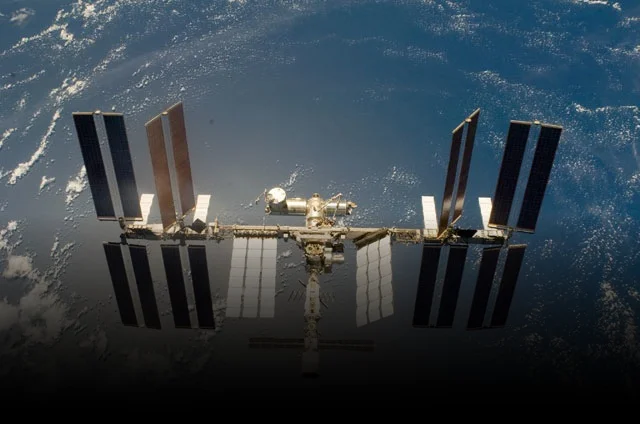
NASA’s recent ‘request for proposals’ marks a pivotal moment for the US space industry, initiating the transition from the International Space Station (ISS) to commercially operated private space stations in low-Earth orbit (LEO) by 2030. This strategic move aims to privatize LEO infrastructure, fundamentally altering how American space research and development will be sustained for decades.
For years, the US space community has anticipated a clear roadmap for what comes after the ISS, a unique marvel of international collaboration approaching its operational limits. Now, with this extensive 360-page solicitation, NASA is formally inviting American companies to step forward, not just as contractors, but as owners and operators of the next generation of orbital platforms. This isn’t merely about replacing hardware; it’s about fostering a robust, competitive commercial space economy that can drive innovation, reduce costs for taxpayers, and expand access to space for a wider array of users, from scientific researchers to commercial manufacturers.
Why NASA’s Shift to Private Space Stations Matters for US Innovation
The strategic shift from government-operated to privately-run LEO platforms signals a critical inflection point for American space commercialization, transforming how US scientific research, manufacturing, and exploration preparation will be funded and conducted. This transition underscores NASA’s commitment to evolving its role from primary operator to anchor tenant and customer, a model that has proven successful in other sectors of the space industry, such as launch services.
This move is expected to unlock significant economic opportunities across the United States. Establishing a market for private space stations will stimulate investment, create high-tech jobs, and foster competition among American aerospace firms. Companies that previously focused on government contracts will now compete to offer diverse services and facilities in orbit, potentially leading to more efficient designs and innovative operational models.
From a scientific standpoint, the shift could lead to more specialized and accessible research platforms. Instead of a single, multilateral station like the ISS, a commercial ecosystem might support multiple private stations tailored for specific research needs—perhaps one optimized for microgravity manufacturing and another for biological experiments. This diversification could dramatically increase the volume and variety of US-led science conducted in LEO, attracting a broader range of academic institutions and private sector research and development initiatives.
NASA’s motivation is clear: to ensure “a sustained human presence in LEO for crew members to perform science and exploration,” as explicitly stated in the cover letter accompanying the request for proposals. By outsourcing LEO operations, NASA aims to redirect its considerable resources and human capital towards its ambitious deep space exploration goals, such as the Artemis program to return humans to the Moon and eventually send astronauts to Mars. This represents a foundational pivot: moving from a primary government operator to a government as a primary customer model.
The Commercial Imperative: Building a Sustainable Space Economy
The International Space Station, operational for over two decades, has been an unparalleled success in human spaceflight, but its operational costs are substantial, estimated at several billion dollars annually. As the ISS approaches its planned retirement, potentially as early as 2030, the imperative to find a cost-effective successor has grown. Private industry, with its drive for efficiency and market-driven solutions, is seen as the natural inheritor of this crucial orbital real estate.
This is not a new concept; several private companies have been working for years on designing and developing such stations, eager to understand NASA’s precise requirements. The December 8 deadline for industry responses provides a concrete timeline for these players to submit their detailed proposals. NASA plans to select “two or more” contractors in this initial phase, aiming for a final decision in April. This multi-vendor approach is designed to foster competition and mitigate risks, ensuring robust options for the future of LEO operations.
The vision is for these private platforms to not only serve NASA’s needs but also cultivate a broader market. This includes offering space for international partners, private astronauts, scientific payloads from universities and corporations, and even new commercial ventures like in-space manufacturing or media production. The success of this model will largely depend on the ability of American companies to attract non-NASA customers, thereby creating a truly self-sustaining space economy.
What Capabilities Will Private LEO Platforms Need?
While the full 360-page document details specific requirements, the core capabilities NASA is seeking in these private space stations revolve around sustaining human life and facilitating diverse activities. These platforms must be capable of providing safe and reliable habitats for astronauts, complete with robust life support systems, power generation, and communications infrastructure. Furthermore, they need to offer flexible laboratory spaces for scientific experimentation and manufacturing processes.
Modularity and adaptability will be key design principles. Unlike the largely fixed architecture of the ISS, future private stations are expected to be more dynamic, allowing for expansion, upgrades, and configuration changes based on evolving market demands. This could mean a base station core that various companies attach their specialized modules to, ranging from advanced materials processing labs to dedicated bio-research facilities. The goal is to maximize utility and minimize long-term operational costs.
Beyond NASA’s immediate needs, these commercial platforms are envisioned to become hubs for a variety of users. Imagine pharmaceutical companies conducting protein crystallization research in microgravity, or semiconductor firms leveraging the vacuum of space for novel chip manufacturing. The private sector’s role will be to innovate not just in construction, but in identifying and cultivating these new markets, ultimately democratizing access to LEO for a wider range of American enterprises and researchers.
Navigating the Transition: Challenges and Opportunities for US Stakeholders
The transition to private space stations presents both significant opportunities and formidable challenges for American stakeholders. One primary challenge lies in ensuring a seamless and safe handoff from the ISS to its commercial successors. NASA and its chosen contractors will need to meticulously plan and execute this transfer of operations, maintaining continuous human presence in LEO without interruption to critical research or operational capabilities.
Funding stability for these private ventures is another crucial factor. While NASA will act as an initial anchor tenant, the long-term viability of these stations will depend on their ability to attract a diverse customer base beyond government contracts. US policy makers and financial institutions will play a vital role in creating an environment that encourages private investment and innovation in this emerging sector. Regulatory frameworks, too, must adapt to address the complexities of commercial operations in orbit, from liability to orbital debris management.
Despite these hurdles, the opportunities for the United States are immense. This initiative cements American leadership in the burgeoning space economy, positioning US companies at the forefront of orbital infrastructure development. It promises to foster a vibrant ecosystem of innovation, driving advancements in robotics, materials science, and life support systems. Moreover, by offloading routine LEO operations, NASA can sharpen its focus on the audacious missions that push the boundaries of human exploration further into the solar system, reinforcing America’s strategic long-term goals in space.
Key Takeaways for US Tech Professionals and Enthusiasts
- NASA is transitioning from the International Space Station (ISS) to commercially operated private space stations in low-Earth orbit (LEO) by 2030.
- The agency has issued a 360-page ‘request for proposals’ to the US commercial space industry, with responses due December 8 and selections of ‘two or more’ contractors by April.
- This strategic shift creates a significant new market for American aerospace companies, fostering innovation, job growth, and a diversified space economy.
- Private LEO platforms are expected to offer more specialized and accessible facilities for scientific research, advanced manufacturing, and other commercial ventures.
- The move allows NASA to refocus its resources on deep space exploration missions, such as the Artemis program, while ensuring a sustained US presence in LEO through commercial partners.
FAQ
What is NASA’s plan for private space stations?
NASA’s plan is to transition from directly operating the International Space Station to utilizing privately owned and operated commercial space stations in low-Earth orbit. This strategy aims to ensure a continuous human presence in LEO for science and exploration, while enabling NASA to focus its resources on deep space missions beyond Earth’s orbit.
When will private space stations replace the ISS?
NASA anticipates that privately developed space stations will succeed the International Space Station as early as 2030. The current ‘request for proposals’ is a critical step in selecting the commercial partners who will design, build, and operate these next-generation orbital platforms.
What does this mean for US commercial space companies?
For US commercial space companies, this initiative represents a substantial new market opportunity to develop, own, and operate orbital infrastructure. It encourages competition, innovation, and the creation of new services in space, fostering a more robust and self-sustaining commercial space economy.
How will this benefit scientific research?
The shift to private space stations is expected to benefit scientific research by potentially offering more diverse, specialized, and accessible research platforms in LEO. This could lead to an increase in the volume and variety of microgravity experiments, attracting a wider range of academic and corporate researchers to conduct cutting-edge science in space.
