
NASA’s LEO Dilemma: The Oligopoly Trap of Commercial Space
- Space
Arjun Vedanta
- 0
- 5 minutes read
The Architect and the Market Reality
For twenty years, NASA has meticulously laid the groundwork for a private space economy in low-Earth orbit, spending billions to cultivate a vibrant ecosystem where it would eventually become just another customer. This April, the agency reiterated its commitment: “NASA supports a robust commercial space economy that advances American industry and promotes technological discovery through in-space work and research.” The intention is noble, a long-term vision of a self-sustaining commercial frontier. Yet, the current trajectory suggests not a bustling marketplace, but an increasingly concentrated landscape, leaving NASA dangerously reliant on the very few titans it helped create.
The agency’s initial program, launched two decades ago, aimed to “stimulate efforts within the private sector to develop and operate safe, reliable, and cost-effective commercial space transportation systems.” This was a necessary kickstart, an injection of government capital and expertise into an industry that, left entirely to market forces, might never have achieved orbit. But what began as a stimulus has evolved into a dependency, an uncomfortable reality where NASA’s future access to space is tied less to a diverse industrial base and more to a handful of dominant providers.
This isn’t merely an academic concern; it’s a structural fault line. When the primary customer also acts as the primary venture capitalist, the lines blur. The desired outcome—a diverse array of providers competing on price and innovation—is often superseded by the reality of network effects and the inherent advantages of incumbents. The dream of being “one of many customers” risks morphing into the predicament of being a captive one, negotiating with entities that grew powerful precisely because of NASA’s patronage.
The Unintended Consequence of Success
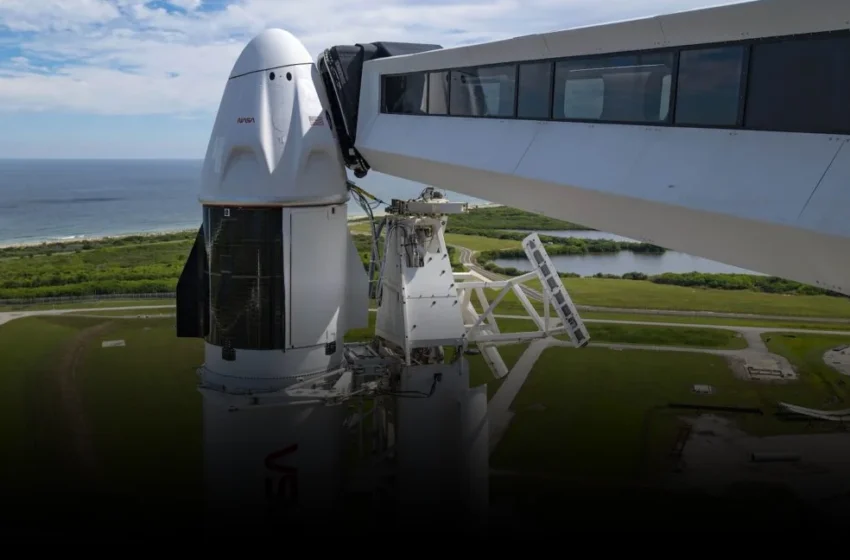
NASA’s drive to commercialize LEO was born from a genuine need to reduce operational costs for the International Space Station and free up resources for deep space exploration. The commercial cargo and crew programs, which brought SpaceX’s Dragon capsule to prominence, successfully demonstrated that private companies could reliably ferry goods and astronauts to orbit. This success, however, has had an unintended, concentrating effect on the market.
The investment required to develop space launch and operations capabilities is astronomical, a barrier to entry that only a few companies can surmount, even with government contracts. Consequently, the commercial LEO market, particularly for heavy lift and crewed missions, has consolidated around a select few players. While the agency’s 2024 philosophy speaks of fostering “innovation and collaboration within the American space industry,” the practical outcome is an environment where **truly independent market growth struggles against the gravitational pull of established giants**.
Consider the incentive at play here. Why would NASA continue to frame its strategy this way? The agency benefits from framing its commercial partners’ success as a triumph of its own long-term vision. It justifies past expenditures and reinforces a narrative of foresight and innovation. But this framing conveniently sidesteps the growing vulnerability of having critical national space capabilities concentrated in so few hands, a vulnerability that would be unthinkable in other sectors of national infrastructure.
The agency’s foundational premise, that its funding would eventually yield a true open market, is proving difficult to manifest. Instead, we see an emergent oligopoly, where the exit strategy for NASA — stepping back entirely — is hampered by the lack of genuinely diverse alternatives to the very companies it helped bootstrap into dominance. This isn’t just about launch vehicles; it extends to the nascent commercial space stations and in-orbit services, where again, a few well-funded entities are positioned to dominate.
Beyond the American Narrative
From an international perspective, the insular focus on “American industry”, while understandable from a national security standpoint, further complicates the notion of a globally diverse, competitive LEO economy. Other nations and consortia are also developing their own capabilities, often with state backing, but the aspiration for a truly open, multilateral space economy remains distant when the foundational premise is a national industrial champion model.
The dilemma NASA faces is profound: continue to underwrite and cultivate a commercial space sector that, by its very nature, tends towards consolidation, or risk losing critical LEO access and capabilities. The former leads to deep reliance; the latter risks an operational vacuum. There are no easy answers. The current trajectory for orbital logistics and in-space manufacturing appears set, at least for the foreseeable future, to benefit a select group of aerospace contractors rather than a thriving ecosystem of new space startups.
The vision of a self-sustaining LEO economy, where NASA is merely a discerning customer, remains appealing. But the reality is that the agency might find itself less like a customer in a competitive market and more like a long-term anchor tenant in a mall it built, dependent on the few shops it convinced to open. This isn’t the failure of commercial space; it’s the uncomfortable success of a specific, government-driven commercialization model, and the structural implications demand a sharper analysis than typically offered from within Silicon Valley’s boosterism.
