
NASA’s Sortie Suit Pivot: A Pragmatic Retreat from Ambitious Lunar Exploration
- Space
Arjun Vedanta
- 0
- 5 minutes read
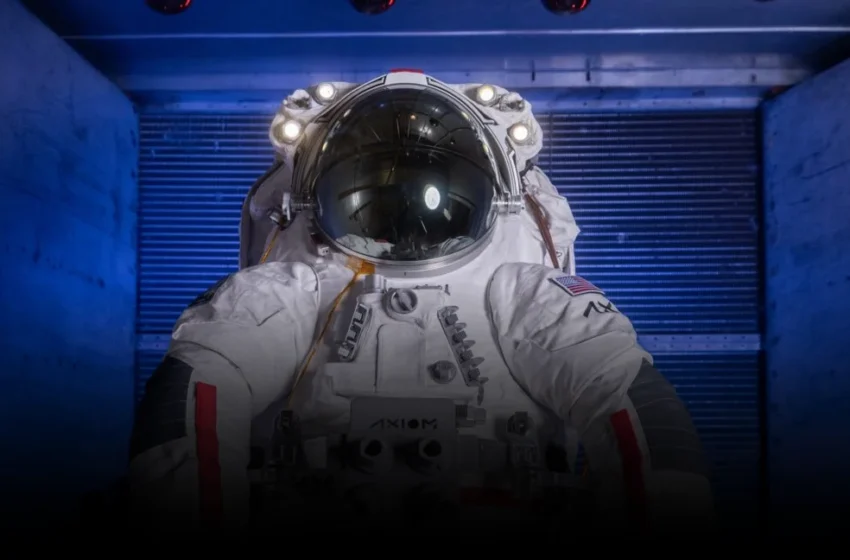
The Price of Pace: A Simplified Moonwalk
NASA’s quiet decision to embrace a simplified “Sortie Suit” for its initial lunar surface missions isn’t merely a technical adjustment; it’s a telling recalibration of ambition for the Artemis program. Announced internally and quickly leaked, this shift, championed by Artemis Program Manager Jeremy Parsons, signifies a profound strategic pivot. The agency, working with Axiom Space, is prioritizing speed and the raw act of getting boots on the Moon by 2028 over the more complex, long-duration exploration capabilities originally envisioned for the lunar south pole.
This isn’t about innovating toward greater efficiency, it’s about making fundamental trade-offs. The explicit goals — to lower the mass, reduce complexity, and simplify interfaces for initial landings using SpaceX and Blue Origin vehicles — underscore a critical point: robust, multi-day Extravehicular Activity (EVA) with extensive scientific instrument deployment is, for now, taking a backseat. This means fewer samples, less in-situ resource utilization (ISRU) experimentation, and constrained human-assisted fieldwork. It’s a pragmatic retreat, framing a less capable suit as an acceleration measure.
Recalibrating Lunar Ambitions, Not Just Hardware
The original vision for Artemis was bold, promising not just a return to the Moon, but a sustained human presence, ultimately leveraging the lunar south pole’s potential water ice. This implied suits designed for extended missions, offering greater dexterity, enhanced life support duration, and better integration with future habitats and research outposts. The “Sortie Suit” approach, by its very definition, suggests a rapid in-and-out operation – a flag-and-footprint exercise designed to hit a political deadline rather than lay foundational scientific groundwork.
Consider the broader implications for deep space exploration. Every mission sets precedents and shapes future development cycles. If the initial suits are intentionally simpler, it defers the development and testing of the more advanced, durable suits necessary for building a true lunar base or operating around an orbital Gateway. NASA, under Parsons’ direction, is clearly driven by the imperative to deliver a visible success – an astronaut on the Moon – which satisfies political timelines and secures continued funding in a competitive budgetary environment. This incentive, while understandable, risks sacrificing long-term scientific and strategic gains for immediate gratification.
The Global Space Race: A New Standard?
The global space community is watching. Other nations, from ESA to JAXA and the rapidly advancing CNSA, are developing their own lunar capabilities, often with a different cadence and strategic focus. For NASA to overtly simplify its surface operations sends a message about what constitutes “success” in this phase of lunar return. It’s a move that could be interpreted as either shrewd agility or an admission of significant internal schedule and cost pressures. While commercial partners like Axiom Space stand to benefit by delivering hardware quickly, even if it’s less ambitious, the long-term risk is that this prioritization of speed sets a lower bar for future lunar missions, where comprehensive capability is continually compromised.
The agency’s pivot is not a technical failure, but a strategic redefinition. It indicates a prioritization of the launch window over the potential breadth of scientific discovery and the resilience of future lunar infrastructure. Getting to the Moon by 2028 is paramount, even if it means doing less once we get there. This isn’t a flaw in the suit itself, but a candid acknowledgment that the path to a sustained lunar presence will likely be built on a series of carefully managed, and often constrained, stepping stones.
The Long Shadow of a Simplified Step
The shift to a “Sortie Suit” is more than a footnote in an internal memo; it’s a tangible reflection of the intense pressures facing complex space programs. It reveals a NASA willing to make difficult trade-offs to meet aggressive timelines, potentially at the expense of comprehensive scientific exploration in the immediate term. While the image of astronauts touching down by 2028 will undoubtedly be a powerful one, the lasting consequence might be a Moon visited, rather than a Moon truly explored and understood in this initial phase.
This decision raises questions about the scope and depth of humanity’s return to the Moon. Are we merely performing fly-bys with feet on the ground, or are we truly committing to the ambitious scientific and industrial future that the lunar frontier promises? The answer, for now, seems to lean towards the former, trading some of our grandest aspirations for the certainty of an earlier arrival.
