
New York Drill’s Pandemic Preparedness Failure Demands Tech Solutions for US Healthcare
- Artificial Intelligence
Arjun Vedanta
- 0
- 12 minutes read
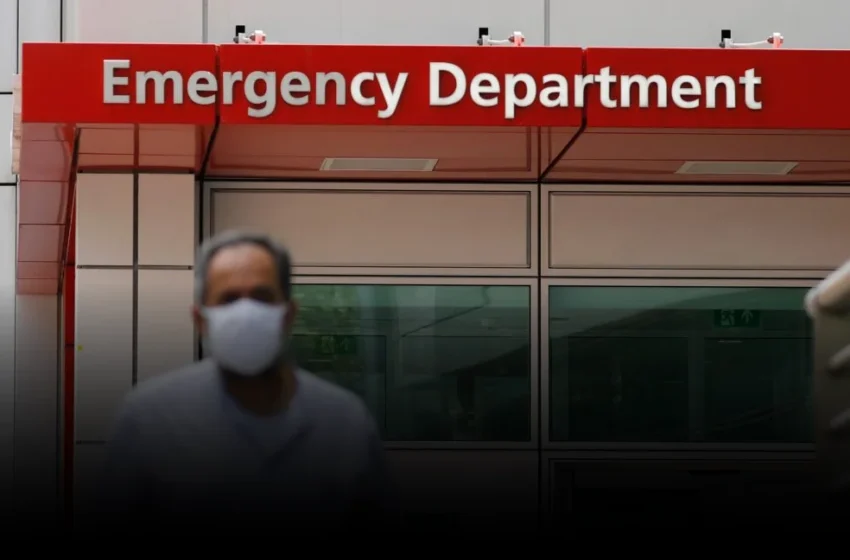
A recent regional drill in New York exposed alarming gaps in US healthcare facilities’ ability to respond to a potential pandemic, with 40 percent of participating sites failing fundamental requirements. This critical shortcoming underscores the urgent need for advanced technology integration, robust data infrastructure, and innovative training methods to fortify the nation’s public health defenses.
While COVID-19 starkly illuminated weaknesses in national and global pandemic strategies, this new study, published in the Morbidity and Mortality Weekly Report, brings the spotlight to the foundational, local level of preparedness. Health officials in New York conducted a simulated scenario involving a patient with a mystery infection carrying pandemic potential. The results were concerning: responses were slow, appropriate use of personal protective equipment (PPE) was inconsistent, and only 60 percent of facilities met basic compliance standards. This isn’t just a local issue; it reflects systemic vulnerabilities across the US healthcare landscape that demand technological intervention.
What Did the New York Drill Reveal About US Preparedness?
The New York drill served as a crucial stress test for frontline healthcare capabilities. Officials reported that the facilities demonstrated slow response times and inconsistent application of basic safety protocols essential for containing a novel pathogen. Specifically, the study highlighted that 60% of facilities managed to pass the foundational elements of the test, leaving a significant 40% that did not. These findings are not merely statistics; they represent potential points of failure that could escalate a localized outbreak into a widespread public health crisis.
As the officials stated in their published report, the drills "identified needs for health care workers and health care facility staff member training to achieve earlier identification, masking, and isolation of potentially infectious febrile patients." This quote encapsulates the core challenges: human error in identification and protocol adherence, which technology is uniquely positioned to address. The immediate implication for US tech professionals is clear: there’s an expansive and critical domain for innovation in public health infrastructure.
How Can Technology Enhance Rapid Detection and Triage?
The initial moments of a novel disease outbreak are paramount. Current manual processes for patient identification and triage, as highlighted by the New York drill, are often too slow and prone to human error. This is where advanced technologies can provide immediate, scalable improvements.
- AI-Powered Symptom Checkers and Triage Bots: AI can rapidly process patient-reported symptoms, identify potential high-risk cases, and guide individuals to appropriate care pathways or telehealth consultations. Companies like Buoy Health and K Health are already deploying AI in primary care settings, offering a template for pandemic response.
- IoT-Enabled Monitoring: Wearable devices and smart sensors within healthcare facilities could monitor patient vital signs, detect anomalies indicative of infection, and even track staff interactions to identify potential exposure pathways, greatly accelerating contact tracing.
- Telehealth and Virtual Consultations: Expanding telehealth infrastructure allows for initial screening and consultation without physical contact, reducing the risk of viral spread within clinics and hospitals. Platforms from providers like Teladoc Health and Amwell offer robust, secure channels for these interactions, which proved invaluable during the early phases of COVID-19.
- Digital Patient Intake Systems: Streamlining patient registration with digital forms that incorporate symptom screening questions can flag potential threats before a patient even enters a waiting room, optimizing facility flow and reducing exposure risk.
These tools move beyond traditional paper-based or even basic electronic health record (EHR) systems, offering real-time data capture and predictive analytics that can significantly cut down response times and enhance the accuracy of initial assessments.
Bridging the Data Chasm: Interoperability and AI for Early Warning
A fragmented data landscape crippled early responses during COVID-19. Healthcare facilities, public health agencies, and research institutions often operate on disparate systems, hindering rapid information sharing. The drill’s findings about slow responses underscore this deficiency. The answer lies in robust, secure, and interoperable health information technology (HIT) infrastructure.
The Role of Interoperability Standards
The Office of the National Coordinator for Health Information Technology (ONC) has been pushing for greater interoperability using standards like FHIR (Fast Healthcare Interoperability Resources). This allows different EHR systems (e.g., Epic, Cerner) to communicate seamlessly. In a pandemic scenario, this means:
- Faster Case Reporting: Automated, real-time reporting of suspected cases from clinics to local and state public health departments.
- Centralized Data Hubs: Secure cloud-based platforms that aggregate de-identified patient data, allowing epidemiologists to track disease spread and identify clusters rapidly.
- Resource Allocation Optimization: Public health officials can make data-driven decisions on where to send PPE, ventilators, and staff based on real-time disease prevalence and facility capacity.
AI-Driven Predictive Analytics
Beyond simply sharing data, artificial intelligence can analyze this aggregated information to identify emerging threats before they become widespread. AI models can scour diverse data sources:
- Clinical Data: Analyzing patterns in patient symptoms, diagnostic test results, and prescriptions to detect unusual spikes.
- Environmental Data: Integrating wastewater surveillance, air quality, and even weather patterns to predict pathogen behavior.
- Social Media and News Feeds: Monitoring unusual health-related chatter or reports to identify potential novel outbreaks.
For example, companies like BlueDot leverage AI to track infectious diseases globally, analyzing news reports, airline ticketing data, and animal health information to predict spread. Implementing such systems at a national level, connected to local healthcare facilities, could provide US decision-makers with crucial lead time.
Advanced Training and Simulation: Beyond Traditional Drills
The "spotty" use of PPE and identified training needs from the New York drill point to a critical gap in healthcare worker readiness. Traditional, infrequent drills, while important, often fall short in preparing staff for the high-pressure, rapidly evolving environment of an actual pandemic. Here, extended reality (XR) technologies offer a transformative solution.
| Training Method | Traditional Drills | XR (VR/AR) Simulations |
|---|---|---|
| Frequency & Scale | Infrequent, resource-intensive, limited participants | On-demand, scalable to thousands, repeatable |
| Realism | Relies on role-playing, limited environmental control | Highly immersive, realistic scenarios, customizable pathogens |
| Safety | Low-risk, but mistakes have minor real-world consequences | Zero-risk environment for critical errors |
| Feedback & Data | Subjective observation, limited data capture | Objective performance metrics, AI-driven feedback, skill tracking |
| Cost | High logistical costs per session | Higher initial investment, lower per-user cost over time |
Virtual Reality (VR) and Augmented Reality (AR) can create hyper-realistic simulations of a pandemic environment. Healthcare workers can practice donning and doffing PPE, performing isolation protocols, and navigating complex triage scenarios without any risk to themselves or patients. These platforms can track performance, provide immediate feedback, and adapt scenarios based on individual learning needs. Companies like Medical Augmented Reality and Osso VR are already developing surgical training simulations; adapting this technology for infectious disease preparedness is a logical and necessary next step for US hospitals.
Such technologies can democratize access to high-quality training, allowing every healthcare professional, from rural clinic staff to urban emergency room personnel, to achieve competency in critical pandemic response skills. This scalable approach significantly addresses the training needs identified by New York health officials.
The Investment Imperative for Future Preparedness
The cost of underpreparedness for a pandemic is astronomical, measured in trillions of dollars in economic loss and, more importantly, millions of lives. The New York drill serves as a stark reminder that complacency is a luxury the US cannot afford. Investing in robust health technology infrastructure is no longer a luxury but a critical national security and economic imperative.
This means sustained funding for:
- Public Health IT Modernization: Upgrading antiquated systems at the Centers for Disease Control and Prevention (CDC) and state/local health departments to support real-time data collection and analysis.
- Interoperability Grants: Incentivizing healthcare systems to adopt and fully implement modern interoperability standards.
- R&D for Emerging Tech: Funding research and development into new AI algorithms, diagnostic tools, and robotic solutions for healthcare.
- Workforce Training Solutions: Subsidizing the adoption of XR training platforms in healthcare education and continuing professional development.
The collaboration between government agencies, private tech companies, and healthcare providers is essential. Without proactive investment and a coordinated strategy to integrate these technological solutions, future drills—and unfortunately, future pandemics—will likely yield similarly disappointing results.
Key Takeaways for US Healthcare Preparedness:
- Local Failure Highlights Systemic Gaps: The New York drill’s 40% failure rate indicates critical deficiencies in basic pandemic response protocols at the frontline.
- Tech Solutions are Crucial: AI for rapid detection, IoT for monitoring, and telehealth for initial screening can significantly improve early response.
- Data Interoperability is Non-Negotiable: Seamless data sharing between healthcare facilities and public health agencies, underpinned by standards like FHIR, is essential for effective outbreak management.
- Advanced Training is Key: VR/AR simulations offer scalable, realistic, and data-driven training for healthcare workers, improving PPE use and isolation protocols.
- Proactive Investment is Imperative: Sustained public and private funding for health IT modernization and R&D is vital to prevent future preparedness failures.
What technologies can improve early pandemic detection?
Artificial intelligence, when integrated with various data sources like clinical records, wastewater surveillance, and even social media, can rapidly identify unusual patterns and predict emerging outbreaks. IoT sensors in healthcare settings and wearable devices can monitor patient vitals for anomalies, providing early warnings.
How can healthcare facilities improve staff training for pandemic response?
Virtual reality (VR) and augmented reality (AR) simulations offer highly realistic and safe environments for healthcare workers to practice critical skills like proper personal protective equipment (PPE) use, patient isolation, and triage protocols. These platforms provide objective feedback and can be scaled to train large numbers of staff efficiently.
Why is data interoperability critical for US public health?
Data interoperability ensures that information can flow seamlessly and securely between different healthcare systems, clinics, and public health agencies. This enables faster case reporting, real-time tracking of disease spread, and optimized allocation of critical resources during a public health crisis.
What did the New York drill specifically find lacking?
The drill revealed that many facilities had slow response times, inconsistent and spotty use of appropriate personal protective equipment (PPE), and general training deficiencies in achieving earlier identification, masking, and isolation of potentially infectious patients.
