
OpenAI’s Executive Exodus Unveils Strategic Turbulence Before IPO
- AI Tools
Arjun Vedanta
- 0
- 4 minutes read
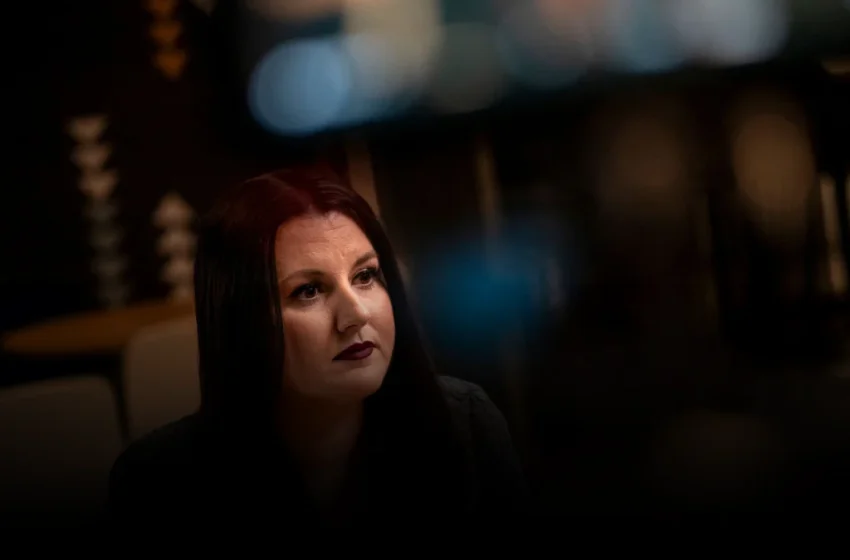
OpenAI’s Precarious Leadership Bench
Fidji Simo, the executive tapped to knit together OpenAI’s sprawling business and product operations, is stepping down from her full-time role as CEO of Applications. Her transition to a part-time advisory capacity, ostensibly due to a protracted neuroimmune condition, leaves an already thin executive bench reeling at a critical juncture. This isn’t merely a high-profile departure; it’s a stark indicator of unresolved structural weaknesses within a company barreling towards an IPO with an eye-watering $852 billion valuation.
Simo’s 2025 arrival was meant to bring order, centralizing key functions under her purview and allowing Sam Altman to refocus on the foundational research, compute, and safety aspects. Instead, the past year has seen a succession of senior exits—CMO Kate Rouch for cancer recovery, CPO Kevin Weil for undisclosed reasons—alongside COO Brad Lightcap shifting into a vague ‘special projects’ role. The common thread is not simply medical leave or new opportunities elsewhere, but a sustained churn that suggests a deeper lack of operational coherence at the very top.
The Consumer Conundrum and an Enterprise Pivot
Simo’s primary mandate was to invigorate OpenAI’s consumer business, particularly ChatGPT’s growth. Yet, the past year has seen the product’s trajectory cool, missing internal revenue targets and forcing a strategic pivot. OpenAI is now leaning ‘harder into coding tools,’ an arena where it currently trails rival Anthropic.
The timing of Simo’s announcement, coinciding with the launch of new GPT-5.6 models—Sol, Terra, and Luna—and the enterprise-focused ChatGPT Work agent, feels less like coincidence and more like a carefully managed distraction. The rapid-fire product announcements, framed as direct competitive jabs at Anthropic, effectively attempt to reframe an internal instability as an external offensive. But a robust product pipeline cannot mask a vacuum of stable, experienced leadership required to execute on such ambitious targets.
The company’s desperation to pivot towards more defensible, revenue-generating enterprise solutions is palpable, especially given the slowing consumer adoption curve. While Denise Dresser, the new Chief Revenue Officer from Slack and Salesforce, brings much-needed enterprise gravitas, her capabilities are constrained without a stable product and business head above her. This executive instability makes any major strategic reorientation far more challenging to implement effectively across a fast-growing, complex organization.
Talent Wars and the Equity Calculus
OpenAI has been aggressively adjusting its employee equity policies, first shortening its vesting cliff from 12 to six months, then eliminating it entirely in December. Internally, Simo framed this move as empowering employees to ‘take risks’ without fear of losing equity if let go early. This is a staggering admission of the precarity felt within a company projecting to spend $6 billion on stock-based compensation in 2025 alone.
The elimination of the vesting cliff, while seemingly employee-friendly, highlights the intense AI talent war and OpenAI’s precarious position in it. It suggests that the company is struggling not just to attract, but crucially, to retain top talent amidst the internal churn and strategic shifts. Executive equity packages, by nature, are often individually negotiated, meaning these company-wide changes likely have little bearing on the major departures, further underlining the distinct, unaddressed reasons for leadership turnover.
The true consequence of Simo’s departure, combined with other recent executive exits and a softening consumer product, is a critical vulnerability in OpenAI’s operational leadership and strategic clarity. This instability comes precisely as it prepares for a potential IPO and intensifies a competitive battle it is currently losing in key areas. For a company that once appeared to have an unassailable lead, the narrative has shifted from inevitable dominance to an urgent, high-stakes scramble for both talent and market share.
