
Quantum Leap from the Margins: How ‘Side Hustles’ Are Redefining High-Stakes Biotech Funding
- Artificial Intelligence
Arjun Vedanta
- 0
- 5 minutes read
The Paradox of “Scary Science” Funding
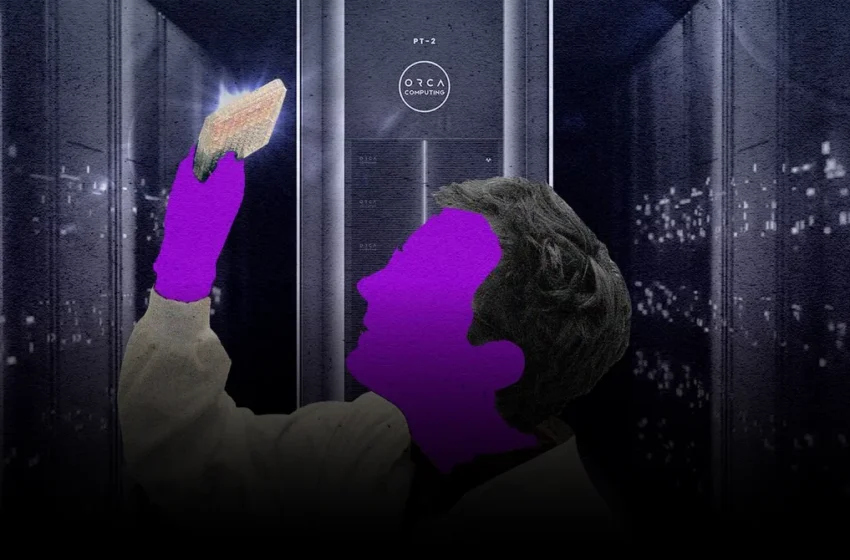
A recent achievement from the Technical University of Denmark (DTU) didn’t just push the boundaries of drug discovery; it spotlighted a fundamental flaw in how the world funds its most ambitious scientific endeavors. Researchers, cobbling together unspent funds and working weekends, used a hybrid quantum-AI system to generate novel peptides. This wasn’t a well-bankrolled moonshot, but a testament to sheer tenacity in the face of institutional risk aversion.
Timothy Patrick Jenkins, the DTU professor who led the project, didn’t mince words: “most innovative science is too scary for foundations.” This statement cuts to the core of the challenge. Grant applications often demand immediate, measurable outcomes, clear methodologies, and low risk profiles. Yet, the truly transformative breakthroughs — those that combine nascent fields like quantum computing with complex biological models — are inherently speculative. They defy neat boxes and predictable timelines, making them a hard sell for committees prioritizing safety over audacity.
The team’s success in creating more effective peptides, especially where data was sparse, is precisely the kind of outcome that could redefine personalized medicine and accelerate vaccine development for understudied populations. Their work directly addresses the systemic lack of diverse genetic data in medical research, a gap that often leaves entire continents underserved. But it took a “side hustle” mentality, born out of necessity, to even get this far. This isn’t just about resourcefulness; it’s an indictment of a system that often sidelines its most promising, if unproven, ideas.
The Commercial Imperative and Academic Scramble
This academic ingenuity isn’t happening in a vacuum. It intersects directly with the intense commercial pressure facing nascent technologies, particularly quantum computing. ORCA Computing, the British startup behind the printer-sized quantum machine used by DTU, needs demonstrable, near-term applications to justify its existence and attract investment. CEO Richard Murray openly acknowledges that quantum technology “has not ever had really clear near-term examples of usefulness,” which explains why “lots of industrial companies think quantum is hazy and far away.”
This is where the incentive analysis becomes critical. While academics like Jenkins are driven by scientific curiosity and the profound societal impact of their work, companies like ORCA are driven by market validation. The DTU team’s breakthrough, despite its limitations—as PhD student Jonathan Funk noted, “Quantum is still not very powerful, so the level of complexity that we could encode wasn’t a normal-sized antibody”—provides exactly that validation. It’s a proof-of-concept for hybrid computing in biotechnology, a concrete example that can be leveraged for future partnerships with industrial giants like BP or Toyota.
The market’s demand for immediate “use cases” for quantum computing, though seemingly pragmatic, might be inadvertently subsidizing speculative academic research that traditional grant systems hesitate to touch. This creates a strange, almost parasitic, but ultimately beneficial, symbiosis. Academics, struggling for funds for their riskiest ideas, find a lifeline in companies desperate to demonstrate commercial viability. It’s a transaction that, while effective in this instance, highlights a structural fragility: groundbreaking scientific exploration shouldn’t have to rely on the whims of venture capital or the strategic maneuvering of startups.
Unlocking Neglected Diseases from the Margins
The true beneficiaries of this unconventional pathway might well be those suffering from conditions that attract little research money. Generative AI workflows are particularly valuable in neglected diseases, Jenkins observed. His team is already eyeing applications for synthetic antidotes for snakebite venom—a global health crisis disproportionately affecting the world’s poorest, yet chronically underfunded, populations.
This is the sharpest observation one can make: the existing ecosystem for scientific funding and technological commercialization, despite its vast resources, often pushes the most impactful, altruistic applications of advanced technology to the fringes. These are the projects deemed too risky for standard grants, too niche for immediate corporate R&D, and too long-term for typical investment cycles. Yet, they are precisely where the most profound advancements for global equity and health stand to emerge.
The DTU team’s quantum-AI peptide discovery isn’t just a scientific triumph; it’s a blueprint for navigating a broken funding landscape. It demonstrates that combining computational biology with emerging hybrid computing systems can unlock solutions for personalized immunotherapies and address historical biases in medical data. But it also raises a stark question: how many other potential breakthroughs, vital for the future of medicine and human well-being, are languishing in researchers’ spare time because the systems designed to support them are too timid to take a leap?
