
Politicizing Public Health: A Perilous Precedent for Global Tech Regulation
- Tech
Arjun Vedanta
- 0
- 5 minutes read
Undermining Regulatory Independence: A Dangerous Precedent
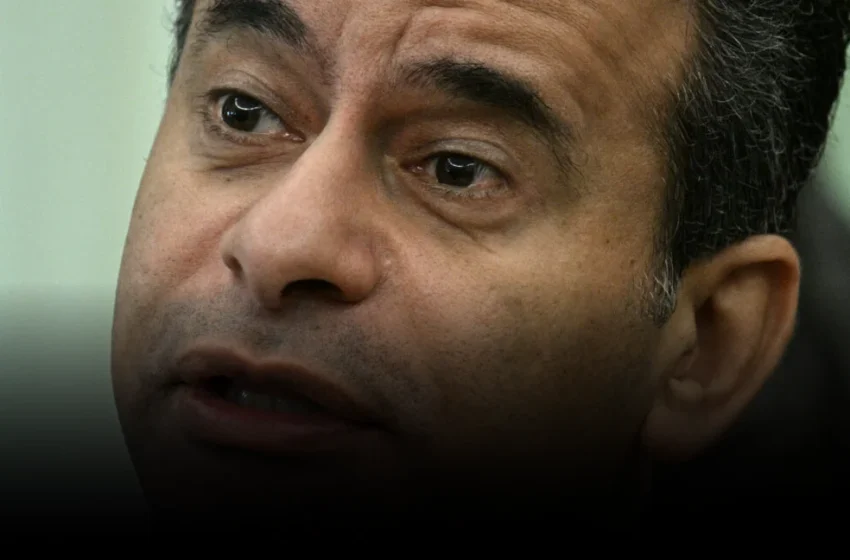
The White House’s reported decision to sign off on firing Marty Makary, culminating in his resignation this Tuesday, points to a direct executive override of public health expertise. Makary’s alleged resistance to fast-tracking certain fruity e-cigarette approvals positioned him squarely against an administration prioritizing quick market entry for specific consumer technologies. The immediate beneficiaries are obvious: the companies pushing these products, gaining unfettered access to a lucrative, if controversial, market segment.
But the damage extends far beyond quarterly earnings reports. Independent regulatory agencies, from the FDA to the European Medicines Agency (EMA) or Singapore’s Health Sciences Authority (HSA), are designed as crucial bulwarks. Their mission is to evaluate safety and efficacy without political interference, a principle fundamental to public trust. When an administration bypasses this process, it signals to future appointees that scientific consensus can be secondary to political expediency, fostering an environment where regulatory capture becomes an institutional norm rather than an isolated incident.
This episode should send shivers through any observer of global tech policy. If a well-established body like the FDA can be so overtly pressured on a product with clear public health implications, what does it mean for the nascent, often ambiguous, regulatory frameworks struggling to keep pace with fields like synthetic biology or quantum computing?
The Global Echoes of Regulatory Capture
From my vantage point covering global tech from Geneva and Singapore, the Silicon Valley narrative often overlooks how these domestic US squabbles are perceived and replicated internationally. What appears as an isolated power play in Washington can quickly morph into a template for nations seeking to accelerate their own technology sectors, potentially at the expense of robust oversight.
Consider the rush for competitive advantage in biotechnology. If the US signals that regulatory bottlenecks can be politically ‘solved,’ developing nations might interpret this as a green light to loosen their own safety protocols to attract investment. The global race for AI leadership, for instance, already sees nations grappling with ethical guidelines. If regulatory bodies are seen as politically pliable, the incentive for companies to adhere to stringent, but slow, ethical frameworks diminishes significantly.
This erosion of trust in scientific independence has cascading effects on international collaborations and standards harmonisation. Why would a European regulator, deeply committed to stringent data privacy or environmental impact assessments, readily collaborate with a US counterpart whose decisions appear susceptible to arbitrary executive decrees? The perception of regulatory integrity is not just a domestic concern; it’s a global currency in tech diplomacy.
The implications are particularly sharp for areas like personalized medicine or novel agri-tech, where public acceptance hinges heavily on transparent, scientifically sound regulatory approval. Undermining this trust means greater public skepticism and, paradoxically, could slow down true innovation in the long run.
When Policy Meets Product: The Tech Industry’s Uneasy Future
The e-cigarette controversy, while seemingly niche, is a canary in the coal mine for the broader consumer technology landscape. Developers pushing radical new brain-computer interfaces, AI systems making critical decisions, or advanced robotics entering daily life will eventually face their own gauntlet of regulatory review. The precedent set by Makary’s resignation suggests these reviews might increasingly be subject to political rather than scientific scrutiny.
This creates a deeply unsettling environment. On one hand, venture capitalists and entrepreneurs will undoubtedly cheer faster paths to market. On the other, it risks a significant degradation of consumer safety and ethical adherence. The loudest voices in industry or the most politically connected will gain an unfair advantage, sidestepping the rigorous testing that underpins long-term public trust and product viability. This is my most skeptical observation: a future where regulatory agility is celebrated, but only because it means less scrutiny, not more efficiency.
What is the incentive for this approach? Beyond the immediate political win of appearing ‘pro-business’ or ‘anti-red tape,’ it feeds a narrative that innovation must always outpace regulation, even when public health is at stake. It frames oversight as an impediment, not a safeguard. This short-sighted view fundamentally misunderstands the role of thoughtful regulation in fostering sustainable innovation and consumer confidence – something global tech companies often learn the hard way through costly recalls or public backlash.
The tech industry, often a vocal advocate for open markets, has a vested interest in the perceived fairness and independence of regulatory bodies. When these institutions become battlegrounds for political agendas, the entire ecosystem suffers, from the smallest startup to the largest multinational. The true meaning of Makary’s exit is a warning: the lines between innovation, commerce, and political power are blurring, and that confusion ultimately serves no one well.
