
Puerto Rico’s Water Crisis: A Blueprint for Neglect in Plain Sight
- Government & Policy
Arjun Vedanta
- 0
- 4 minutes read
The Self-Inflicted Thirst of a Rain-Soaked Island
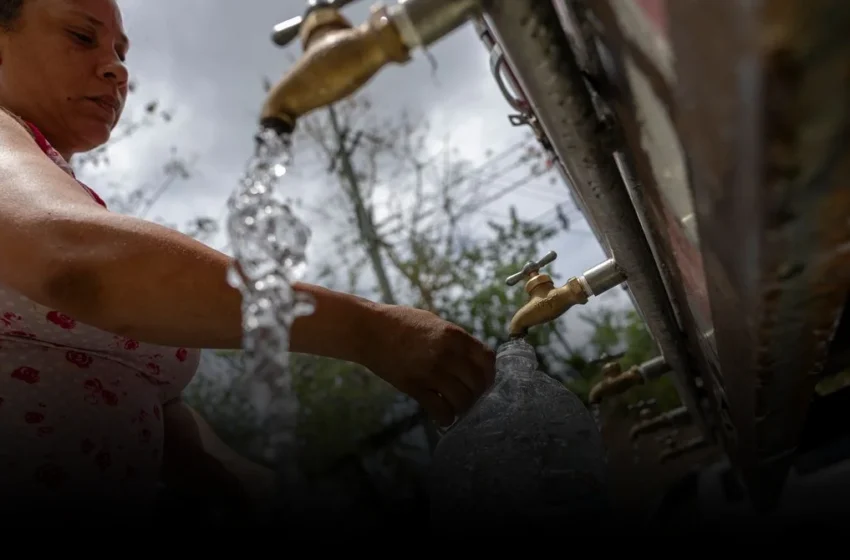
Puerto Rico, an island routinely drenched by between 30 and 169 inches of rainfall annually, is rationing water. For 180,000 households, taps go dry two days a week, a stark reality in the wake of July’s record-breaking dry spell. This isn’t merely a consequence of drought; it is a profound failure of governance and infrastructure, illustrating a systemic paralysis that prevents the adoption of obvious, cost-effective climate resilience. The island’s predicament is a potent warning, one that Silicon Valley’s futurists, fixated on digital disruption, often overlook: real-world solutions are routinely stymied not by technology, but by entrenched political inertia.
The contradiction is palpable. While residents face intermittent water access, the Puerto Rico Aqueduct and Sewer Authority (PRASA) loses an astounding 60 percent of the island’s drinking water to dilapidated pipes before it ever reaches customers. This colossal waste, exacerbated by ruptures in critical arteries like the 72-inch Superaqueduct, defines the immediate crisis. Yet, even as headlines scream about historic droughts, billions of gallons of rainwater fall unchecked onto rooftops, flowing into an overwhelmed storm system instead of being captured for use. This isn’t a problem without a solution; it’s a problem actively ignored.
The Uneasy Alliance of Abundance and Apathy
The solution, or at least a significant part of it, has been staring Puerto Rico in the face for decades: rainwater harvesting. Fernando Abruña, a local architect, estimates a million households could collect 30 billion gallons a year, a significant offset against the 72 billion gallons of residential use. This isn’t theoretical; it’s a proven, decentralized infrastructure. The US Virgin Islands, another Caribbean territory, requires approximately 90 percent of new homes to include cisterns, and Barbados has similar codes. Honolulu County even offers free rain barrel installations. The technology is simple, robust, and gravity-fed, diverting water from roofs to storage for non-potable uses, significantly easing the burden on centralized systems.
The fact that Puerto Rico, a US territory, lacks similar mandatory building codes or even meaningful government incentives for rainwater harvesting, while smaller, less resourced island nations have embraced it, is not merely an oversight. It speaks volumes about a deeper institutional resistance to decentralized solutions. Why push for distributed resilience when the existing, centralized model perpetuates a status quo that benefits a select few through procurement contracts and political patronage? The incentive for inaction, ironically, is often the preservation of existing power structures and the avoidance of disruptive, even if beneficial, change.
Lessons from the Caribbean: A Global Warning
José Pérez Cordero, a legislator in the Puerto Rico House of Representatives, introduced a resolution in June for a feasibility study on rainwater harvesting. It went nowhere. This follows a 2024 law mandating public agencies to implement rainwater collection on government buildings—a law that, according to Pérez Cordero, is neither followed nor enforced. “Sadly, we always wait for the reaction,” he observed, pointing to a consistent lack of political will from his own New Progressive Party.
This isn’t just about water; it’s about a fundamental failure of climate adaptation in action. Farah Nibbs, from the University of Maryland Baltimore County, rightly points out that governments should treat rainwater harvesting as part of the national water supply and help cover costs. Instead, it’s left to small non-profits like Plenitud Puerto Rico, who have spent up to $5,000 per unit to install 73 systems for vulnerable neighbors since 2010. Their admirable efforts, however, are a drop in an ocean of institutional neglect.
Puerto Rico’s struggle is a microcosm of a global challenge. As climate change intensifies dry seasons and makes rainy seasons more erratic, the demand for adaptable, resilient infrastructure will only grow. The island’s story reveals that the most advanced technologies or ingenious startups often aren’t the missing piece. Rather, it’s the political courage to prioritize long-term, decentralized solutions over short-term political expediency and the inertia of existing, failing centralized systems. If a readily available, low-tech solution cannot be implemented here, what hope do we have for truly complex climate challenges elsewhere? The water crisis on this rain-soaked island serves as a stark, undeniable blueprint for neglect, echoing far beyond its shores.
