
Rewriting Pre-Columbian Economics: Cacao’s Hidden Role in Mississippian Power
- Special
Arjun Vedanta
- 0
- 6 minutes read
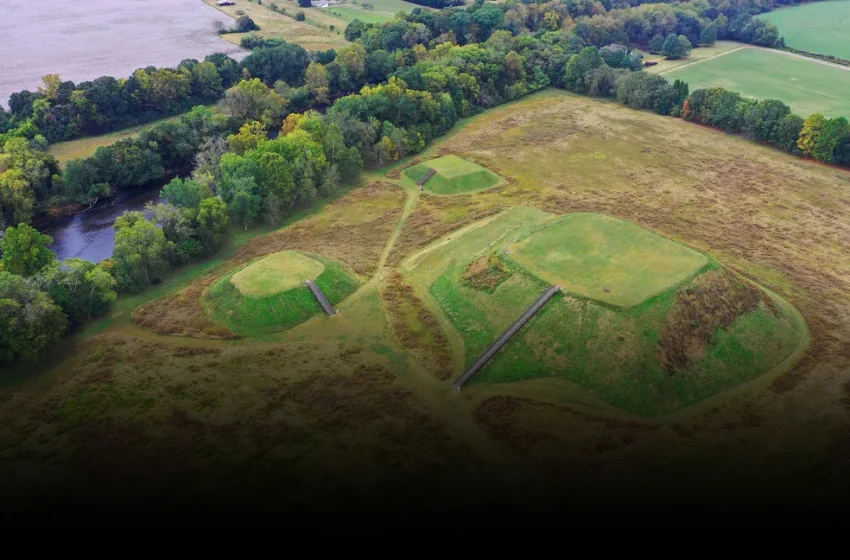
The discovery of cacao consumption at Etowah a millennium ago is not just a fascinating historical footnote; it fundamentally reconfigures our understanding of pre-Columbian economic sophistication and the social capital required to sustain such expansive, high-value luxury networks, which likely drove, rather than merely supported, complex societal development. This isn’t merely about distant trade routes; it’s about the sophisticated mechanisms of power, influence, and resource allocation that allowed a substance from 3,000 kilometers away to become a staple in ceremonial feasts in what is now northern Georgia. The sheer logistical achievement suggests an intricate web of relationships, far more advanced than typical portrayals of indigenous North American societies often allow, forcing a critical re-evaluation of their societal architecture.
Beyond Simple Barter: The Deep State of Ancient Trade
Archaeologist Adam King’s team, identifying fragments of Theobroma cacao in 11th-century potsherds at Etowah, offers more than just evidence of an exotic delicacy enjoyed by Mississippian elites. It points to a structured, resilient supply chain capable of moving high-value goods over vast distances, from the tropics of Central America to the eastern woodlands. This wasn’t incidental exchange, a serendipitous passing of goods among disparate groups; it represents a deliberate, managed process, echoing the vast mercantile networks that would later define the Silk Roads or early European spice trades. Such operations demand significant investment in human capital, intricate planning, and the establishment of trust and security across diverse cultural landscapes.
The conventional narrative often undersells the organizational complexity of pre-Columbian North American societies, particularly concerning interregional commerce. We tend to frame their economies in terms of localized subsistence or sporadic commodity exchange, missing the underlying currents of sustained, large-scale luxury trade that shaped political landscapes. The sheer effort to transport cacao – a fragile, high-demand item, susceptible to spoilage – across thousands of kilometers suggests not just a desire for exotic goods, but a profound understanding of their symbolic and economic leverage within a hierarchical society.
Consider the incentives at play, a constant throughout human history: the groups facilitating this trade, from the source cultivators to the various intermediaries and the final consumers, each gained something beyond mere calories or tools. For the Mississippian leaders at Etowah, consistent access to cacao likely reinforced their social status and political authority, allowing them to host elaborate feasts and rituals that cemented alliances and displayed unparalleled wealth. This was about projecting power, demonstrating control over resources and networks far beyond their immediate territorial reach, making it less about ‘trade’ as we understand it today, and more about prestige economics and strategic alliance building, securing loyalty through shared bounty.
Cacao’s Enduring Legacy: Fueling Monumental Ambition
The explicit mention that “chocolate may have helped build the Mississippian mounds” is a crucial, yet often overlooked, hypothesis for understanding ancient sociopolitical structures. It’s a significant conceptual leap from simple consumption to monumental engineering, directly tying the symbolic power of a luxury good to tangible infrastructure. If true, it implies that the economic benefits derived from the cacao trade — or, more likely, the social cohesion and political capital it fostered — were directly channeled into large-scale public works. Think of it as a form of ancient social capital investment: the prestige gained from providing rare consumables translated into the ability to mobilize significant labor and material resources for construction projects that defined their civilization.
This dynamic challenges the idea that monumental architecture solely emerged from agricultural surpluses or direct tribute systems. Instead, it posits a more nuanced model where the acquisition and distribution of high-status goods like cacao generated a cycle of indebtedness, loyalty, and reciprocal exchange among different societal strata. Leaders who could reliably source and share such treasures were inherently more powerful, better positioned to command the labor necessary for building colossal earthworks, thereby solidifying their rule and leaving an indelible mark on the landscape.
The discovery thus pushes us to consider these societies as engaged in sophisticated geopolitical strategies, where trade goods served as diplomatic tools, markers of hierarchical position, and even as a form of currency or stored value. It’s almost as if some Silicon Valley disruptor had to invent a continent-spanning logistics network to deliver a status symbol that cemented leadership for a rising tech mogul, where access defined status more than raw production. The comparison, while anachronistic, highlights underlying mechanisms of value creation and power consolidation that are strikingly similar across millennia.
Revisiting Historical Narratives: A Broader Lens
What Silicon Valley reporters often miss, caught up in the immediate buzz of the latest AI model or startup valuation, is the deep historical echoes of power dynamics and economic structures that transcend any particular technological era. The Etowah cacao story isn’t about new tech, but about timeless human behaviors amplified by an unexpected archaeological discovery. It forces us to ask: how many other assumptions about ancient societies are similarly limited by a narrow interpretative lens, one that underestimates the ingenuity, economic sophistication, and interconnectedness of pre-colonial civilizations?
The existence of a robust, long-distance luxury market 1,000 years ago in North America necessitates a profound re-evaluation of educational curricula and popular perceptions. It dispels notions of isolated tribes and simple subsistence economies, replacing them with a vision of dynamic, interconnected societies with complex social hierarchies, extensive trade networks, and sophisticated political strategies. This isn’t just an archaeological find; it’s a recalibration of an entire continent’s history, demonstrating how a single, seemingly minor detail, when properly analyzed, can unravel centuries of oversimplified understanding and reveal a richer, more complex past.
The implication is clear: even without the rapid communication and transportation technologies we possess today, human societies have consistently demonstrated an astonishing capacity for organization, innovation, and trade when the incentives align with consolidating power and status. The cacao trade at Etowah wasn’t just about indulgence; it was about the very fabric of power, culture, and civilization in a world far more interconnected and strategically driven than we’ve often been led to believe.
