
Russia’s Drone Recruitment Drive: A Strategic Disaster for Its Tech Future
- Artificial Intelligence
Arjun Vedanta
- 0
- 4 minutes read
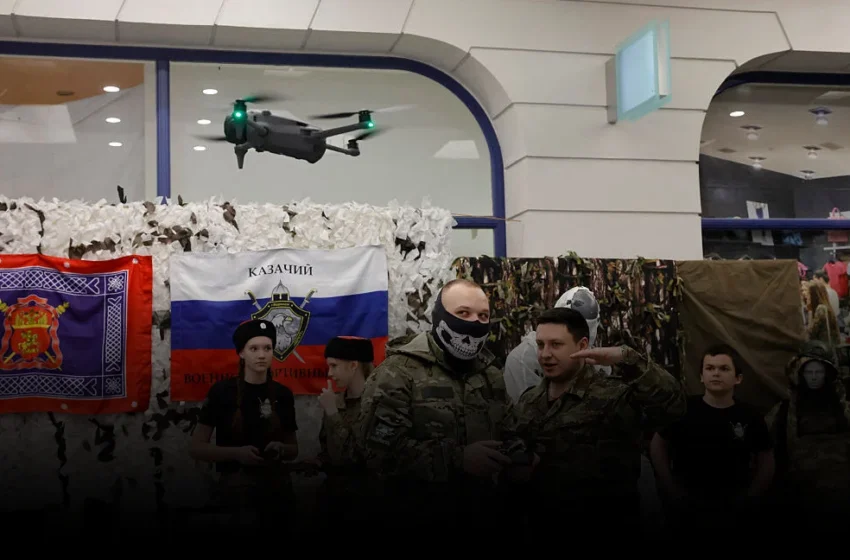
Russia’s Forced Tech Talent Pipeline
The Kremlin’s latest campaign to conscript university students as military drone pilots, complete with tantalizing financial incentives and veiled promises of safety, reveals a profound, long-term strategic miscalculation for Russia’s technology future. What appears on the surface as an expedient solution to wartime manpower needs is, in fact, structurally compromising Russia’s civilian technology sector and sacrificing critical human capital.
This initiative is not a fringe movement but a widespread, government-backed push. Pamphlets at institutions like Bauman Moscow State Technical University promise free tuition and up to $70,000 for a year of service, according to Bloomberg. Beyond financial lures, tax holidays, loan forgiveness, and even free land are dangled before a student body numbering approximately 2 million men across Russian universities.
The scope is vast, with the independent magazine Groza reporting at least 270 Russian academic institutions actively promoting military contracts. This recruitment drive, now in the fifth year since Russia’s full-scale invasion of Ukraine in February 2022, is specifically targeting students with skills in drone operation, model aircraft, electronics, radio engineering, and general computer proficiency, as NBC News detailed. These are precisely the skills that underpin a modern, competitive civilian tech economy, from software development to advanced manufacturing.
The Illusory Safety of Wartime Tech
The narrative pitched to these students is one of specialized, relatively safe service, distinct from the brutal front lines. Yet, the reality is starkly different. There has already been one confirmed battlefield death among these newly minted student drone pilots, with possibly more unacknowledged casualties.
This isn’t just about drones; it’s about repurposing potential innovators as expendable assets. The Kremlin’s desperate scramble for drone operators, cloaked in promises of technical prowess and ‘safe’ service, ironically signals a profound failure to cultivate a resilient, independent tech sector capable of both military innovation and economic growth. Instead of investing in sustained research and development that builds domestic technological strength, Russia is cannibalizing its academic institutions and future workforce.
The immediate incentive for the Kremlin is clear: an urgent need to replace combat losses and bolster its capabilities in a drone-heavy modern battlefield. This top-down directive benefits the military apparatus by providing a rapid, if ultimately unsustainable, influx of technically literate personnel. However, the true cost is borne by Russia’s broader economic prospects and its capacity for future innovation, diverting the very talent needed to compete globally in areas like artificial intelligence, advanced robotics, and software development.
A Self-Inflicted Brain Drain for Russia’s Future
While other nations, from the burgeoning tech hubs in Southeast Asia to established European powers, heavily invest in retaining and nurturing their STEM talent for long-term economic dividends, Russia is effectively accelerating a self-inflicted brain drain. Forcing bright young minds into military service, particularly under false pretenses of safety, discourages genuine innovation and drives those who can leave to do so.
Consider the adjacent fields: the engineers who would build next-generation industrial automation, the programmers who would develop sophisticated AI algorithms for civilian applications, or the entrepreneurs who would launch startups leveraging cutting-edge electronics. Many of these individuals are now being funneled into a temporary, high-risk military role, with their long-term career trajectories fundamentally altered. This isn’t just a loss of individual potential; it’s a systemic degradation of the entire tech ecosystem.
The long-term impact on Russia’s capacity for sustained technological advancement will be severe. By prioritizing short-term military expediency over human capital development, Russia is not just filling immediate gaps in its armed forces; it is strategically hollowing out its future economic competitiveness, leaving its tech sector increasingly reliant on state directives rather than organic growth and genuine talent. The price for this short-sighted strategy will be paid in decades of lost innovation and a diminished global standing.
