
Anthropic’s ‘No Roadmap’ Approach to Claude Code Signals Deeper AI Industry Instability
- Artificial Intelligence
Arjun Vedanta
- 0
- 5 minutes read
The Mirage of Agile AI Development
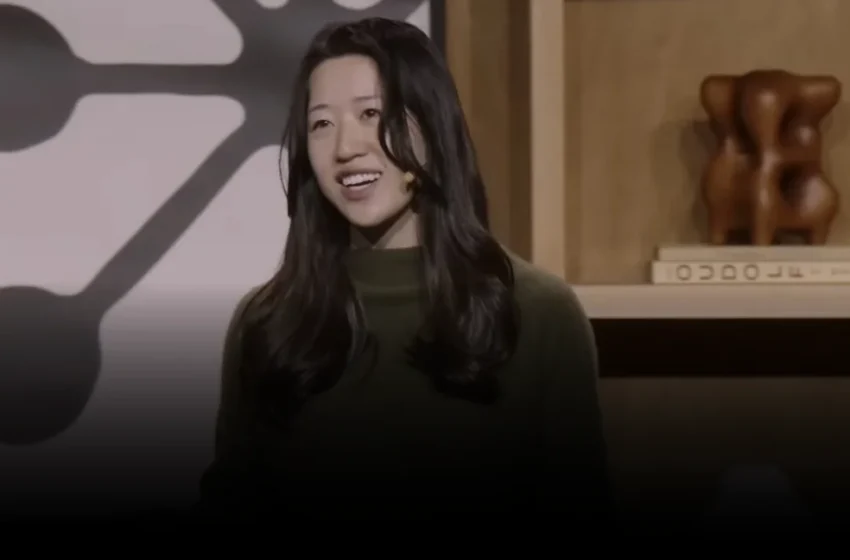
SAN FRANCISCO—Doubling usage limits for paying customers, while a welcome relief for those hitting compute walls, barely masks a more profound revelation from Anthropic’s recent Code with Claude developer conference. Cat Wu, the product lead for Claude Code, confirmed what many in the trenches already suspected: there is no long-term roadmap for the product. This isn’t just an admission of agile development; it’s a stark indicator of the structural instability inherent in the current generative AI boom, where fundamental dependencies on compute and data shape product evolution far more than any articulated user journey.
The company frames this absence of a fixed plan as a strategic advantage, a ‘lean harness’ approach to an ‘ever-expanding array of surfaces’ and a ‘rapidly evolving user base’. Yet, the practical reality is that the sheer pace of model capability improvements, coupled with an insatiable demand for tokens and compute, makes traditional long-range planning almost impossible. This isn’t innovation; it’s reactive engineering in a fog.
Anthropic’s decision to double usage limits for Pro and Max plan users—a direct response to widespread ‘user frustration about a compute crunch’—underscores a market where growth outstrips infrastructure. The compute deal with SpaceX, a pragmatic solution to a pressing bottleneck, highlights the true chokepoint in the AI race: access to enormous, often bespoke, computational power. This isn’t about code quality or feature sets; it’s about brute force capacity.
The Illusion of User-Driven Innovation
In a healthy software ecosystem, product roadmaps are often collaborative documents, refined through user feedback and competitive analysis. Here, Anthropic suggests its roadmap is rendered ‘moot by improvements in model capabilities and new signals from developers’. This formulation flips the traditional product development model on its head. Instead of products evolving to meet user needs, user needs are seemingly discovered retrospectively, informing an adaptation to an already-improving underlying model. It’s a subtle but critical distinction.
This reliance on ‘new signals from developers’ as the primary guide implies a significant gap between what AI models can do and what real-world developers actually need. The industry’s current fixation on benchmark scores and ever-larger parameter counts often overshadows the pragmatic demands of enterprise integration, cost-efficiency, and predictable performance. What good is a ‘better’ model if its capabilities don’t translate into tangible, stable, and affordable solutions for a global developer base?
The implicit incentive here is clear: Anthropic benefits from maintaining an image of nimble adaptability while securing the massive compute resources necessary to compete, effectively shifting the burden of defining product utility onto its user base. This strategy allows them to focus on foundational model advancements and scaling infrastructure, rather than the costly, time-consuming work of building a truly robust, user-centric product suite with clear feature commitments.
Global Implications of Silicon Valley’s Compute Race
From Geneva to Singapore, companies grapple with the practicalities of AI deployment, where regulatory landscapes and data sovereignty concerns are paramount. Silicon Valley’s relentless focus on raw capability and compute scale often overshadows these global operational realities. The casual admission of ‘no long-term roadmap’ for a critical developer tool like Claude Code sends ripples far beyond the San Francisco Bay Area.
Businesses in Europe or Asia, considering significant investments in Anthropic’s ecosystem, require a level of predictability and transparency that a ‘no roadmap’ policy fundamentally undermines. How do you plan for integration, compliance, or even budgeting when the core tools are evolving in such an ad-hoc manner? This isn’t just about a single product; it speaks to the broader fragility of the AI supply chain.
The doubling of limits, while alleviating immediate pain points, reinforces the precarious nature of relying on third-party compute. It signals that even well-funded players like Anthropic are perpetually at the mercy of their infrastructure providers—or, in this case, securing bespoke deals like the one with SpaceX. This dynamic breeds a certain strategic uncertainty for any organization building atop these platforms. The sharpest observation is that the compute deal with SpaceX, rather than signifying Anthropic’s robust future, quietly reveals the desperate, ongoing scramble for silicon and energy that defines the AI industry’s true ceiling.
Ultimately, this isn’t a story of agile innovation; it’s a window into an industry operating at its fundamental limits, driven by technological possibility rather than market maturity. The implications for companies betting their digital futures on these foundational models are significant, forcing a strategic re-evaluation that extends far beyond the feature lists and into the very core of infrastructure dependency.
