
Saudi Arabia’s Ceer EV: A Diversification Dream Confronts Global Auto Reality
- Tech
Arjun Vedanta
- 0
- 5 minutes read
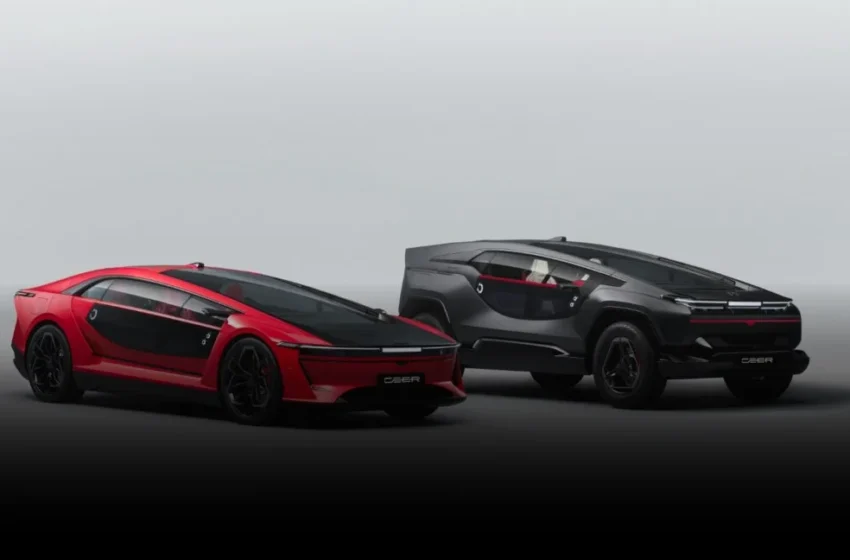
The Industrial Mirage: Building an EV Ecosystem from Scratch
A new car company, built from scratch in Saudi Arabia, aiming for seven distinct models by 2030, including hybrids. That is the stated ambition for Ceer, a joint venture between the Kingdom’s Public Investment Fund (PIF) and Foxconn. Presented as a direct manifestation of Vision 2030, this initiative promises to diversify the economy away from oil and localize technological innovation.
Yet, this narrative of inevitable progress obscures a far more intricate and challenging reality. The true story isn’t merely about whether Saudi Arabia can assemble vehicles; it’s about the immense, perhaps insurmountable, friction inherent in a petrostate attempting to suddenly manufacture advanced technology within a fiercely globalized, capital-intensive industry. This sector is already dominated by a handful of entrenched giants and their deeply integrated supply chains.
Building an automotive brand, let alone an entire manufacturing ecosystem, is a colossal undertaking. It demands decades of iterative engineering, an advanced industrial base, and a highly skilled workforce across everything from materials science to complex software integration. Tesla, for all its disruptive energy, still relies on a global network for its components and R&D talent. For Ceer, the Exobot sedan and SUV may represent a vision, but the road to competitive production requires navigating existing battery technology monopolies, securing microchip supplies, and recruiting engineering talent in a saturated global market.
The idea that a nation can simply declare itself a ‘world-class product’ manufacturer in an industry as complex as electric vehicles by 2030 strains credulity. This is less about genuine industrial emergence and more about an expensive, high-stakes gamble on a global stage.
Geopolitical Engine: Vision 2030’s Deeper Play
The launch of Ceer is not just an economic play; it is a profound geopolitical statement. Saudi Arabia’s Vision 2030 is fundamentally about securing a post-oil future and projecting regional and global influence through technological sovereignty. The incentive here is multifaceted: it’s about signaling serious intent to international investors, creating high-profile jobs domestically, and reducing dependence on foreign manufacturing for critical goods.
Foxconn’s involvement, a Taiwanese electronics manufacturing giant, is particularly telling. It represents a pragmatic attempt at technology transfer, leveraging an experienced partner known for contract manufacturing rather than deep automotive R&D. This partnership offers Saudi Arabia a shortcut, but it also raises questions about true indigenous capability versus assembly under foreign license. The deal positions Ceer not just as a car company, but as a critical piece of the Kingdom’s industrial policy, aligning with broader efforts in AI infrastructure and advanced robotics.
This initiative isn’t occurring in isolation. It’s part of a wider geopolitical contest where nations like China are heavily subsidizing their own EV industries, and traditional auto powers are scrambling to transition. Saudi Arabia seeks to carve out its own niche, leveraging its vast sovereign wealth fund to accelerate industrialization. The objective is clear: to be a producer, not just a consumer, of next-generation mobility, thereby enhancing its strategic autonomy and influence in a rapidly shifting global order.
The Long Road Ahead: Global Ambitions vs. Market Realities
Ceer’s stated ambition to expand beyond the GCC region if demand exists is precisely where the rubber meets the road. The global EV market is already fiercely competitive, with established players like Volkswagen, GM, and BYD pouring billions into R&D and factory upgrades. New entrants, even well-funded ones, face a brutal gauntlet of regulatory hurdles, brand building, and distribution network construction.
The concept of ‘world-class’ is not merely about build quality or features; it encompasses a complex interplay of cost, efficiency, after-sales service, and a deeply engrained consumer trust that takes decades to cultivate. For Ceer to genuinely compete with a Tesla or even a Hyundai on the global stage by 2030 means overcoming massive economies of scale enjoyed by incumbents. It means establishing rigorous testing standards, perfecting sophisticated software for advanced driver-assistance systems, and building a vast service infrastructure. These are not trivial challenges.
Ultimately, the Ceer venture highlights the inherent paradox of a petrostate trying to fast-track industrial maturity. While the financial capital is undeniably present through the PIF, the human capital, institutional knowledge, and deep technological ecosystems are not built overnight. Saudi Arabia is making a powerful statement of intent. The question remains whether ambition, however well-funded, can truly reshape the fundamental economics and competitive realities of the global automotive industry in less than a decade.
