
Snail Slime’s Masterpiece: Why Biotech Can’t Replicate Nature’s Tunable Materials Yet
- AI Infrastructure
Arjun Vedanta
- 0
- 5 minutes read
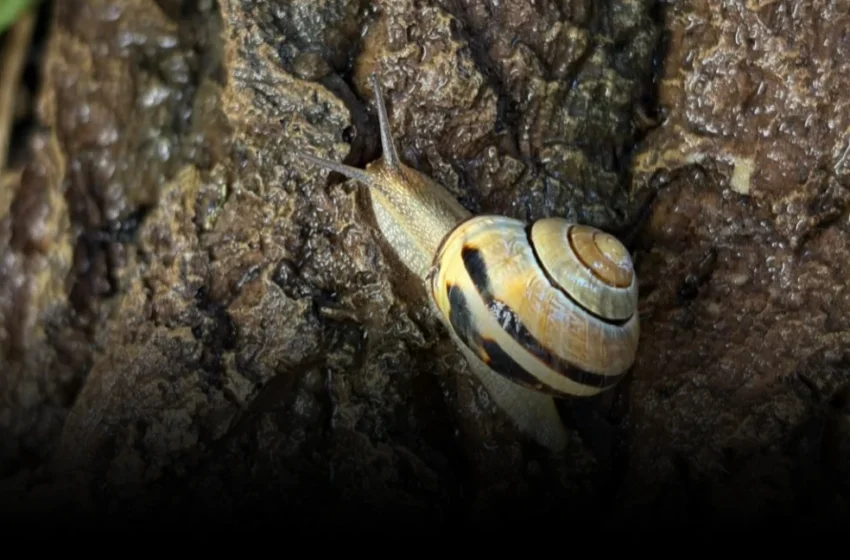
Nature’s Material Architects
A humble discovery about snail mucus, seemingly confined to the niche world of biomaterials, exposes a profound chasm in our engineering capabilities. German scientists recently pinpointed how collagen and calcium orchestrate the tunable mechanical properties of snail slime, enabling these mollusks to secrete specific formulations for lubrication, adhesion, or even hibernation-sealing. This isn’t merely a curiosity; it’s a stark reminder that nature has perfected ‘smart materials’ that modern laboratories, with all their advanced tools, struggle to mimic with similar precision and efficiency.
For years, material science has striven to create substances that adapt their properties on demand. Think about self-healing polymers or morphing alloys. Yet, the elegant simplicity of a snail’s biological manufacturing, detailed in the journal Science, makes our synthetic efforts look crude by comparison. Snails don’t just produce one type of slime; a grove snail, for instance, secretes five distinct versions, from a lubricating gel for locomotion to a calcite-rich epiphragm that seals its shell during winter hibernation, offering robust protection against predators and harsh conditions. This sophisticated, on-the-fly material synthesis is a biological masterclass.
What the Silicon Valley echo chamber often misses, preoccupied with the next AI model or SaaS unicorn, is the slow, painstaking progress in fundamental science that truly underpins future breakthroughs. This discovery isn’t about immediate commercial applications—though cosmetics and drug delivery have shown interest, with a 2020 study even demonstrating enhanced wound healing when common garden snail slime was combined with gold nanoparticles. Instead, the real story here is the blueprint nature provides for building materials with dynamic, context-aware properties, a feat still largely beyond our grasp.
The Unseen Engineering of Biological Systems
The core finding – that specific components like mucins (glycoproteins), complex carbohydrates, collagen, and calcium interact in a precise ‘recipe’ – highlights the intricate self-assembly and regulation inherent in biological systems. These aren’t just random ingredients mixed together; it’s a dynamic, responsive process. The 2023 research identified three distinct types of garden snail mucus: one for hydration, one for adhesion, and one for lubrication, each with specific chemical compositions tailored to its function. This level of functional specificity through compositional variation remains a holy grail for synthetic material engineers.
We can formulate a high-strength adhesive or a flexible lubricant, but we cannot yet produce a single, manufacturing-friendly system that dynamically switches between these states based on environmental cues, let alone one that also forms a durable, mineralized seal for protection. This challenge isn’t just about chemistry; it’s about control at the molecular scale, integrated with biological feedback loops that are millions of years in the making. The implicit claim here is that if we understand the ‘recipe’, replication is inevitable, yet the complexity of biological processes often defies simple reverse-engineering.
The incentive to publish such findings now, beyond pure scientific advancement, likely lies in securing further research grants and institutional prestige. By framing the discovery as a ‘recipe,’ the research team makes a complex biological mechanism seem approachable and potentially reproducible, encouraging more investment in bio-inspired material science. The ultimate beneficiaries are not necessarily immediate consumers of snail-slime face cream, but rather the foundational researchers probing the limits of what materials can be, pushing us closer to truly adaptable synthetic structures.
Beyond Mimicry: Designing Truly Smart Materials
Our current approach to ‘smart materials’ often involves incorporating external sensors, actuators, and complex control systems. A robot using artificial muscle might dynamically change its grip, but that’s a macro-scale system layering mechanical and electronic components. The snail, conversely, achieves this through intrinsic material design. Its cells secrete precursor molecules that self-assemble into diverse structures with precisely tuned rheological properties, without any external energy input beyond basic metabolism. This intrinsic adaptability is where our current polymer science and additive manufacturing fall short.
Consider the adjacent fields: biomimetics in robotics often focuses on form and locomotion, while advanced composites aim for strength and lightweight properties. Neither yet delivers the integrated, multifunctional tunability seen in a single biological secretion. The challenge isn’t just to identify the constituent parts but to understand their exact ratios, the sequence of their assembly, and the cellular mechanisms that regulate their production and modification in real-time. This is why developing next-generation medical implants or truly responsive soft robotics requires more than just knowing what’s in the snail’s slime; it demands understanding the underlying biochemical manufacturing plant.
Ultimately, this German team’s work underscores that biology often holds the most elegant solutions to engineering problems. While we are fixated on digital solutions and artificial intelligence, the natural world continues to quietly outperform our most sophisticated designs in terms of material efficiency, adaptability, and resilience. The real breakthrough will come not when we can synthesize collagen and calcium, but when we can program cells, or synthetic equivalents, to build and adapt materials with the same unthinking genius as a common garden snail.
