
SpaceX’s Florida Shift: More Than Just a Launchpad Change
- Space
Arjun Vedanta
- 0
- 5 minutes read
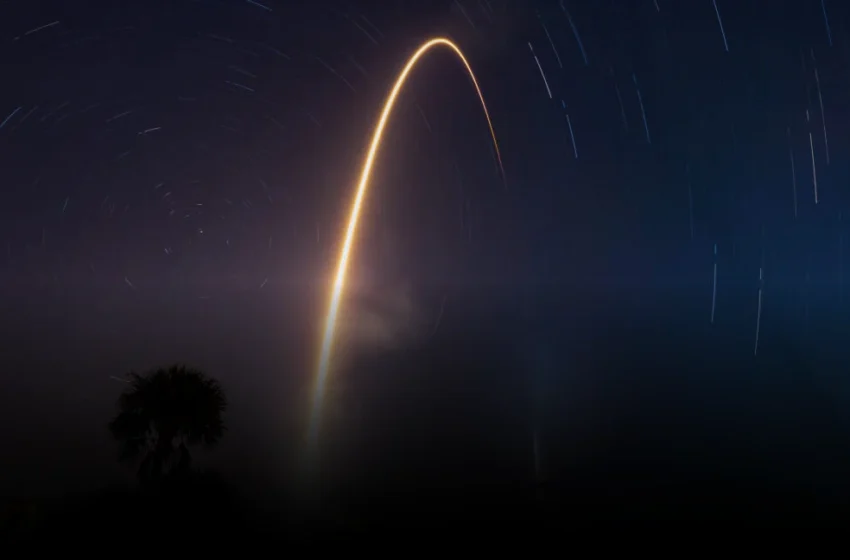
Beyond the Launchpad: Unpacking SpaceX’s Strategic Retreat from Florida
The world’s busiest spaceport is about to get a lot quieter, but not for the reasons anyone in Silicon Valley seems to grasp. For a decade, Florida’s Space Coast thrived on SpaceX’s relentless cadence, a dizzying blur of Falcon 9 rockets that made weekly launches feel routine. Now, as a senior SpaceX official confirms a significant cut to Florida operations until Starship is ready, the silence isn’t just about fewer rockets; it’s about a company fundamentally reorganizing its global ambitions around a single, massive gamble.
Last year, SpaceX executed an astonishing 165 Falcon 9 launches, with approximately 75 percent dedicated to populating its Starlink internet satellite constellations. This volume cemented its dominance in the space economy, establishing an unparalleled launch manifest. This year, however, a noticeable shift began in January, with more missions originating from Vandenberg Space Force Base in California, a trend set to intensify. This isn’t merely a pivot to a different coast; it’s a strategic retreat from one operational front to consolidate resources on another, suggesting the internal confidence in Falcon 9’s continued utility, or even the immediate profitability of Starlink’s current expansion rate, might be less robust than public statements imply.
Moving launches to Vandenberg offers advantages, particularly for polar orbits preferred by certain Starlink tranches, but it complicates the sheer volume achieved from Florida’s dual pads. The operational calculus shifts from maximizing reusable rockets turnaround to optimizing for a different set of orbital mechanics and logistics. This decision, conveyed by a senior official, isn’t a casual adjustment. It signifies a deeper, more calculated move with implications that reach far beyond launch efficiency.
Starship’s Shadow: The Unseen Costs of a Singular Bet
The crucial qualifier in SpaceX’s announcement – “until Starship arrives” – is the gravitational center of this entire strategy. Starship represents a paradigm shift in orbital transport, promising unprecedented payload capacity at drastically reduced costs. Yet, its development has been marked by ambitious timelines and spectacular, if instructional, test failures. The company is essentially betting its near-term launch rhythm and the rapid expansion of Starlink on the timely operational readiness of a vehicle that is still very much in flux.
This reliance on Starship carries significant financial implications for SpaceX. Maintaining two distinct launch vehicle development and operational streams (Falcon 9/Heavy and Starship) is costly. A slowdown in Falcon 9 launches, particularly for Starlink, could impact revenue streams that fund Starship’s prodigious research and development budget. Moreover, the regulatory hurdles for Starship’s full operational deployment from Boca Chica, Texas, remain substantial, involving complex environmental reviews and FAA approvals that are not entirely within SpaceX’s control. Every delay in Starship’s maturation directly impacts the company’s ability to execute its long-term vision, including the most ambitious phases of Starlink deployment.
One must consider the incentive here: why make this announcement now, explicitly tying Falcon 9’s reduced cadence to Starship’s future? This framing serves multiple purposes. It manages investor expectations regarding Starlink deployment speed, rationalizing slower short-term progress as a necessary strategic long-term positioning for Starship. It also puts implicit pressure on both internal Starship development teams and external regulators, effectively signaling that the entire company’s immediate future hinges on this one program.
Geopolitical Gravity: Shifting Launchpads and Global Ambitions
The ripple effects of SpaceX’s launch realignment extend beyond its balance sheet. For years, the company has almost single-handedly defined the commercial launch market, dwarfing competitors like ULA, Arianespace, and Rocket Lab in terms of launch frequency. A voluntary slowdown, even if temporary, might offer a rare window for these other launch providers to gain market share or refine their own reusable rocket technologies.
The choice of launch site also holds geopolitical weight. Florida, with its legacy of NASA and military space endeavors, is synonymous with American leadership in space. California’s Vandenberg, while strategically vital for polar orbits, doesn’t carry the same public-facing narrative of rapid, everyday access to space. This shift, even if presented as purely logistical, underscores the changing priorities within a company that is increasingly central to national infrastructure and defense. The complex supply chain and specialized workforce supporting these launch operations also face adjustments, potentially impacting local economies that have grown reliant on SpaceX’s constant activity.
This isn’t merely about moving rockets from one pad to another. It’s about a calculated, if risky, bet on a single technology, a re-evaluation of current business models, and a subtle but powerful signal to the industry, regulators, and rival nations about the future trajectory of the most influential private space company in the world. The Florida silence is not merely a pause; it’s a reverberation of a massive internal restructuring for a future that remains largely unproven.
