
SSD Timing Attacks: Why Your Hardware Is the New Privacy Frontier
- Cybersecurity
Arjun Vedanta
- 0
- 4 minutes read
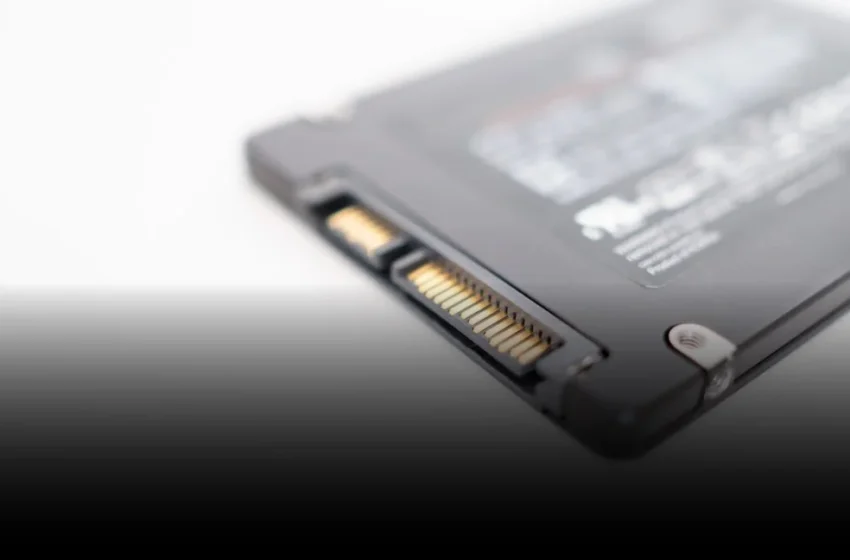
The Deeper Abyss of Digital Surveillance
The quiet hum of your computer’s solid-state drive now broadcasts more about your online activity than any cookie ever could. This is the stark reality exposed by the FROST technique, a new method of web tracking that leverages the microscopic timing differences in hardware operations, not just software calls. For years, the digital privacy debate has revolved around browser settings, data policies, and the cat-and-mouse game of ad blockers versus fingerprinting scripts. But FROST rips away that comfortable veneer, revealing a far deeper, systemic vulnerability where your physical hardware is now a potential snitch.
This isn’t another iteration of browser-level surveillance; it’s a fundamental architectural challenge, moving the goalposts of privacy protection from the application layer straight into the silicon. Sites can now infer which other web pages you’re viewing and even which applications are running on your machine by subtly interacting with your SSD. This is possible through a side-channel attack, essentially gleaning confidential data from the physical manifestations of a system, such as varying task completion times or resource contention. It’s a sophisticated form of hardware fingerprinting that bypasses traditional software-based defenses entirely.
A Hardware Problem, Not Just Software
For those accustomed to tracking the ebb and flow of digital privacy, this shift is profound. Previous privacy invasions — from browser history logging by Meta to Yandex’s data collection — were primarily software-centric. They could often be mitigated with stronger browser sandboxing, privacy extensions, or even simply disabling third-party cookies. FROST, or “fingerprinting remotely using OPFS-based SSD timing,” operates at a lower level, exploiting how the Operating System’s File System (OPFS) interacts with the underlying SSD’s controller and memory.
This is where the Silicon Valley narrative often falls short. American tech reporting frequently fixates on the latest software features or platform updates, missing the systemic implications when the threat landscape shifts to core computing infrastructure. The immediate impulse is to seek a software patch, a browser update, or a new privacy setting. Yet, the very nature of a side-channel attack on hardware timing means that these software-centric solutions are, at best, a band-aid. The problem isn’t a bug in the code; it’s a feature of the microarchitecture itself.
The Illusion of Browser Privacy
Consider the implications: your browser, long touted as a bastion of digital autonomy, is now a potential conduit for probing the physical state of your machine. Browser vendors have poured vast resources into isolating web content, creating virtual sandboxes that theoretically prevent web pages from interacting directly with your operating system or other applications. FROST demonstrates that this isolation is incomplete when it comes to the subtle, yet detectable, interactions with shared hardware resources like the SSD.
The incentive for this kind of relentless pursuit of user data is clear: the multi-billion-dollar adtech industry and data brokers thrive on ever more granular profiles. As software protections improve, forcing them to find new vectors, the shift to hardware-level inference becomes an inevitable next frontier. It enables persistent, cross-site, and cross-application tracking that is incredibly difficult for the user to detect or block, strengthening the grip of entities that profit from pervasive surveillance.
Confronting the Architectural Challenge
The cynical observation here is that the industry’s default response – a hasty software patch or a new API that claims to fix the issue – will be woefully inadequate. This isn’t a vulnerability that can be simply patched away with a browser update. It demands a re-evaluation of how operating systems manage hardware resource contention for web applications and, potentially, fundamental changes in how SSD firmware is designed to mitigate timing leaks.
The battle for digital privacy has moved from the software stack to the physical layer. This presents a complex challenge not just for browser developers, but for OS vendors and even hardware manufacturers. Do operating systems need to implement stricter, more abstract hardware access layers for web content? Can future SSDs be designed with built-in timing isolation, perhaps through more robust hardware-level obfuscation or noise injection? These are questions that will require deep collaboration across the entire computing stack, far beyond the purview of any single browser or software update. The era of believing our web activity is truly private, even with the most stringent software settings, is effectively over.
