
Switch 2 Security Stumbles Early: Userland Jailbreak Signals Major Challenge for Nintendo
- Hardware
Arjun Vedanta
- 0
- 9 minutes read
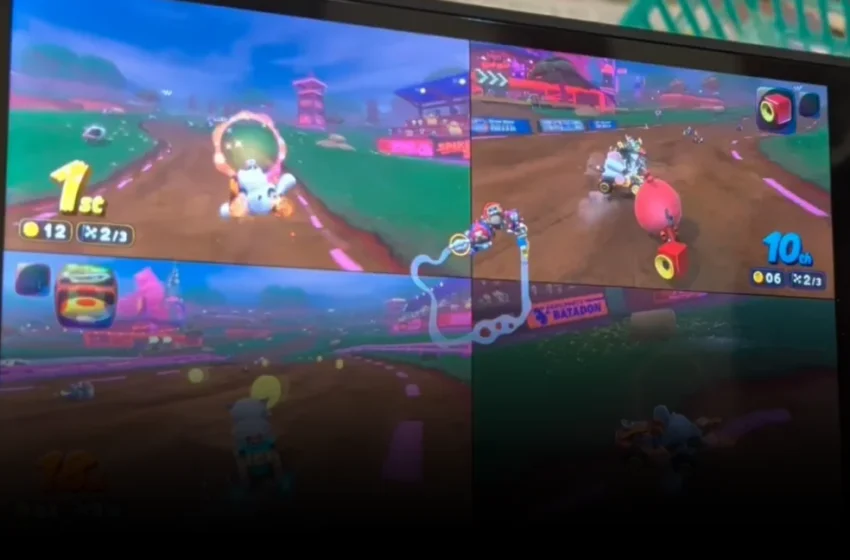
The upcoming Nintendo Switch 2 faces an early and significant security challenge with researcher Sammy Hajhamid demonstrating a software-only, “userland” partial jailbreak. This exploit, achieved weeks before the console’s expected launch, signals a critical vulnerability that could fundamentally alter the security landscape for Nintendo’s next-generation platform and its lucrative US market.
Hajhamid’s breach allows for unauthorized code execution and access to various system components, even if it doesn’t provide full administrative control. While a “tethered” hack requiring external PC assistance, it establishes a crucial foothold for hackers, providing insights into the console’s architecture. For American tech enthusiasts, this exploit sparks interest in early homebrew applications and game modifications, but it also raises concerns for Nintendo regarding potential future piracy and the overall stability of their platform.
The “Userland” Breach: What It Means for Switch 2 Security
Researcher Sammy Hajhamid utilized a specific weakness in the original Switch version of SmileBasic 4, a programming environment, to achieve this early access. The hack exploits a 32-bit integer overflow discovered when items are removed from an array within SmileBasic, a detail Hajhamid explicitly credits to “substantial effort for ~2 weeks” using OpenAI’s Codex to analyze the interpreter. This integer overflow provides access to an array pointer, which in turn grants read and write capabilities to certain portions of the system memory.
“Userland” access, as Hajhamid achieved, means that code can run within the user mode of the operating system, but without full administrative or kernel-level privileges. This limits direct control over the core system functions but still enables significant unauthorized activity. Hajhamid stated this access “lets us run homebrew, reverse engineer and mod Switch 2 games, back up save files off the Switch, and access most of the Switch 2’s peripherals through MMIO.” This capability, even if restricted, is a major concern for console manufacturers aiming for a locked-down platform.
Crucially, this is a “tethered” hack, meaning it requires external assistance to initiate. Specifically, it necessitates a macOS or Linux PC running a node.js package on the same network as the Switch 2 to enable privileged system access. This tethered nature acts as a significant barrier to widespread, casual adoption, differentiating it from the more impactful “untethered” exploits that require no external hardware or repeated setup. However, history shows that tethered exploits often precede more permanent solutions. The original Nintendo Switch saw various tethered exploits, like Fusée Gelée, pave the way for a vibrant homebrew scene.
Nintendo’s Looming Challenge: Preventing a Full Compromise
Nintendo has historically engaged in a relentless cat-and-mouse game with hackers, investing heavily in digital rights management (DRM) and console security. The early discovery of a userland exploit for the Switch 2 places immense pressure on the Japanese gaming giant. While a userland breach doesn’t immediately spell doom for the console’s security, it indicates a foundational weakness that could be further exploited to achieve a more comprehensive “kernel” compromise.
A kernel exploit, which grants full control over the operating system, is the holy grail for hackers and the nightmare for console manufacturers. Such an exploit would allow for the easy installation of custom firmware, widespread game piracy, and unfettered modification of games, potentially impacting Nintendo’s official online services and the integrity of its digital storefront. For US game developers and publishers, this could mean significant revenue losses and a challenging environment for protecting their intellectual property. Nintendo’s response will likely involve both software patches to close the specific vulnerability and potentially hardware revisions if the exploit is tied to fundamental design flaws.
Protecting the digital marketplace is paramount for Nintendo. The ability to back up save files off the Switch 2, as Hajhamid’s exploit allows, might seem innocuous, but it opens doors for manipulating game progression or even transferring illegally obtained saves. Accessing peripherals via MMIO (Memory-Mapped I/O) could lead to unauthorized hardware integrations or circumvention of official accessory safeguards, further eroding Nintendo’s control over its ecosystem.
What This Means for US Consumers and the Homebrew Scene
For the dedicated American homebrew community and tech enthusiasts, this userland jailbreak is exciting news. It signals the potential for custom applications, emulation of older consoles, and deeply personalized gaming experiences on the Switch 2. The ability to “reverse engineer and mod Switch 2 games” could foster a creative community around the console, offering new ways to play and interact with titles beyond Nintendo’s official scope. However, these activities often operate in a legal grey area in the US, particularly concerning the Digital Millennium Copyright Act (DMCA).
The average US consumer, however, might not immediately feel the direct impact of this specific tethered exploit. The requirement for a separate PC and a specific operating system (macOS or Linux) makes it less accessible than a simple plug-and-play solution. Mass market adoption of homebrew often waits for an untethered, simpler exploit. Yet, the existence of this vulnerability means that the race is on for a more robust hack. If an untethered kernel exploit emerges, it could lead to widespread piracy, which, while appealing to some, carries significant risks like console bans from Nintendo’s online services, system instability, and the potential for malware.
| Feature | Tethered Userland Access (Current Exploit) | Full Untethered Kernel Exploit (Potential Future) |
|---|---|---|
| Control Level | Limited to user applications, specific memory regions. | Complete system control, including core OS functions. |
| Initiation | Requires external PC (macOS/Linux) and specific software (node.js). | Starts directly from the console without external assistance after initial setup. |
| Impact on Users | Enables homebrew, modding, save backups, peripheral access, but cumbersome. | Enables custom firmware, widespread piracy, extensive modifications, easier access. |
| Nintendo’s Response | Software patches, minor revisions. | Major software overhauls, hardware revisions, legal action. |
The early userland jailbreak of the Nintendo Switch 2, while currently limited and tethered, represents a crucial early breach of its security architecture. This development sets the stage for a prolonged security battle between Nintendo and the hacking community, with significant implications for the console’s future and the broader gaming industry.
- The exploit provides a crucial initial foothold for modders and homebrew enthusiasts, enabling activities like game modding and save file backups.
- Its “tethered” nature and PC requirement limit mass adoption, but serve as a proof-of-concept for more potent future exploits.
- Nintendo faces immediate pressure to patch the identified 32-bit integer overflow and bolster its security defenses to prevent a full kernel compromise.
- The incident highlights the ongoing challenge for console manufacturers to secure their platforms against a sophisticated hacking community, with potential ramifications for intellectual property and revenue.
What is a “userland” jailbreak?
A “userland” jailbreak grants hackers access to the user-level operations of a device’s operating system, allowing them to run unauthorized code and applications. This level of access is distinct from a “kernel” jailbreak, which provides full, administrative control over the entire system. While useful for homebrew, userland access is generally more limited in its scope.
How does this exploit impact US Switch 2 owners?
Currently, the impact on average US Switch 2 owners is minimal due to the hack’s tethered nature and technical requirements. However, it signifies that the console is vulnerable. For tech-savvy enthusiasts, it opens doors to early modding and customization, but also carries risks like potential console bans from Nintendo’s online services if they engage in unauthorized activities.
What role did OpenAI’s Codex play in the discovery?
Researcher Sammy Hajhamid explicitly stated that he used OpenAI’s Codex, an AI code generation and analysis tool, to help him probe the SmileBasic 4 language interpreter. This demonstrates how advanced AI tools are now being leveraged by security researchers to identify vulnerabilities, potentially accelerating the discovery of exploits in complex software environments.
