
The AI Grid Paradox: Solid-State Transformers Promise Modernity, Risk New Fault Lines
- AI Infrastructure
Arjun Vedanta
- 0
- 6 minutes read
The Century-Old Grid Meets Silicon Valley Demand
Utility companies across the United States face a sobering reality: a multi-year waiting list for the most basic building blocks of their grid. This isn’t for some cutting-edge fusion reactor component, but for conventional power transformers, whose core design hasn’t changed fundamentally since the 1880s. The culprit for this supply chain bottleneck, ironically, is the same force now promising a high-tech antidote: artificial intelligence.
The ravenous electricity demands of AI data centers are pushing grids to their breaking point, but also accelerating investment in solid-state power transformers (SSPTs), a technology that replaces century-old mechanical engineering with modern power electronics. While presented as a silver bullet, this rapid, AI-driven shift carries an inherent paradox, threatening to introduce new systemic vulnerabilities and deepen existing energy inequalities rather than universally modernizing the grid.
The reliance on conventional transformers is more than a nostalgic nod to industrial-era ingenuity. These behemoths are custom-built, not mass-manufactured, with two copper wire coils manually wound around a steel core. This bespoke production means that upgrading or simply replacing an aging unit — many of which are well past their intended lifespan — can take several years.
The US power grid, already aging and under-invested, is now confronted with an exponential surge in demand. Large-scale data centers, particularly those optimized for AI workloads, are consuming unprecedented amounts of energy, often drawing power equivalent to small cities. This direct pressure point has exposed the brittle reality of an infrastructure fundamentally unprepared for the demands of the digital age, creating a market imperative for a faster, more flexible solution.
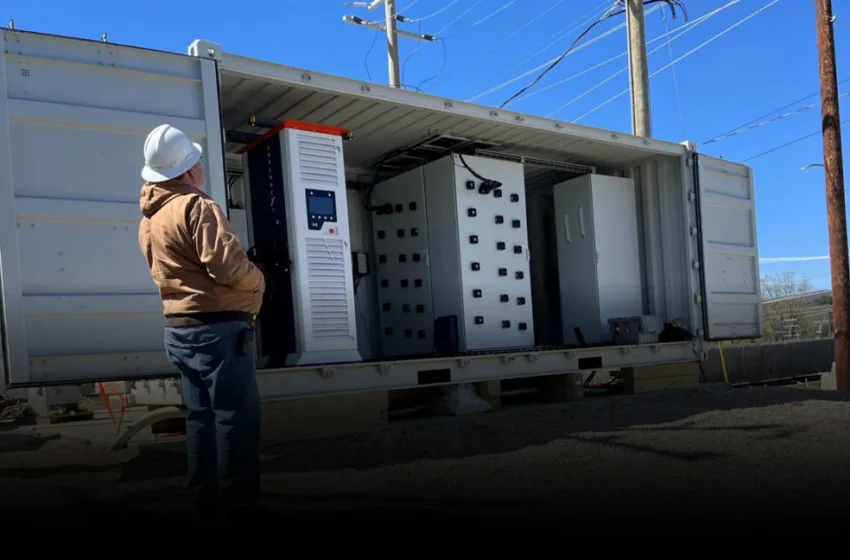
Enter the solid-state power transformer. Instead of coils and cores, SSPTs utilize power electronics and advanced control algorithms to convert voltage, allowing for smaller, lighter, and potentially more efficient units that can theoretically be mass-produced. The promise is alluring: faster deployment, reduced footprint, and better grid control.
For the hyperscalers building out AI infrastructure, SSPTs represent a direct path to securing the energy supply they desperately need, sidestepping the manufacturing delays plaguing traditional components. This is not merely about efficiency; it’s about enabling the continued expansion of AI, which is seen as a critical competitive advantage by major tech firms.
The Hidden Costs of a “Silver Lining”
Yet, the narrative of SSPTs as a universal silver lining glosses over significant complexities. Utilities are, by nature, deeply conservative institutions, their primary mandate reliability, not rapid technological iteration. Introducing a fundamentally different, software-driven transformer technology into an interconnected grid built on electromechanical principles creates a myriad of integration challenges.
It requires not just new hardware, but new operational protocols, new maintenance expertise, and critically, new cybersecurity paradigms. Conventional transformers, for all their archaic design, are largely immune to the digital attacks that plague modern systems. SSPTs, with their advanced electronics and network connectivity, present entirely new attack vectors for nation-state actors or sophisticated criminal enterprises looking to disrupt critical infrastructure.
The idea that a rapid shift to software-defined grid components is a universally beneficial upgrade, without acknowledging the profound increase in digital vulnerability, is a dangerous form of technological myopia.
Furthermore, the acceleration of SSPT adoption is not driven by a holistic strategy for grid modernization across all communities. It is propelled by the urgent needs of the biggest energy consumers: the tech giants powering AI. This creates a distinct incentive structure.
The development and deployment of SSPTs are heavily funded by, and thus designed to serve, the requirements of large data center operators. While the technology may eventually trickle down, the immediate beneficiaries are those with the capital and influence to demand bespoke energy solutions. This raises uncomfortable questions about energy equity.
Will rural communities, already struggling with aging infrastructure and limited investment, see their grid challenges compounded as resources and expertise are diverted to support the cutting-edge demands of AI hubs? Or worse, will they be left with an even older, less resilient conventional grid while the new, “modern” grid primarily serves the economic engines of the tech industry?
A Fragmented Future for Power Grids
The potential for a fragmented grid future is real. We could see a bifurcated system: highly advanced, digitally controlled microgrids and substations serving AI data centers and dense urban areas, coexisting with, but poorly integrated into, the legacy infrastructure serving less profitable or less visible regions. This isn’t merely an upgrade; it’s a re-prioritization of who gets access to the most resilient and advanced energy solutions.
The scramble to meet AI demand means the industry is choosing speed over comprehensive, equitable transformation. Rather than fostering a truly universal grid modernization, this path risks creating pockets of high-tech energy resilience surrounded by a wider landscape of increasing vulnerability and inequity. The irony is palpable: the very technology promising to accelerate progress could inadvertently widen the chasm between those connected to the grid of tomorrow and those stuck in the grid of yesterday.
We saw hints of this dynamic during the early rollout of smart meters and distributed energy resources, where adoption rates and investment varied wildly based on local economic conditions and political will. The sheer scale and urgency of AI’s energy demands amplify this risk significantly. Without strong regulatory oversight and a commitment to equitable deployment, SSPTs will not be the unifying force for grid modernization that they are presented to be.
Instead, they could become another powerful tool for the privileged few, further entrenching a two-tiered energy system that leaves vast swathes of the population behind. The hard truth is that while SSPTs offer a technological escape hatch for the immediate AI energy crisis, they also introduce a new layer of systemic risk and potential social division that demands far more scrutiny than it currently receives.
