
The Digital Lens: How Modern Robotics Rescues History from the Deep
- Robotics
Arjun Vedanta
- 0
- 4 minutes read
Deep-Sea Ghosts, Digital Eyes
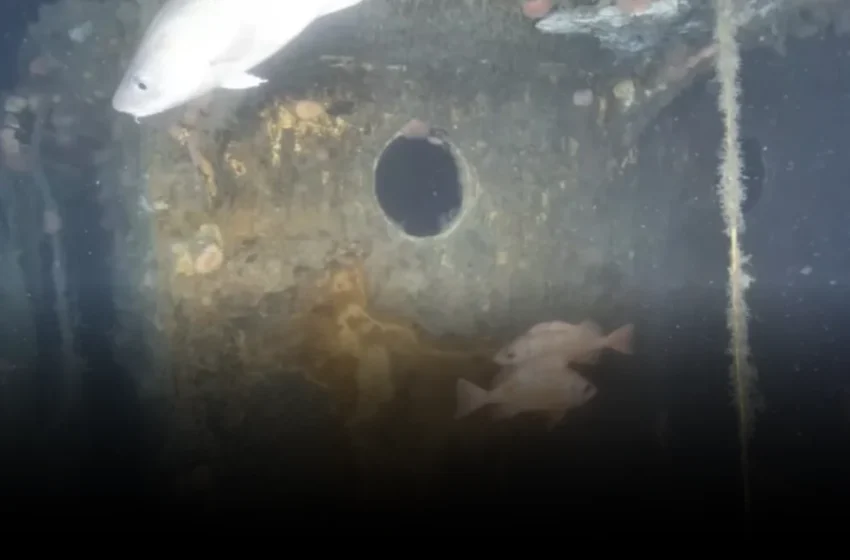
The first images of Sir Ernest Shackleton’s Quest, recently unveiled by the Royal Canadian Geographic Society, are not merely historical artifacts. They are a stark demonstration of how far deep-sea exploration technology has advanced, transforming what was once an impossible quest into a precise, data-driven operation.
This isn’t about intrepid divers battling crushing depths; it’s about autonomous underwater vehicles, sophisticated sonar mapping, and AI-powered image processing. The celebrated discovery of the Quest, sixty years after its 1962 sinking, represents a quiet triumph for marine robotics that often goes unacknowledged.
The original expedition, Shackleton’s final journey, was equipped with early 20th-century marvels like a wireless set and an odograph for charting routes. Fast forward a century, and finding such a wreck requires a fundamentally different class of technology, far removed from the romanticized image of explorers poring over ancient charts.
There’s a curious dissonance in how these discoveries are presented: the public gets the legend, while the underlying technological feats remain largely unsung, relegated to specialist journals. Framing these finds as purely historical narratives—’the spirit of adventure’—serves to romanticize the process, obscuring the vast capital and complex engineering now required, which in turn simplifies public appeals for funding and attention, benefiting the institutions involved by maintaining a palatable, traditional image.
Scanning the Abyss: The Tech Behind the Find
The search for the Quest, much like the prior discovery of the Endurance in 2022, relied on cutting-edge subsea imaging and data analytics. These aren’t just powerful cameras on ropes; they are complex systems capable of operating autonomously for extended periods in environments hostile to human life.
AUVs, or Autonomous Underwater Vehicles, are the true workhorses of modern deep-sea archaeology. Equipped with multi-beam sonar arrays, these machines can map vast swathes of the seafloor with unprecedented detail, compiling bathymetric data that reveals anomalies invisible to older, less precise methods.
Once a target is identified, the next phase involves high-resolution optical and acoustic imaging. This often entails multiple passes by an AUV or remotely operated vehicle (ROV), gathering thousands of images that are then stitched together computationally. This process creates a 3D digital model of the wreck site, allowing for detailed analysis without physical intervention.
The sheer volume of data generated by these deep-sea expeditions demands significant computational power and advanced algorithms. From noise reduction in sonar returns to object recognition in optical data, AI infrastructure plays an increasingly critical role in making sense of the deep’s digital echoes.
The New Gold Rush: Data, Discovery, and Funding
The celebration of the Quest’s imagery is deserved, but it prompts a deeper look at the economics and incentives driving these expeditions. Modern deep-sea exploration is less about individual heroism and more about institutional backing, advanced technological partnerships, and the monetization of data.
Who owns the terabytes of raw sonar scans and photographic data? What are the long-term implications for access, preservation, and scientific research when commercial entities or private funders are integral to these discoveries? These questions are rarely foregrounded in public announcements, yet they are crucial for the future of marine archaeology and oceanography.
The current incentive structure subtly downplays the technical marvels, allowing the narrative to focus on historical significance, which resonates more broadly with public funding bodies and private donors than a highly technical exposition of advanced sensor fusion or underwater navigation algorithms. This selective storytelling, while effective for PR, masks the underlying revolution.
The discovery of the Quest, a ship designed for Arctic exploration and later refitted for the Antarctic, serves as a poignant reminder that while the spirit of adventure endures, the tools of exploration have undergone a radical transformation. The real story isn’t just that another historical vessel has been found; it’s that we now possess the digital lens and autonomous capabilities to systematically peel back the ocean’s veil, revealing secrets with precision unimaginable to Shackleton himself. This marks a new era where history is not merely found, but meticulously reconstructed, byte by byte, from the cold, dark depths.
