
Local Drones: America’s Quiet Expansion of Surveillance, One Firework Fine at a Time
- Tech
Arjun Vedanta
- 0
- 4 minutes read
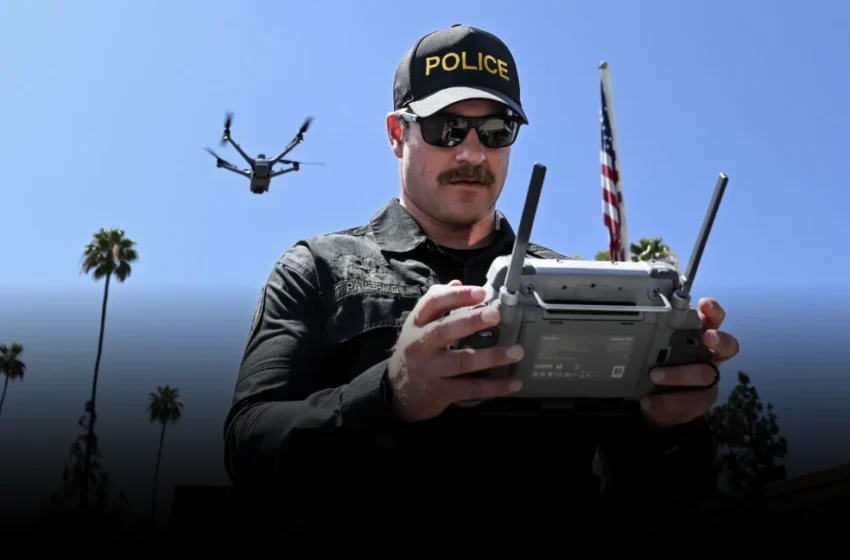
The Quiet Creep of Local Surveillance
The $100,000 fine levied by the Sacramento Fire Department this Fourth of July, thanks to new drone surveillance capabilities, isn’t just a headline about illegal fireworks. It’s a stark, financially impactful data point in a far larger, less scrutinised trend: the rapid, decentralised expansion of domestic surveillance technology into the hands of local municipal authorities across the United States. While Silicon Valley narratives often fixate on facial recognition or federal data breaches, the real privacy frontier is being quietly redrawn in hundreds of towns and cities, under the banner of public safety.
This year, as America marked its 250th anniversary, the celebration became a proving ground for aerial monitoring. Police and fire departments, previously limited by ground patrols or fixed cameras, now routinely deploy drones for a multitude of tasks. Sacramento’s Captain Justin Sylvia noted their new drones offer high-resolution video, capable of pinpointing addresses via Google Maps—a capability that transforms anonymous crowds into identifiable individuals in moments.
The incentive for this shift is clear and often persuasive: drones offer a perceived efficiency in tackling issues from wildfire prevention to crime. They promise to reduce the costly fires, injuries, and noise pollution associated with illicit pyrotechnics. Yet, this piecemeal adoption means a patchwork of oversight, varying wildly from county to county, city to city. What starts as a specific solution for a defined problem, like firework enforcement, rarely stays confined to its initial mandate.
Beyond Fire Hazards: Mission Creep Takes Flight
Drones, by their very nature, are versatile platforms. A system acquired for fire spotting during July 4th celebrations can just as easily monitor public gatherings, traffic patterns, or protest movements the rest of the year. This expansion of capabilities, often termed mission creep, is not a hypothetical concern; it is an established pattern in the lifecycle of new surveillance technologies. The ability to collect high-resolution aerial data on an entire neighbourhood for one purpose inevitably opens the door for its application in others.
Consider the data. Who owns it? How long is it stored? What analytical tools—perhaps even AI-powered object detection or behavioural analysis—are applied to it? These are questions rarely debated at the municipal procurement level, far from the public forums that scrutinise national or even state-level surveillance programs. The original article focuses on the immediate deterrence of fireworks, missing the critical implication: a single drone deployment contributes to a sprawling national data mosaic, fragmented but potentially pervasive.
The most concerning aspect of this proliferation isn’t the initial use case, but the precedent it sets for data collection and algorithmic application by hundreds of disparate local entities, creating a fragmented but pervasive de facto national surveillance grid by stealth. This bottom-up approach to ubiquitous monitoring often evades the broader civil liberties discussions that accompany federal initiatives, precisely because each local rollout appears minor in isolation.
A Patchwork Panopticon Takes Flight
The narrative of drones as benign public safety tools masks a significant shift in the balance between individual privacy and state power at the most granular level of governance. While the concept of a ‘smart city’ often conjures images of efficiency and convenience, the reality on the ground—or, more accurately, in the sky—is a relentless expansion of eyes and ears. These municipal drone fleets are essentially adding new layers to an emergent, decentralised panopticon, capable of persistent, wide-area surveillance.
Unlike traditional CCTV, which is static, drones offer dynamic, mobile oversight, providing a new dimension of observation that can be deployed reactively or proactively. The commercial ecosystem around this includes numerous drone manufacturers and software providers who benefit from the burgeoning demand, further incentivising the adoption of this technology. These vendors often frame their products in terms of public good, making it easier for local governments to justify their purchases.
This quiet revolution in surveillance bypasses the loud, often gridlocked debates over privacy legislation. It establishes a precedent where advanced aerial data collection becomes a routine operational expense for a fire department, not a contentious policy decision. The cumulative effect of thousands of local governments adopting these capabilities without a coherent national framework for data governance, retention, and access will profoundly reshape the landscape of civil liberties in America, one high-resolution flight at a time.
