
Google’s Quantum Calibration Fix: A Software Detour on the Road to Hardware Stability
- Artificial Intelligence
Arjun Vedanta
- 0
- 6 minutes read
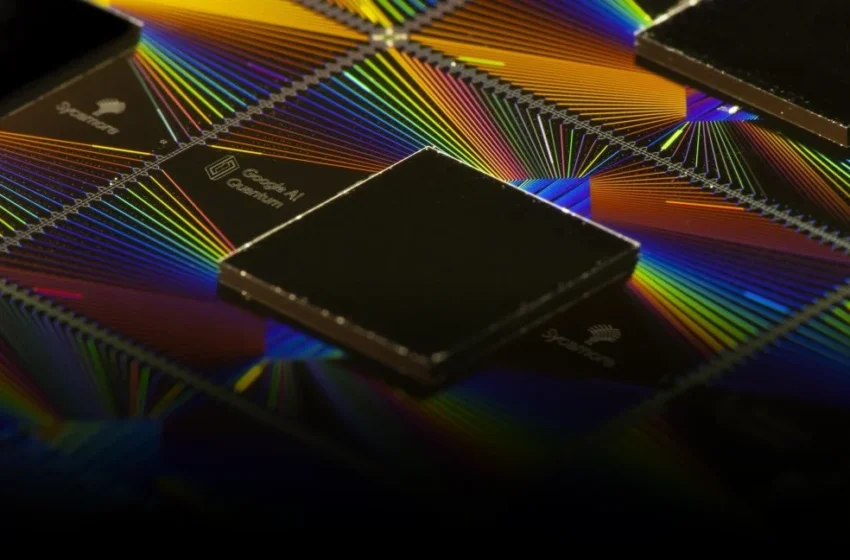
Google’s latest quantum computing announcement, lauded by some as a subtle but critical step forward, is less a triumph of quantum physics and more a sophisticated act of engineering jujutsu – using software to sidestep a persistent hardware vulnerability. The company claims it has figured out how to integrate processor calibration with quantum error correction, a move that promises to combat qubit drift during prolonged computations. This technical feat, while impressive on its own terms, fundamentally re-frames a core stability challenge as a problem solvable through algorithmic cleverness rather than foundational material science. It’s a classic Silicon Valley response: when the physical world pushes back, write more code.
Quantum Stability: A Software Patch for Hardware’s Imperfections
For years, the Achilles’ heel of superconducting quantum processors has been their inherent sensitivity, operating mere millikelvin above absolute zero. Tiny manufacturing inconsistencies among individual qubits necessitate an intricate calibration process, tuning microwave pulses to achieve optimal gate fidelities and minimize error rates. This pre-computation ritual, however, becomes a significant liability as quantum algorithms grow longer and more complex; the exquisitely delicate quantum states drift over time, rendering initial calibrations obsolete and degrading computational accuracy.
Google’s recent work addresses this head-on by finding a way to perform real-time calibration using the same data stream already leveraged for quantum error correction. In essence, the system now constantly self-corrects its control parameters while simultaneously working to preserve the fragile quantum information from environmental noise and decoherence. It’s an elegant solution, yes, but it’s also a computational bandage over a deeper wound: the fundamental instability of the underlying hardware itself, a challenge shared by competitors like IBM with their own transmon qubit architectures.
This approach highlights a growing trend in the quantum space, where software advancements are often presented as “solving” problems that are, at their root, material science or fabrication challenges. While certainly a pragmatic step for current Noisy Intermediate-Scale Quantum (NISQ) devices, it raises questions about the long-term trajectory toward truly fault-tolerant quantum computing. Are we inadvertently pushing off the harder, foundational work by continuously optimizing around hardware limitations, rather than investing more heavily in intrinsic qubit stability from the ground up?
The Illusion of “Solving” Calibration: Who Benefits?
The original article might suggest this is purely a technical hurdle overcome, but the implications run deeper into the strategic maneuvering within the nascent quantum industry. By cleverly integrating calibration into error correction, Google positions itself as a leader not just in raw qubit count or quantum volume, but in the sophisticated control systems essential for practical quantum operations, distinguishing its full-stack capabilities. For Google, this move solidifies its position as a leader in quantum software and control systems, potentially offering a more marketable narrative and quicker path to demonstrations than waiting on elusive material breakthroughs.
This strategy is particularly valuable in a landscape where companies like IBM, Rigetti, Quantinuum (using trapped ions), and even European consortia are aggressively pursuing their own quantum architectures and benchmarks. Presenting a software-based solution to a persistent hardware challenge offers a narrative of progress that is immediately demonstrable and less reliant on the painstaking, multi-year cycles of materials research. It’s a way to maintain momentum and investor confidence in the short term, without necessarily requiring a “better” physical qubit from a manufacturing perspective.
Yet, the irony is stark: we’re building exquisitely sensitive machines that require constant digital babysitting, deferring the hard questions about their intrinsic robustness. This isn’t about improving the inherent signal-to-noise ratio within the superconducting transmon qubits themselves, but rather about writing smarter software to manage their inherent imperfections and the effects of environmental noise. It’s a testament to ingenious engineering, perhaps, but also a quiet acknowledgement of the physical world’s stubborn resistance to perfectly stable quantum states.
Beyond Drift: The Path to Truly Fault-Tolerant Quantum Computing
While dynamic calibration unquestionably prolongs the coherence times of logical qubits and enables longer algorithms, it does not fundamentally alter the underlying physics of decoherence, nor does it eliminate the need for cryogenic systems. The ultimate goal of fault-tolerant quantum computing requires more than just clever control protocols; it demands qubits that are inherently more stable, less prone to environmental interference, and easier to manufacture with high uniformity and minimal variance. Whether through proposed topological qubits, which offer native error resilience, or alternative architectures like those based on trapped ions or photonics, which face their own laser drift challenges and scaling hurdles, the quest for intrinsic stability remains paramount.
Relying heavily on software-driven compensation mechanisms for fundamental hardware flaws introduces its own layer of complexity and potential overhead. Every additional line of control code, every compensatory algorithm, adds to the computational burden and potential points of failure, even as it addresses another. This becomes a delicate balancing act between mitigating errors and the significant computational resources required to do so, a critical factor for scaling beyond current experimental prototypes and achieving practical quantum supremacy for real-world problems.
This breakthrough is certainly a milestone for quantum computing’s engineering phase, pushing the boundaries of what’s achievable with current superconducting hardware and advancing our understanding of quantum control. However, it also serves as a stark reminder: until the fundamental material and architectural challenges are met head-on, much of the “progress” we celebrate in quantum computing will continue to involve ever more sophisticated software bandaids. The true quantum revolution will arrive when we build machines that are as robust as they are brilliant, not just cleverly managed to mask their inherent frailties.
