
The Looming Battle for Your Car’s Software: Why ECU Tuning is Just the Start
- Software
Arjun Vedanta
- 0
- 5 minutes read
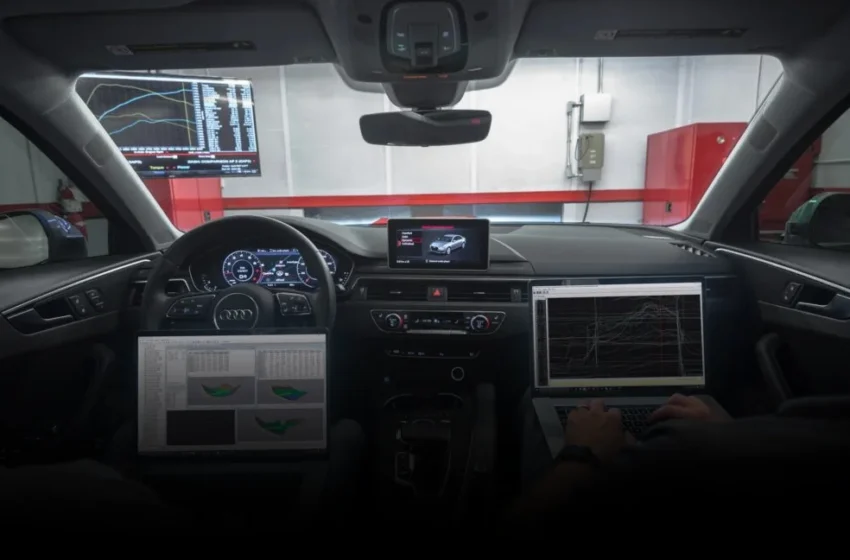
The Code Barrier: OEMs vs. Ownership
A curious struggle is unfolding under the hood of modern automobiles, one that has far less to do with mechanical engineering and everything to do with code. This isn’t a story about horsepower figures or torque curves, though those are the visible symptoms. It’s about the quiet, relentless assertion of control by original equipment manufacturers (OEMs) over what consumers believe they own, using software as their primary lever.
For decades, companies like Alabama-based Audi Performance & Racing (APR) have thrived by offering aftermarket performance enhancements, primarily through electric control unit (ECU) tuning. What was once a relatively straightforward process, allowing significant boosts in engine output for everything from naturally aspirated to turbocharged vehicles, has become a digital minefield. OEMs are tightening security protocols, encrypting firmware, and implementing complex authentication routines, transforming the act of modifying a car’s performance into an increasingly arduous, almost adversarial, task.
The argument from manufacturers is typically couched in terms of safety, emissions compliance, and intellectual property protection. These are valid concerns, to a point. Yet, beneath these explanations lies a more fundamental, self-serving incentive: control over the entire product lifecycle. By locking down the ECU, OEMs restrict independent repair shops, dictate upgrade pathways, and funnel consumers back into their proprietary service networks, often paving the way for lucrative subscription services for features once standard or easily modified. This isn’t just about preventing a third-party from boosting your car’s speed; it’s about controlling who can fix it, how long it lasts, and what features you can access.
Beyond Horsepower: The Right to Repair and Modify
The plight of ECU tuners serves as a canary in the coal mine for a much broader issue: the right to repair and modify products in an increasingly software-defined world. The lines between hardware and software have blurred, and with that, the traditional understanding of ownership is eroding. When a company can remotely disable features, void warranties for non-OEM modifications, or simply make it technically impossible to access and alter a device, are we truly buying a product, or merely licensing its functionality?
This isn’t confined to performance vehicles. The same battle plays out with agricultural equipment, where farmers are fighting for the right to repair their own tractors against software lockouts by manufacturers like John Deere. It’s evident in smartphones, where independent repair shops struggle against proprietary parts and diagnostic tools. Even in home appliances, embedded software is increasingly dictating functionality and lifespan. The common thread is the digital tether that allows manufacturers to maintain post-sale influence, effectively extending their revenue models and market dominance beyond the initial purchase.
The current situation, where aftermarket specialists like APR must expend ever-greater resources to navigate these digital fortresses, underscores a significant shift. In the early naughts, extracting more power from a B5-generation Audi S4 was a matter of minutes once the right tools were developed. Today, it’s a constant cat-and-mouse game, demanding deep cryptographic understanding and reverse engineering expertise, often against a backdrop of legal threats. This arms race, framed as cybersecurity, is effectively creating an ecosystem of planned obsolescence and forced reliance on official channels.
A Global Precedent for Digital Property
The global tech landscape watches this battle closely, though Silicon Valley reporters, often focused on the next big app or funding round, frequently miss the structural implications. Unlike the US, where “right to repair” legislation faces an uphill battle against powerful lobbying, regions like the European Union have begun to legislate more forcefully on consumer rights concerning digital products. Their directives, while not always perfect, signal a growing recognition that true ownership in the 21st century requires control over the underlying software, not just the physical shell.
The most skeptical observation here is that OEMs’ stated concern for vehicle safety and emissions often conveniently aligns with their desire to monopolize service and upgrade paths, turning what should be a consumer choice into a restrictive ecosystem. This isn’t about protecting the driver; it’s about protecting the revenue stream. As vehicles become autonomous and connected, the data they generate will also become a battleground, further intertwining software control with privacy and competition concerns.
This evolving dynamic demands a re-evaluation of what ‘ownership’ means for software-defined products. If we cannot freely modify, repair, or even fully utilize the capabilities of the goods we purchase without the manufacturer’s permission, then the concept of personal property itself has fundamentally shifted. The struggles of a specialized ECU tuner in Alabama might seem niche, but they echo a much larger fight for consumer autonomy that will define our relationship with technology for decades to come, far beyond the confines of a turbocharged engine.
