
The False Authority Fallacy: RFK Jr. and the Erosion of Public Health Credibility
- Government & Policy
Arjun Vedanta
- 0
- 4 minutes read
The Deceptive Lure of Unofficial Authority
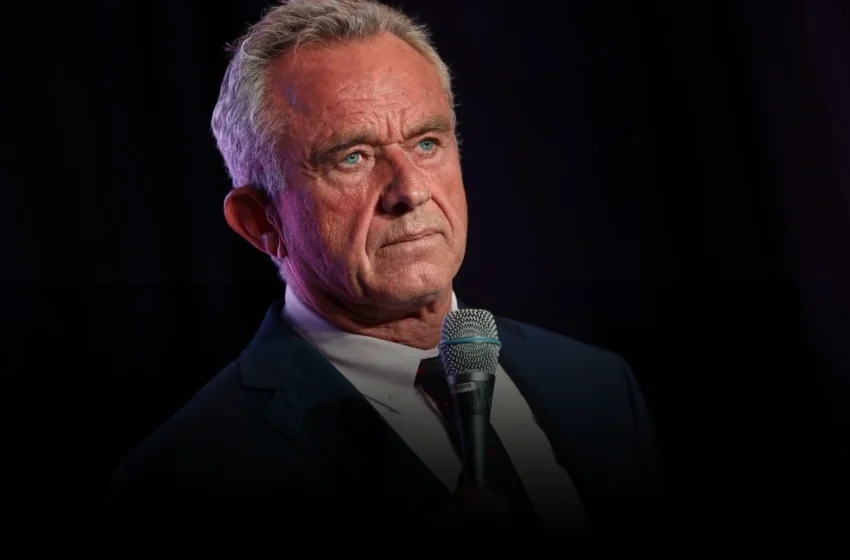
A recent dispatch noted Robert F. Kennedy Jr., described as “US Health Secretary,” slated to deliver a keynote at an anti-vaccine conference alongside the discredited former doctor Andrew Wakefield. The immediate jolt from that supposed title is the point: Kennedy holds no such government position. This fundamental misrepresentation—whether by conference organizers, eager media, or a complicit public—is not a mere semantic oversight; it represents a calculated weaponization of perceived authority, a potent tactic that fundamentally undermines the arduous work of legitimate public health bodies globally.
The event itself, hosted by Children’s Health Defense (CHD), an organization Kennedy once led, brings together figures whose careers are built on challenging established medical consensus. Wakefield, infamously stripped of his medical license after a fraudulent study attempting to link autism with the MMR vaccine, serves as a stark reminder of the stakes. His actions, deemed serious professional misconduct by a medical board after mistreating vulnerable children, should relegate him to obscurity. Instead, his enduring presence on such platforms, amplified by figures like Kennedy, highlights a deeply troubling dynamic where scientific evidence is secondary to narrative.
Global Echoes of Domestic Disinformation
What transpires in Washington, D.C., with a figure like Kennedy, reverberates far beyond American borders. The digital age ensures that discredited claims, once confined to fringe publications, now metastasize across social media and encrypted channels, reaching populations in Geneva, Singapore, and London with equal velocity. This global dissemination creates a fertile ground for vaccine hesitancy, even in regions where public health infrastructure is fragile and the re-emergence of preventable diseases carries catastrophic implications.
This particular conference, occurring now, serves less to inform and more to re-legitimize discredited figures within a specific, politically charged echo chamber, consolidating a narrative that benefits its orchestrators through continued relevance and donations. The World Health Organization and national health ministries across Europe and Asia dedicate immense resources to building trust in immunisation programs; events like this actively work to dismantle it, often with minimal accountability for the real-world health outcomes.
One cannot help but observe the brazenness of such a gathering: the most dangerous narratives aren’t those outright rejected, but those subtly disguised by a veneer of legitimacy, even if that veneer is entirely fabricated. When a public figure, riding on a famous name, allows himself to be cast in an official role he does not possess, it contaminates the very discourse necessary for informed public health decisions.
The Broader Erosion of Scientific Consensus
The anti-vaccine movement, exemplified by the enduring partnership between CHD and its prominent former leader, is merely a symptom of a much larger, more corrosive trend: the systemic erosion of trust in scientific consensus. In an era where complex issues demand nuanced understanding, simplicity and sensationalism often triumph. Public health advice, painstakingly derived from rigorous research and peer review, finds itself battling against carefully constructed fictions presented with compelling conviction.
The consequence is tangible. Resurgences of measles, once virtually eradicated in many developed nations, directly correlate with declining vaccination rates. The strain on healthcare systems, already buckling under various pressures, is exacerbated not by new pathogens but by old, preventable ones. This environment makes it exponentially harder for actual medical and scientific experts to communicate critical information, as their authority is constantly questioned by voices lacking any factual basis.
Ultimately, the saga of RFK Jr.’s perceived ‘Health Secretary’ title and his platforming of figures like Wakefield is more than a story about vaccines. It is a stark illustration of how easily institutional credibility can be mimicked and weaponized. The structural implication is clear: without a robust defence of verified scientific fact and a collective skepticism towards self-appointed authorities, the global commitment to public health risks becoming perpetually entangled in a web of well-funded, politically expedient misinformation.
