
The Global Disconnect: Why ‘Sustainable Travel’ is More Marketing Than Mandate
- Tech
Arjun Vedanta
- 0
- 5 minutes read
The Illusion of Green: A Systemic Bypass
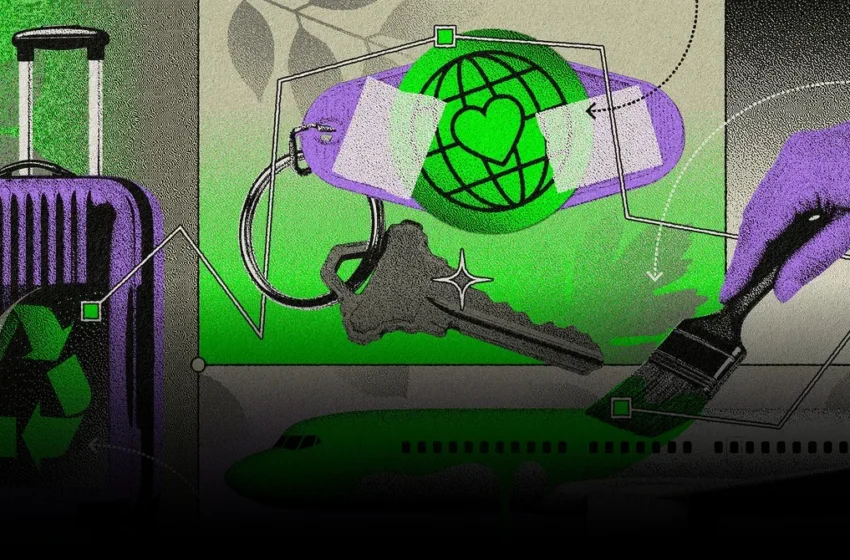
A recent paper in Frontiers in Sustainability laid bare what many discerning travelers already suspected: the ‘eco-friendly’ claims of the global tourism industry are often little more than sophisticated camouflage. The research identified five key categories of greenwashing—from dubious eco-certifications to misleading carbon offsets and the co-opting of ‘green development’ to mask social injustice. But what this deep dive into consumer-level deception doesn’t fully grasp is the profound systemic failure at play, one that extends far beyond individual hotels fudging their linen reuse programs.
This isn’t just about individual businesses being opportunistic; it’s about a global regulatory void that actively enables massive, often foreign-owned, corporate chains to privatize the perception of ecological responsibility. They reap the marketing benefits of a growing ‘sustainable’ travel market while externalizing genuine environmental and social costs onto vulnerable local economies and ecosystems. The outcome is a powerful disincentive for the very structural change the planet desperately needs.
When social psychology research suggests that guests are more likely to reuse towels if told “Join your fellow guests” rather than “Help save the environment,” it highlights a critical insight: human behavior, even altruistic, can be nudged by social norms. Yet, the industry itself often evades its own collective responsibility, preferring the superficial over the substantive. What everyone is missing is that the problem isn’t just a lack of consumer awareness; it’s a lack of enforceable global standards that creates a vacuum for exploitation.
Extracting Value, Externalizing Harm
The core of the issue lies in an asymmetrical power dynamic. Local communities, often in nature-rich regions where ecotourism is pitched most aggressively, bear the brunt of environmental degradation—water scarcity, waste management crises, coastal pollution from resort operations. Yet, the profits frequently flow to distant corporate headquarters. The original article notes, quite astutely, that a locally owned business is more likely to operate with its community and ecosystem in mind, as profits stay local, and accountability is direct. Conversely, the bigger and more distant the owner, the less incentive they possess to coexist genuinely with their neighbors.
This observation is a sharp, contrarian counterpoint to the prevailing narrative that growth in tourism always equates to development. Instead, it often signifies extraction. When an all-inclusive resort, a model fundamentally at odds with sustainable living due to its inherent mass consumption and waste, advertises its green credentials, it is often a smokescreen. These behemoths demand enormous volumes of water for landscaping and pools, generate vast amounts of solid waste, and rely on imported food. Any claims of supporting local economies or environments must be scrutinized with extreme prejudice: are worker wages disclosed? Is significant food sourced locally? Are zero-waste policies rigorously applied beyond a few symbolic gestures?
The current incentive structure is clear: for multinational corporations, it is cheaper and easier to invest in a marketing campaign about sustainability—a glossy brochure featuring pristine beaches and smiling locals—than to undertake the costly and complex structural overhauls required for true environmental stewardship. This framing benefits shareholders seeking reputation boosts and a wider market, rather than the ecosystems and communities ostensibly being ‘helped.’
The Digital Echo Chamber of Greenwashing
The problem is further exacerbated by the digital age. The article correctly flags influencers as a common source of misleading information, particularly those paid to create content. This isn’t just about individual celebrity endorsements; it’s about a digital media ecosystem that prioritizes aesthetics and virality over verifiable fact. An Instagram reel of a seemingly ‘eco-friendly’ resort, replete with straw baskets and refillable toiletries, can generate millions of impressions, creating a powerful illusion of sustainability without a single audit or scientific benchmark.
While certifications like the Global Sustainable Tourism Council (GSTC) and EarthCheck offer some rigor, they are not universally adopted, nor are they immune to the pressures of an industry eager to bypass stringent requirements. LEED certification, while a platinum standard for construction, tells us little about a hotel’s daily operational footprint or its engagement with local ecological realities. Without strong international bodies, perhaps even a UN-backed framework, with teeth to enforce compliance and penalize misleading claims, these certifications remain voluntary and fragmented efforts in a global marketplace.
The absence of clear, enforceable global regulations means the burden of proof falls entirely on the individual consumer. This is an untenable situation. We don’t ask consumers to fact-check every pharmaceutical claim or the structural integrity of every bridge they cross. Yet, when it comes to the planet’s future, we are told to ‘look for details’ and ‘question everything.’ This passive stance from governments and international bodies effectively grants large corporations a license to obfuscate. Until that fundamental power imbalance is addressed through robust, globally coordinated regulation, ‘sustainable travel’ will remain an aspirational marketing slogan, not a universal operating principle.
