
The Robotic Steel Factory: A Glimpse Into Manufacturing’s Unseen Bottlenecks
- Robotics
Arjun Vedanta
- 0
- 5 minutes read
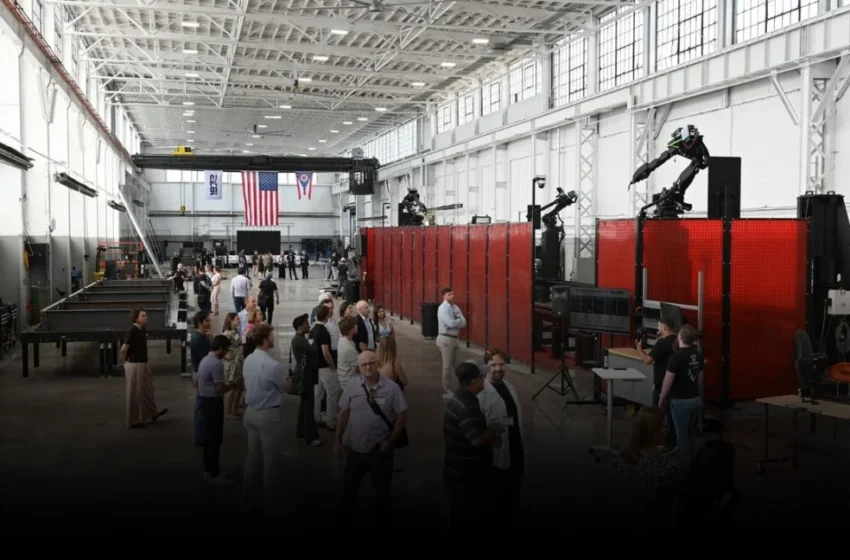
Beyond the Hyper-Automation Hype Cycle
The real story in manufacturing isn’t just about robots replacing humans, but about how specific, capital-intensive automation initiatives like 1872’s robotic steel factory illuminate a fundamental tension: the pursuit of hyper-efficiency in narrowly defined tasks versus the persistent need for adaptability in large-scale infrastructure. Three former SpaceX engineers have, through their new venture 1872, launched a prototype facility in Cincinnati aiming to automate the fabrication of steel parts, specifically skids for AI data centers and small modular nuclear reactors. While the press release will focus on impressive engineering, the critical lens reveals a manufacturing sector increasingly splintered between bespoke, rigid automation and the messy, iterative reality of construction.
This isn’t a fresh idea, of course. Industry has pursued automation for decades, yet the core challenge of balancing speed with flexibility in complex physical production remains. 1872’s CEO, Dan Summers, articulates this pragmatism, noting the company is “building towards autonomy, but we’re not necessarily building in a dogmatic fashion towards full autonomy.” He suggests that reaching 80 percent autonomous operations might be the sweet spot, with “diminishing returns to go to full 100 percent.” This sentiment, though practical, is often glossed over in the relentless narrative of ‘lights-out factories’ and implies a necessary human gap that these highly specialized systems inherently create and depend on, rather than eliminate.
The push to automate steel skids for burgeoning sectors like AI data centers and SMRs is a clear signal of incentive: where demand is high and standardized components are critical, automation offers a compelling proposition. The companies building these next-generation data centers and energy solutions are desperate for faster, more predictable supply chains, and 1872 aims to capture that market by establishing its automated prototype factory by 2027. They benefit from streamlined production, reduced labor costs, and potentially higher quality control. Yet, this strategy also underlines a crucial limitation. Each pivot in design specification for a new reactor type or a different data center configuration could necessitate significant re-engineering of the automation, underscoring the brittle nature of highly optimized systems when faced with evolving requirements.
The Silicon Valley Blind Spot: General Purpose vs. Specialized Robotics
For years, Silicon Valley has championed software and general-purpose AI, often overlooking the sheer inertia and material complexity of physical manufacturing. Reporters focused on apps and algorithms routinely miss the nuanced, multi-layered challenges of bringing true automation to heavy industries. What 1872 is attempting — automating a historically labor-intensive process like steel fabrication—is a profound test of applied robotics, distinct from the agile, easily updated software world. This isn’t just about teaching a robot arm to weld; it’s about handling raw material logistics, quality inspection in harsh environments, and integrating varied fabrication processes like cutting, bending, and assembly, all within tight tolerances and immense forces.
The choice to target steel skids is smart, offering a relatively standardized product for high-growth sectors. However, the path to 80% autonomy is fraught with integration headaches. Consider the adjacent technologies: advanced welding robots, precision cutting lasers, material handling systems, and sophisticated computer vision for defect detection. Each of these components represents a mini-ecosystem of its own, and stitching them together into a seamless workflow demands more than just AI-driven software; it demands robust systems engineering and a deep understanding of metallurgy and civil infrastructure. The implicit assumption that 80% autonomy can be easily maintained when the other 20% involves human intervention for complex exceptions or retooling is, charitably, optimistic, and critically, a potential bottleneck in itself.
Manufacturing Resilience in a Volatile World
The real innovation here isn’t just the application of AI and robotics, but the attempt to build a resilient domestic manufacturing capability for critical infrastructure. Supply chain disruptions during the pandemic, coupled with geopolitical tensions, have highlighted the fragility of relying on distant, often opaque, manufacturing ecosystems. A company like 1872, born from the rigorous engineering culture of SpaceX, is addressing this directly by attempting to localize and de-risk the production of essential components for rapidly expanding energy and compute sectors. This move resonates with broader global trends towards reshoring and securing strategic industrial capacity, a conversation largely absent from the original reporting.
But the question remains: how scalable and adaptable are these hyper-specialized robotic factories? If 1872 succeeds with steel skids, what’s next? Will their systems be able to pivot to other crucial components for, say, offshore wind turbine foundations or advanced modular housing, or will each new product line require a ground-up re-engineering of their ‘autonomous’ cells? The current focus on dedicated applications for specific industries risks creating a new kind of manufacturing silo, trading the flexibility of human labor for the rigidity of fixed automation. This structural implication—that advanced manufacturing might become a collection of highly efficient, yet narrowly purposed, ‘black box’ factories—is the profound, unexamined consequence of efforts like 1872’s, shaping the future of industrial production in ways most tech analysts are still struggling to grasp.
