
The Wild West of AI Kids’ Toys: A Data Minefield Hiding in Plain Sight
- Artificial Intelligence
Arjun Vedanta
- 0
- 7 minutes read
Pixar Got It Wrong (But They’re Close)
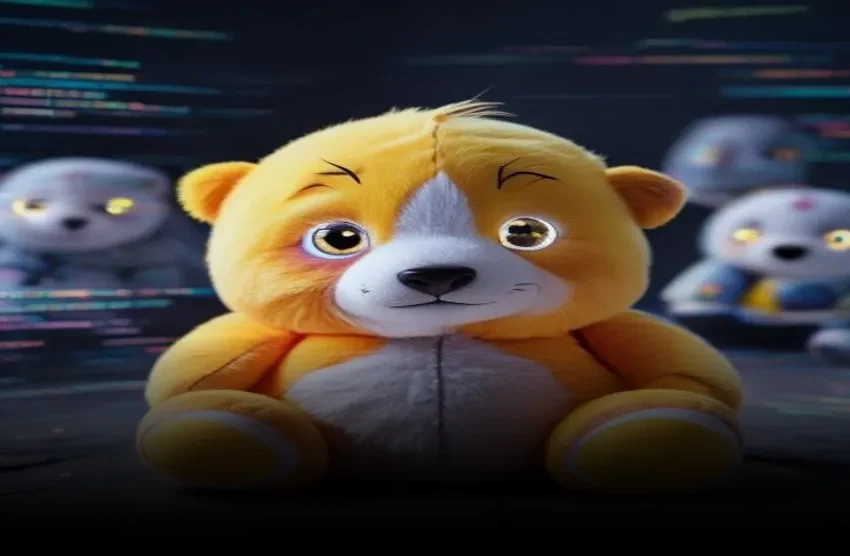
I caught the trailer for Toy Story 5 the other day. The main antagonist? A green, frog-shaped kids’ tablet named Lilypad. A genius new villain for the franchise, no doubt. But honestly, if Pixar had its ear to the ground, they’d have swapped that tablet for an AI-powered plushie or a talking robot. Because the real boogeyman in kids’ tech isn’t a tablet anymore; it’s the cuddly, seemingly harmless AI toy.
What I find fascinating here is the sheer velocity. These AI toys are everywhere. They’re marketed online as friendly companions to children as young as three, promising everything from educational aid to emotional support. And they’re still, astonishingly, a largely unregulated category. Think about that for a second. An AI whispering into a developing mind, unsupervised. It’s a gold rush, only this time, the prospectors are digging for data, not gold, and the claims are being staked right in our living rooms.
From Trade Show Floor to Toddler’s Hand: A Quiet Invasion
It’s easier than ever to spin up an AI companion these days, thanks to accessible model developer programs and what some call ‘vibe coding’—essentially, stitching together APIs with minimal oversight. This isn’t groundbreaking, enterprise-level AI. This is often off-the-shelf, cheap computational power wrapped in plastic and polyester.
By 2026, these things have become a go-to trend in cheap trinkets, lining the halls of every major electronics and toy trade show. I’ve walked those floors – CES, MWC, Hong Kong’s Toys & Games Fair. You see the same pattern every few years: a new tech emerges, then a deluge of me-too products. Remember the smartwatches for kids from a decade ago? Half-baked ideas, privacy nightmares waiting to happen. This feels eerily similar, but with far higher stakes.
The numbers don’t lie. By October 2025, there were over 1,500 AI toy companies registered in China alone. Huawei’s Smart HanHan plush toy sold 10,000 units in China in its first week. Sharp put its PokeTomo talking AI toy on sale in Japan this April. And if you browse for AI toys on Amazon, you’ll mostly find specialized players like FoloToy, Alilo, Miriat, and Miko, the last of which claims to have sold more than 700,000 units. This isn’t a niche. This is a burgeoning, global industry.
The economics are brutal, and that’s usually where corners get cut. These aren’t Apple-level R&D budgets for the most part. They’re often lean operations, prioritizing speed to market over, say, rigorous security audits or long-term ethical considerations.
The Real Cost: Beyond the Purchase Price
Here’s the thing: calling these ‘toys’ feels like a deliberate misdirection. They are sophisticated, data-gathering devices interacting with the most vulnerable members of our society. What I worry about is what’s happening beneath the surface, behind the cute blinking eyes and the synthesized voice.
Nobody’s really talking about the real problem — which is the complete absence of a universally accepted ethical framework for AI interaction with minors. We’ve seen scandals with internet-connected dolls collecting children’s conversations in the past. Remember the My Friend Cayla doll that was deemed an illegal spying device in Germany? That was 2017. We learned nothing, apparently, because here we are, facing a much more advanced, much more pervasive version of the same issue.
The Data Goldmine Underneath the Fur
These devices aren’t just reciting facts; they’re listening. They’re collecting voice prints, interaction logs, speech patterns, and potentially even emotional responses through tone analysis. This data is often uploaded to proprietary cloud servers for processing, often handled by third-party AI service providers. And who’s vetting those providers? Who owns that data? The terms of service, if they exist and are legible, are usually buried deep in legalese that no parent, let alone a three-year-old, is ever going to read or comprehend.
This isn’t just about privacy in a vague sense. This is about creating detailed profiles of children, tracking their development, their preferences, their vulnerabilities. Imagine that data being sold, leveraged for targeted advertising, or worse, used to influence developing minds. The long-term psychological impact of constant, personalized algorithmic interaction on a child’s social skills and critical thinking capabilities is a question we are only just beginning to ask, if at all.
Regulation: A Game of Catch-Up (Or No-Show)
The regulatory landscape is, shall we say, fragmented. In the EU, GDPR offers some protection for children’s data, but enforcement across a vast range of small, global manufacturers is a nightmare. In the US, COPPA (Children’s Online Privacy Protection Act) is a start, but it was designed for a different era of internet usage, not sentient-ish robotic companions.
This is a global industry, remember? A company registered in Shenzhen can sell its AI toy on Amazon US. How do you enforce privacy laws across borders when the toy itself is just a conduit to a server in a different jurisdiction? It’s a Wild West. Regulators are still debating whether AI constitutes a ‘product’ or a ‘service,’ let alone how to govern its interaction with minors.
Let’s be honest about this: these companies have a clear financial incentive. The AI isn’t just a gimmick; it’s the engine for data collection, for future potential monetization through content subscriptions, personalized learning modules (with inherent data feedback loops), or even just selling aggregated behavioral data to market researchers. The upfront cost of the toy often barely covers manufacturing. The real value is in the continuous interaction.
A Cautionary Tale, Still Being Written
I’ve watched companies try this before. The early IoT boom, the ‘smart home’ craze — many of those products ended up being abandoned, their cloud services shut down, leaving expensive bricks. What happens when one of these AI toy companies goes bust? Does your child’s emotional support bot simply cease to function, or worse, does its unmaintained backend become a backdoor into your home network? Platform dependency here is a massive hidden risk.
It’s not all doom and gloom, of course. AI *could* offer incredible educational tools, personalized learning, and genuine companionship for children in specific contexts. But the current uncontrolled explosion of these devices, coupled with a palpable lack of transparency and regulatory oversight, paints a much bleaker picture. We’re essentially letting thousands of untested algorithms babysit our children, and we haven’t even bothered to run a background check.
