
The Wild West of AI Kids’ Toys: A Parent’s Digital Minefield
- Artificial Intelligence
Arjun Vedanta
- 0
- 6 minutes read
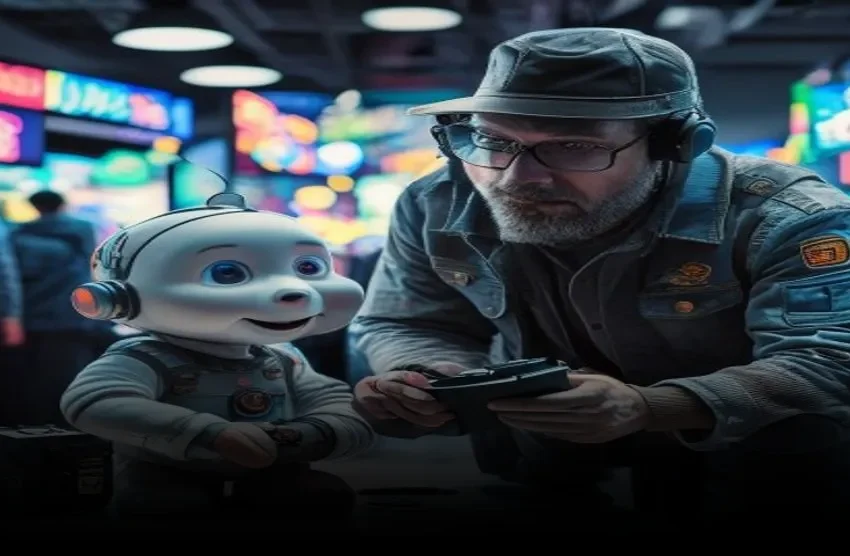
The Unregulated Frontier of Childhood AI
Pixar, bless their hearts, just unveiled their next big villain for Toy Story 5: a green, frog-shaped kids’ tablet named Lilypad. A genius move, tapping into that universal parental dread of screen addiction. But honestly, if Pixar truly had its ear to the ground, the antagonist wouldn’t be a mere tablet. It would be an AI kids’ toy. A seemingly innocuous, chatty companion. And yes, that’s as scary as it sounds.
These things are everywhere now. Or at least, they’re being marketed that way online, presented as friendly sidekicks for children as young as three. What I find fascinating here is how quickly this category has exploded, almost entirely unchecked. It’s a gold rush, powered by the sheer ease of spinning up an AI companion these days, thanks to accessible model developer programs and what some in the industry jokingly call “vibe coding” – essentially, tweaking existing large language models with a thin veneer of kid-friendly persona.
Let’s be honest about this: these aren’t just novelties anymore. By 2026, they’ve become a go-to trend in cheap trinkets, lining the halls of every major trade show from CES and MWC to the sprawling Hong Kong Toys & Games Fair. The numbers, when you can even get them, are eye-watering. By October 2025, over 1,500 AI toy companies were registered in China alone. Huawei’s “Smart HanHan” plush toy, for instance, shifted 10,000 units in its first week in China. Sharp put its “PokeTomo” talking AI toy on sale in Japan this April. This isn’t niche; this is mainstream.
The Seductive Appeal and The Hidden Hooks
When you browse Amazon for AI toys, you’re past the early adopters. You’re seeing specialized players like FoloToy, Alilo, Miriat, and Miko, the latter of which proudly claims more than 700,000 units sold globally. That matters. That’s a significant footprint in our homes and, more critically, in the formative years of our children.
The appeal is obvious, especially for exhausted parents. A companion that can tell stories, answer questions, and provide endless engagement. It sounds like a dream. But I’ve watched companies try variations of this before, from Tamagotchis to Furby Connects, and here’s what usually happens: the initial fascination fades, but the underlying infrastructure—the data collection mechanisms, the cloud dependencies—often remains, quiet and hungry.
Data Harvesting & The Digital Afterlife of a Toy
Nobody’s talking enough about the real problem here — which is data. Specifically, our children’s data. These AI toys, almost by definition, are listening devices. They record conversations, process speech, and interact in ways that are deeply personal. What happens to that audio? Where is it stored? Who has access to it? And for how long?
Most of these toys aren’t running their AI entirely on-device; they’re transmitting data to a cloud service. This means a child’s questions about their day, their fears, their imaginative ramblings, are being sent, processed, and often retained by a third-party company. This isn’t just about privacy; it’s about the potential for behavioral profiling of children from a shockingly young age. Imagine what that data could be used for twenty years from now.
The economics are brutal. Many of these AI toy companies are small, venture-backed startups. Their long-term monetization strategy often extends beyond the initial purchase price. Are we looking at subscription models for advanced AI features? Is the data itself the product, anonymized and aggregated for market research? Or worse, will these companies eventually pivot, be acquired, or simply fail, leaving a trove of sensitive child data in legal limbo or, potentially, in the hands of bad actors?
Echoes of the Past, Warnings for the Future
We’ve seen this movie before. The early days of the internet, the rise of social media, the smart home craze – each promised convenience and connection, often delivering them at the cost of our privacy and, sometimes, our sanity. This AI toy boom feels similar, but with higher stakes. We’re talking about direct, intimate interaction with developing minds.
Remember the uproar over Genesis Toys’ ‘My Friend Cayla’ doll? It was found to be recording children’s conversations and transmitting them unencrypted, leading to regulatory action in Germany. That was years ago, and the AI capabilities then were rudimentary compared to today’s large language models. The problem hasn’t gone away; it’s simply become more sophisticated and harder to detect.
A subtle skepticism I hold: while the AI models themselves are impressive, the actual ‘intelligence’ in many of these toys feels less about fostering genuine interaction and more about addiction loops designed to keep kids engaged and parents buying accessories. It’s a platform play, only the platform is embedded in a plush toy or a brightly colored plastic gadget. And what happens when the cloud service supporting your child’s beloved AI friend shuts down? The toy becomes a brick. A very expensive, very disappointing brick.
What Comes Next? A Reckoning, Or More Wild West?
Regulators are always playing catch-up. Laws like COPPA in the U.S. and GDPR-K in Europe exist, but enforcing them on a global scale, particularly with new, rapidly evolving AI capabilities, is a Herculean task. How do you audit an AI toy’s data retention policies or its potential for unintended bias? How do you ensure models aren’t inadvertently exposing children to inappropriate content, or subtly influencing their development?
The challenge isn’t just legal; it’s ethical. As parents, educators, and technologists, we need to ask harder questions about the long-term impact of these always-on digital companions. Are we outsourcing critical aspects of our children’s emotional and intellectual development to algorithms that prioritize engagement over wellbeing? Are we creating a generation fluent in AI interaction but perhaps less adept at nuanced human connection?
We are, I think, at a crucial inflection point. This isn’t a fleeting gadget trend; it’s a foundational shift in how children might interact with technology. Without robust regulation, clear ethical guidelines, and informed parental vigilance, this wild west of AI toys could leave more than a few digital orphans in its wake. And unlike Pixar’s villains, the real dangers here won’t be easily put back in a box.
