
TSMC’s AI Bet: A Wind-Powered Warning for Tech
- Special
Arjun Vedanta
- 0
- 7 minutes read
The Silicon’s Shadow: AI’s Unseen Power Hunger
It’s a story I’ve seen play out countless times over my fifteen years covering this industry: a company hits an unprecedented boom, raking in profits, only to suddenly face a fundamental, physical constraint. This time, it’s TSMC, the undisputed king of advanced chip manufacturing, riding the crest of the AI revolution. Their balance sheets are surging, a testament to the insatiable demand for the specialized silicon that powers every generative marvel from ChatGPT to autonomous vehicles. But what’s fascinating here isn’t just the profit margin; it’s the quiet, yet monumental, scramble for power.
What I find truly telling is that even the titans of the semiconductor world, whose products live in the ethereal realm of bits and bytes, are being forced to grapple with something as utterly physical as electricity. The AI energy demand isn’t just a talking point for think tanks anymore; it’s a strategic imperative that’s pushing a company like TSMC to sign 30-year deals for offshore wind farms. Let’s be honest about this: they’re not doing it solely for environmental bragging rights. They’re doing it because, without reliable, massive amounts of energy, there are no chips. No chips, no AI. Simple as that.
Taiwan, a strategic fulcrum in global geopolitics and the very heart of advanced chip production, faces a precarious energy balance. Its reliance on imported fossil fuels is a vulnerability, and the energy needs of its industrial backbone — especially TSMC’s colossal fabrication plants — are only escalating. This isn’t just about Taiwan’s national grid; it’s about the resilience of the global tech supply chain. The scale of this dependency is truly staggering.
The Megawatt Math: A 30-Year Bet
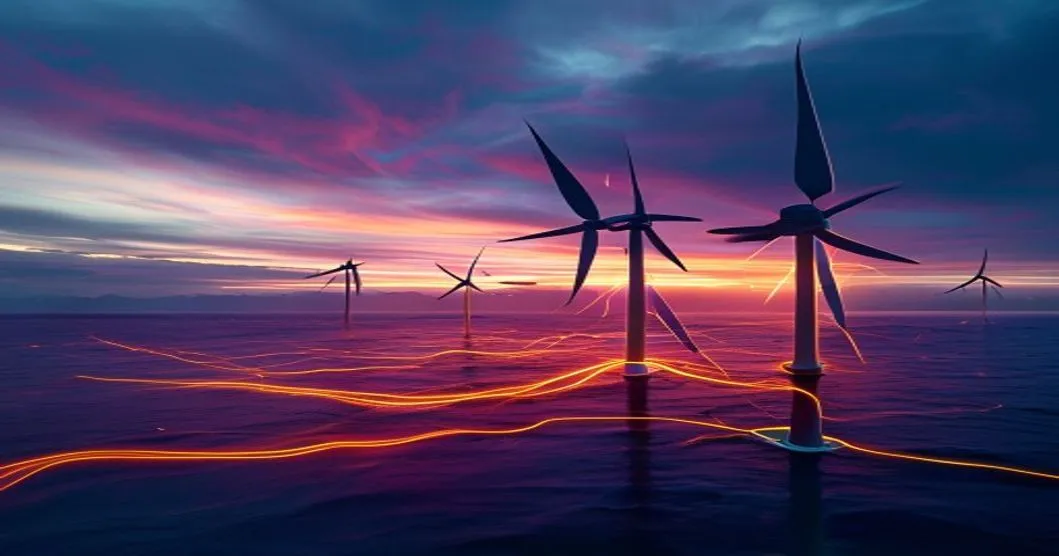
The details of TSMC’s move are stark. They’ve inked a 30-year corporate power purchase agreement (PPA) with Canada’s Northland Power, committing to take 100 percent of the output from the Hai Long offshore wind project. We’re talking more than 1 gigawatt of power capacity across three sites in the Taiwan Strait. That’s enough to power the equivalent of over a million Taiwanese households. A million. Think about that for a second.
This isn’t some short-term greenwashing initiative; it’s a multi-decade infrastructure commitment that underscores the long-term strategic calculations being made at the highest levels of the tech industry. When a company locks in energy supply for three decades, it tells you everything you need to know about the expected lifespan and energy requirements of their core business. They know, better than anyone, what’s coming down the pipe.
I’ve watched companies try similar pivots before, from dot-com era data centers building their own power plants to crypto miners seeking out the cheapest hydroelectric dams globally. The challenge of securing stable, affordable energy is as old as industry itself. But the scale, the complexity, and the geopolitical backdrop of this TSMC deal feel different. This isn’t just about efficiency; it’s about existential continuity. (And yes, that’s as scary as it sounds).
Beyond the Chip: The True Price of Progress
The conversation around AI tends to focus on its dazzling capabilities, its transformative potential, and, increasingly, its ethical dilemmas. But who actually benefits if the energy required to run it brings grids to their knees and accelerates climate change? Nobody’s talking enough about the real problem — which is the fundamental resource drain. The fact is, AI’s growth isn’t just digital; it’s intensely physical, demanding incredible amounts of power.
Consider this: a 2023 International Energy Agency (IEA) report estimated that electricity consumption by data centers, driven by AI, could double by 2026. Double. In just three years. This isn’t just a concern for TSMC; it’s a looming crisis for utilities, governments, and every citizen. The energy footprint of training a single large language model can be equivalent to several car lifetimes of emissions, and that’s before we even get to inference and daily usage. This isn’t some abstract future problem; it’s happening right now.
This isn’t about privacy risks in the traditional sense, or a monetization trap for consumers (not directly, anyway). This is about a hidden cost, an externality that the broader public often overlooks. The environmental burden, the strain on existing energy infrastructure, the geopolitical jockeying for resources – these are the true prices of our insatiable digital appetite. And they’re costs that will be borne by all of us, whether we’re aware of it or not.
A History Lesson, Unlearned?
Remember when we all believed that the internet would make everything paperless? Or when data centers were just a side note? Each technological leap, from the mainframe to the cloud, has brought with it unforeseen demands on physical resources. The dot-com bust was partly about overbuilding capacity, sure, but the underlying infrastructure — the fiber, the server farms — still demanded power. We often chase the innovation without fully comprehending its gravitational pull on the material world.
TSMC’s move, with Hai Long’s wind farms scheduled to begin supplying power in 2025 and become fully operational by 2027, is a stark reminder of the lag between technological demand and infrastructural reality. Building gigawatts of clean energy capacity isn’t like spinning up a new cloud instance; it takes years, enormous capital, and complex political will. This isn’t a quick fix. This is a deliberate, long-game play.
The historical parallel isn’t just about energy. It’s about the vulnerability of critical infrastructure. When a nation’s core industry relies so heavily on one company, and that company relies so heavily on a stable energy supply, it creates a nexus of strategic importance that extends far beyond quarterly earnings reports. Taiwan’s energy security is, quite literally, global tech security.
What TSMC’s Wind Power Pivot Really Means
This isn’t just a story about TSMC or Taiwan. It’s a bellwether for the entire tech industry. If the company manufacturing the most advanced chips in the world needs to proactively secure gigawatts of clean power just to keep its fabs humming, what does that say about the rest of the industry? What about the data centers across the US, Europe, and Asia, all trying to keep pace with AI’s voracious appetite?
The shift we’re witnessing is profound. The digital world, which once seemed to decouple us from physical constraints, is now driving an unprecedented demand for very tangible, very finite resources. Electricity, clean water for cooling, rare earth minerals — these are becoming the new choke points for innovation. TSMC’s massive investment in wind power isn’t just a gesture; it’s a clear, unequivocal signal that the golden age of cheap, abundant energy for computing is rapidly drawing to a close.
For any tech executive, any investor, anyone who cares about the future of this industry, this is the real headline. The chips are here, the AI is here, but the power? That’s the next frontier. And solving it requires a level of foresight and investment that makes even TSMC’s multi-billion dollar fabrication plants look like mere stepping stones. The true cost of AI, it turns out, is measured not just in silicon, but in megawatts. And the fight to secure them has only just begun. It’s a fundamental challenge that will redefine the next decade of technology (which, if you think about it, is the whole point).
