
US Ebola Travel Ban Exposes Fractures in Global Health Governance
- Tech
Arjun Vedanta
- 0
- 4 minutes read
The Illusion of Isolation in a Connected World
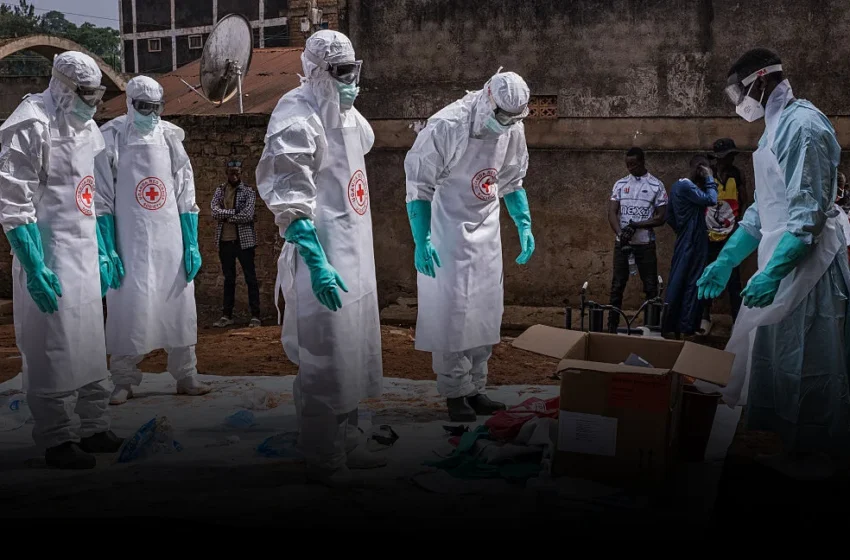
The Trump administration’s decision to escalate its travel ban, now encompassing even lawful permanent residents who have traveled through the Democratic Republic of the Congo, Uganda, or South Sudan, is not merely a public health measure. It is a stark declaration of policy, one that profoundly undermines the very mechanisms of international collaboration essential for containing global health crises. While the World Health Organization and other agencies plead for unified action against the rapidly spreading Bundibugyo strain of Ebola in the DRC—an outbreak first announced May 15 and already the third largest recorded, with 1,018 cases and 234 deaths by May 24—the US has opted for a different path entirely.
This move, presented as a protective firewall, instead signals a dangerous structural fracture in global health governance, prioritizing isolationist national policies over the coordinated, data-driven international strategies an interconnected world demands. It’s a policy that reveals a fundamental misreading of modern epidemiology and the inherent porosity of national borders in the face of biological threats.
When Data Takes a Back Seat to Politics
Consider the data. The stated rationale is containment, yet the ban extends to countries with minimal or no reported cases. Uganda, for instance, has recorded only seven cases and a single death. South Sudan, bafflingly, has reported zero cases. To lump these nations in with the DRC, where the situation is indeed dire and outstripping response efforts, demonstrates a policy divorced from precise epidemiological intelligence. This isn’t a granular application of risk assessment; it’s a blanket measure that casts a wide, indiscriminate net, creating friction where cooperation is most needed. One has to question the underlying incentives: why this announcement now, and who benefits from framing a public health response as a national security blockade?
The administration, facing an election cycle and a base receptive to nationalist posturing, gains politically by demonstrating aggressive border control, irrespective of the scientific nuances of disease transmission. This plays directly into a popular narrative of strength and decisiveness, even if it actively complicates the on-the-ground reality for health workers. The global public health community, which relies on the free flow of information, personnel, and resources, sees its efforts hampered by such unilateral declarations. Health workers, epidemiologists, and logistical experts — many of them US citizens or residents — suddenly face arbitrary barriers, complicating their ability to move between outbreak zones and their home bases.
The Long Shadow Over Global Health Infrastructure
The immediate consequence is clear: diminished trust and reduced efficacy in global health initiatives. When a major power like the US unilaterally closes its borders, it discourages other nations from transparently reporting outbreaks, fearing economic or travel repercussions. This secrecy is exactly what enables pathogens to spread unchecked. This administration’s action stands in stark contrast to the sophisticated global surveillance networks and rapid diagnostic tools that modern bio-technology offers, capabilities designed to prevent the very kind of spread this ban purports to address.
Instead of leveraging these technologies for targeted, real-time responses, the policy defaults to a pre-digital, almost medieval approach of quarantine by geography. The skeptical observer might conclude this is not about Ebola containment but rather a chilling precedent for how future global crises, from pandemics to climate migration, will be managed: through isolationist policies that disregard the intricate dependencies of our modern world. This approach, ironically, makes us all less safe, by weakening the collective immune response of the international community. The interconnectedness of global commerce, supply chains, and travel demands a commensurate level of collaborative governance, not a retreat into national silos that ultimately prove to be porous and ineffective. The real danger lies not just in the virus, but in the systemic unraveling of the global cooperation architecture built to fight it.
