
Venezuela’s Seismic Doublet Reveals a Deeper Institutional Collapse
- Tech
Arjun Vedanta
- 0
- 5 minutes read
Beyond Tectonic Plates: The Human Fault Line
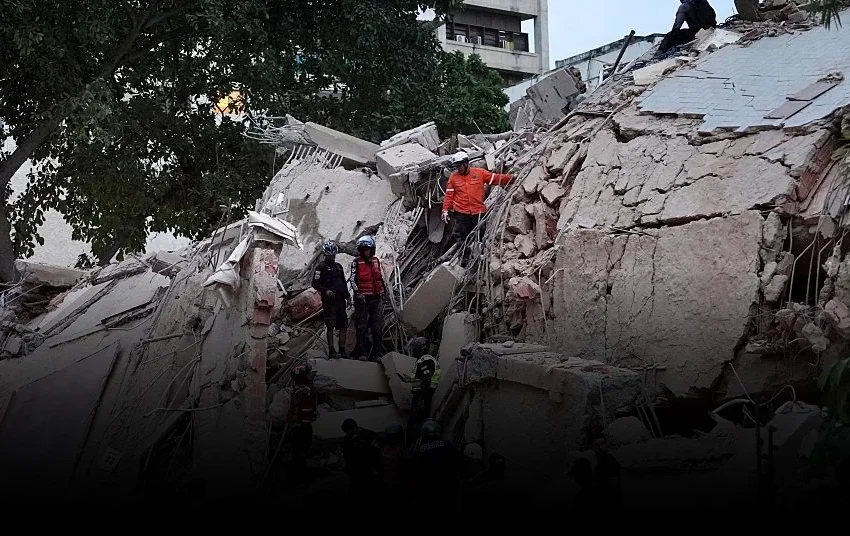
A building does not merely fall; it confesses. On June 24, as a rare seismic doublet — two powerful earthquakes of magnitude 7.2 and 7.5 — tore through Venezuela in just 39 seconds, the collapsing structures weren’t just succumbing to geological forces. They were loudly declaring years of systemic neglect, regulatory failure, and a dramatic erosion of state capacity, consequences that even international aid cannot fully obscure. This was not merely an act of nature, but a profound demonstration of how deeply a nation’s foundational stability has been compromised.
The technical reasons for the devastation are clear: a shallow epicenter between 10 and 20 kilometers, combined with the brutal one-two punch of two magnitude 7+ quakes. As civil engineer Alan Damián Sánchez Pulido explained, the initial tremor damaged structures, altering their inherent stability, leaving them fatally vulnerable to the second, immediate shock. This phenomenon, he noted, is exceptionally rare but can occur wherever tectonic plates interact, especially with the lateral, parallel movement characteristic of the Caribbean and South American plates in Venezuela.
Yet, framing this as a mere “lack of preparedness culture,” as some suggest, is a convenient deflection; a truly resilient culture is not organic, but meticulously engineered by consistent state investment in public education, stringent building codes, and responsive emergency services. Venezuela’s seismic vulnerability isn’t a new revelation, but the preparedness gap reflects a profound institutional void. The real story lies not just in the earth’s movement, but in the brittle infrastructure and hollowed-out governance that amplified its wrath.
When Resonance Meets Neglect: A Built Environment Betrayal
The science of resonance dictates that when an earthquake’s frequency aligns with a building’s natural oscillation, structural movement amplifies dramatically, regardless of initial design. This effect, coupled with varied soil conditions, explains why some structures in Caracas swayed like pendulums while others, like the San Miguel building, simply crumbled. Eduardo Burger witnessed this firsthand in Altamira, narrowly escaping walls that “broke away and fell right where I was standing.”
Sánchez Pulido highlighted a critical disparity: while Mexico City leverages advanced tools from the UNAM Institute of Engineering to tailor construction to specific soil behaviors, Venezuelan regulations lack this crucial level of detail. This absence isn’t an oversight but a symptom of a deeper decay in urban planning and geotechnical engineering standards, a tacit betrayal of its citizens who inhabit these vulnerable structures. When buildings fail to perform “as intended,” as Sánchez Pulido described, it raises questions not just about the earthquake, but about the integrity of their original design, construction, and inspection process.
The swift announcement of international aid, totaling $150 million from the US alone, alongside contributions from Mexico and Spain, serves a dual purpose: it provides immediate, critical relief while simultaneously offering a narrative of global solidarity that subtly mitigates international scrutiny of the domestic governance failures that amplified the disaster’s impact. This framing helps secure geopolitical goodwill and access for aid organizations in a notoriously difficult operating environment.
The Echo of Collapse: A State’s Vanishing Capacity
The human toll of this institutional failure became tragically clear in the chaotic aftermath. Verónica Cañas and her family, safe but displaced, are among thousands waiting for structural assessments from agencies that are overwhelmed or simply non-existent. Carolina Armas reported waiting over 12 hours for Civil Protection to inspect her deeply cracked building, a delay that speaks volumes about the state’s response capability.
Emergency responders and volunteers, as noted by Burger, faced critical shortages of basic equipment, complicating rescue efforts and prolonging the agony for those trapped. International humanitarian organizations like Project Hope quickly identified urgent needs for bandages, suture materials, medications, and specialized tools, underscoring the severe deficit in local disaster preparedness and logistical capacity. The willingness of citizens to step up, launching digital platforms and aid drives, ironically highlights the gaping holes left by a state unable to provide essential services.
The call for a “culture of prevention” from experts like Sánchez Pulido is sound, yet it rings hollow when the mechanisms for fostering such a culture — robust civil defense infrastructure, updated building codes, consistent enforcement, and reliable emergency services — have visibly eroded. This seismic doublet didn’t just rattle buildings; it laid bare the profound systemic weaknesses of a nation that, when truly tested, struggles to protect its own, revealing a deep fissure in its ability to govern effectively.
