
Venezuela’s Seismic Shock: Beyond Geology, a Catastrophe of Governance
- Tech
Arjun Vedanta
- 0
- 5 minutes read
Beyond the Tremor: A Catastrophe of Governance
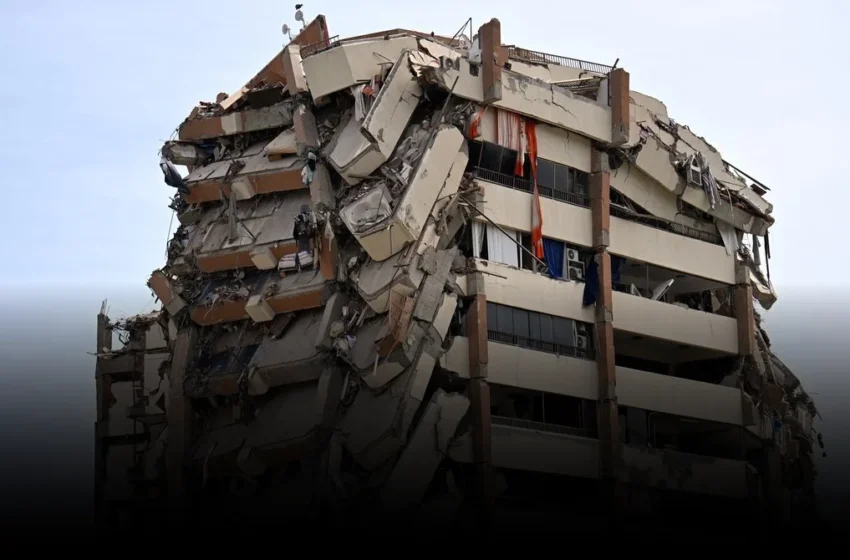
The ground in Venezuela convulsed last Wednesday, a 39-second geological ballet of a 7.2 and 7.5 magnitude seismic doublet near Yumare. Yet, the true tremors shaking the nation are not just subterranean; they are the deep cracks in a social contract, laid bare by the chilling discrepancy between official casualty counts and scientific projections.
Official reports acknowledge 164 lives lost and nearly 1,000 injured. In sharp contrast, the US Geological Survey (USGS) projects a potential death toll ranging from 10,000 to 100,000. This is not simply a statistical difference; it represents a fundamental indictment of infrastructure resilience and disaster preparedness, pushing the narrative far beyond geological inevitability into the uncomfortable realm of systemic failure.
The event itself was a textbook example of a seismic doublet, a phenomenon Mark Allen, a professor at Durham University, attributes to stress transfer between adjacent fault segments. These strike-slip earthquakes, characteristic of the South America and Caribbean plate boundary—much like California’s San Andreas Fault—are inherently destructive due to their shallow origins. But to label this purely a ‘natural disaster’ is to grant a convenient absolution; the geology provided the trigger, but human choices, or lack thereof, are setting the stage for what could be a far greater tragedy than even Allen’s warnings imply.
The Illusion of Preparedness: What the Numbers Truly Say
For years, international development agencies and seismic monitoring bodies have flagged Venezuela as a high-risk zone. Caracas, positioned precariously in an active seismic corridor, has been under a silent watch. The 10 km and 20.3 km depths of last week’s quakes meant that the energy released had a minimal journey to densely populated areas, amplifying the felt intensity and potential for damage.
The critical factor, however, is not the magnitude itself, but what stands atop the shifting earth. Venezuela’s infrastructure, battered by years of economic instability and underinvestment, offers little in the way of seismic retrofitting or robust building codes. While nations like Japan invest heavily in advanced earthquake-resistant construction and comprehensive early warning systems, much of Venezuela’s urban planning has stagnated or deteriorated.
When the USGS provides such a vast and terrifying range for potential casualties, it is implicitly factoring in the fragility of a nation’s built environment. It points to shoddy construction, unregulated expansions, and a pervasive lack of maintenance that turns residential blocks into potential death traps. This isn’t just about geology; it’s about the state capacity to enforce standards, to invest in preventative measures, and to develop robust disaster management protocols.
The Turkey and Syria earthquake doublet three years prior, with similar magnitudes of 7.6 and 7.8, offered a grim preview of how rapidly a crisis can escalate when infrastructure is compromised. The comparison to Venezuela is stark, underlining that the technology and engineering know-how to mitigate such disasters exist; what is often missing is the political will and consistent resource allocation.
Caracas on the Brink: A Global Test Case for Resilience
Professor Allen’s warning about the risk of further aftershocks in the Caracas region is not academic speculation; it is a critical assessment based on well-understood seismic dynamics. The USGS reiterates that post-quake activity can persist for weeks or months, and while frequency decreases, the possibility of powerful subsequent tremors remains.
This ongoing threat in Caracas illuminates a broader issue of global urban resilience, particularly in regions burdened by geopolitical instability and economic hardship. The incentive for any government to minimize the public perception of risk is strong, as it avoids difficult questions about accountability and resource allocation. However, when the US Geological Survey projects a death toll that could reach 100,000, it becomes more than a scientific estimate; it is an unspoken indictment of a state’s failure to protect its citizens, creating a profound disincentive for transparent reporting of actual vulnerabilities from within.
The true story of Venezuela’s seismic doublet is not just about the earth’s powerful movements; it is about the human systems that amplify or mitigate their impact. It is a harsh reminder that in an interconnected world, infrastructure development and effective disaster management are not merely local issues, but global concerns that reveal the true cost of neglected state capacity. The challenge for Venezuela, and indeed for many developing nations in high-risk zones, is whether this latest catastrophe will finally force a reckoning with the systemic failures that truly define its seismic vulnerability.
