
Ford’s AI Reality Check: ‘Gray Beards’ Expose Limits of Algorithm-First Manufacturing
- Artificial Intelligence
Arjun Vedanta
- 0
- 4 minutes read
The Algorithm’s Blind Spot: When Tacit Knowledge Trumps Data
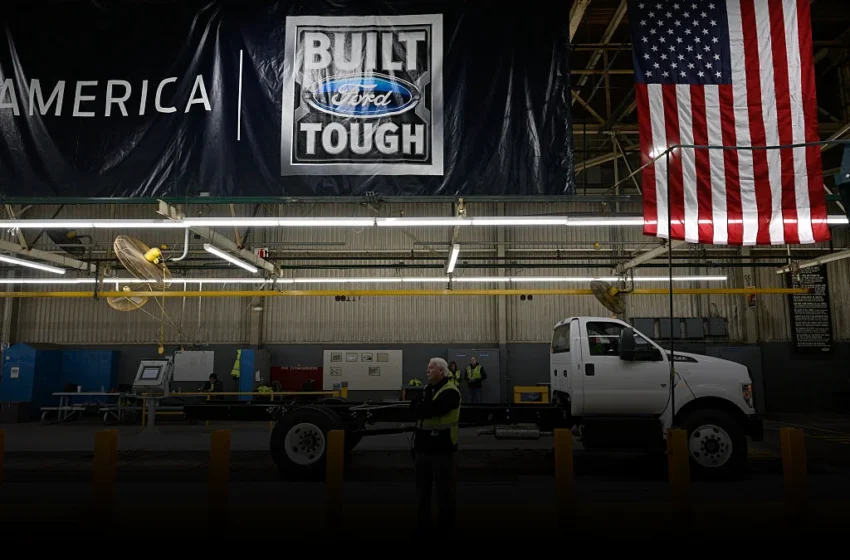
Ford Motor Company’s recent decision to rehire 350 veteran engineers, affectionately termed “gray beards,” isn’t merely a course correction; it’s a stark admission. After years of increasing reliance on artificial intelligence and automated systems to ensure quality, the automotive giant found itself falling short. This isn’t a story of AI failing outright, but of its fundamental limitations in replicating the kind of complex, intuitive, and experience-driven problem-solving that remains uniquely human in heavy industry. The contradiction is clear: the much-hyped promise of AI-driven quality and efficiency in complex physical manufacturing is proving fundamentally reliant on—and often exposed as inferior to—the very human experiential knowledge it aims to supersede.
Kumar Galhotra, Ford’s chief operating officer, explicitly stated the company had been “relying more and more on automated quality systems” with disappointing results. The solution? “Brought back technical specialists” who “hunt for failure points before a part ever reaches the plant floor.” Charles Poon, VP of vehicle hardware engineering, was even more direct: “Mistakenly we thought that by just introducing artificial intelligence and ingesting the design requirements that we had, that that would produce a high-quality product.” This is a powerful, if quiet, indictment of an industry-wide trend to assume that more data and more algorithms automatically equate to better outcomes in the messy, physical world.
Beyond Generative Design: The Unquantifiable Art of Engineering Quality
The Ford narrative cuts through the prevailing Silicon Valley rhetoric around generative design and AI-first engineering. While AI excels at optimizing parameters within a tightly defined problem space, it struggles immensely with the subtle, often unquantifiable nuances of real-world materials, manufacturing processes, and potential failure modes. An engineer with decades of experience doesn’t just process data points; they instinctively recognize the faint hum of a stressed component, the slight discoloration that indicates a faulty batch, or the subtle deformation that foreshadows a catastrophic failure. This is tacit knowledge—a wealth of intuition and judgment gained through countless iterations, failures, and hands-on experience—that simply cannot be fully captured by a neural network, no matter how vast its training data.
Ford’s executives are now deploying these seasoned experts not just to fix current quality issues, but to actively train younger staff and, critically, to reprogram the very AI tools that fell short. This re-integration of human expertise is already yielding tangible results, with Ford anticipating $1 billion in reduced costs this year and claiming the top spot among mainstream brands in the JD Power Initial Quality Survey. This isn’t an anti-AI stance; it’s a pragmatic recalibration, recognizing that the human element is not a bug to be removed, but a feature to be integrated thoughtfully within an advanced manufacturing environment. The incentive here for Ford is clear: to present a narrative of astute course correction and operational excellence, while subtly pushing back against the often-unrealistic promises of purely algorithmic industrial automation.
The Global Tech Lesson: Humility in Automation
This isn’t an isolated incident. Across global industrial sectors, from aerospace to medical devices, companies are grappling with the limitations of a purely digital approach to physical challenges. While AI offers immense potential in areas like predictive maintenance or supply chain optimization, the core processes of design, engineering, and quality assurance often demand a level of human oversight and intuitive problem-solving that current AI models cannot replicate. The greatest danger isn’t that AI will take all our jobs; it’s that we’ll design systems so reliant on AI that they lose the adaptive, intuitive feedback loops that only human operators can provide, ultimately leading to brittle, non-resilient processes.
The Ford story should serve as a cautionary tale for the broader tech industry, especially those operating outside the immediate realm of pure software. While the pursuit of fully autonomous systems is compelling, real-world deployment frequently reveals that complex physical systems, safety-critical applications, and nuanced customer expectations still necessitate the irreplaceable blend of human experience and critical judgment. The “gray beards” aren’t just saving Ford money; they’re offering a vital lesson on the true nature of intelligence in an increasingly automated world. Their return underscores that for all the advancements in artificial intelligence, genuine ingenuity and quality often emerge from the deeply human understanding of how things work—and, crucially, why they sometimes don’t.
