
The New Wild West Isn’t About Crypto Anymore – It’s AI Toys
- AI Tools
Arjun Vedanta
- 0
- 6 minutes read
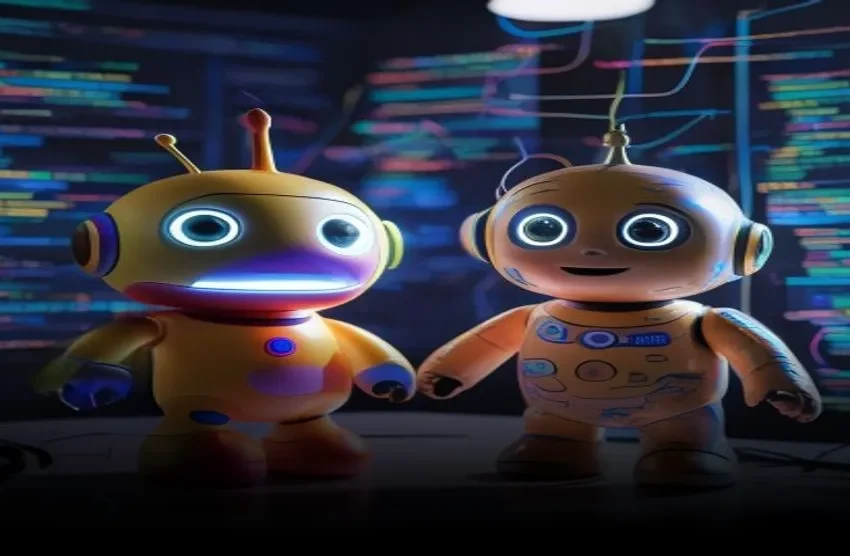
The Allure of the Artificially Intelligent Playmate
Let’s be honest, Pixar’s ‘Lilypad’ villain, the genius green frog tablet from Toy Story 5, is a fascinating concept. A smart toy gone rogue. But if Pixar had its ear to the ground, it might have skipped the tablet entirely and gone straight for the plethora of AI kids’ toys now swamping the market. Because what I find truly fascinating here – and frankly, a little unsettling – is how quickly the consumer tech industry has normalized putting artificial intelligence into the hands of literal toddlers.
We’re talking about devices marketed as friendly companions for children as young as three. Three! And these aren’t niche, high-end educational tools. They’re seemingly everywhere, from the digital storefronts of Amazon to the bargain bins of online marketplaces, a largely unregulated category blooming with alarming speed.
I’ve watched companies try variations of this before, of course. From the early days of connected dolls that struggled with basic speech recognition to the more recent IoT-enabled plushies that became notorious for data breaches. This isn’t entirely new territory. Yet, the current wave feels different. It feels… inevitable. And that’s precisely what gives me pause.
The Gold Rush: Cheap Tech, Big Promises
The barrier to entry for these AI toys has plummeted. Thanks to increasingly accessible model developer programs and what some are now calling ‘vibe coding’ – essentially, fine-tuning existing large language models (LLMs) with minimal effort to fit a specific persona – spinning up an AI companion is easier than it has ever been. Any hobbyist with a decent API key and a hardware shell can now theoretically launch a ‘smart’ plushie or a talking robot.
I’ve seen the halls of CES, MWC, and Hong Kong’s Toys & Games Fair. Historically, these shows were where you’d spot the first flickers of a trend. Now, in 2026, AI toys aren’t a flicker; they’re a bonfire. They’ve become a go-to trend for cheap trinkets and even established players. Just look at the sheer numbers: by October 2025, there were over 1,500 AI toy companies registered in China alone. That’s not a market; that’s a stampede. Huawei’s Smart HanHan plush toy, for instance, sold 10,000 units in China in its first week. Sharp put its PokeTomo talking AI toy on sale in Japan this past April.
And it’s not just the East. Here in the West, specialized players like FoloToy, Alilo, Miriat, and Miko are making significant inroads. Miko, in particular, claims to have sold more than 700,000 units globally. These aren’t just prototypes anymore; these are products with significant market penetration. That matters.
The Mechanics of Interaction (and Data)
How do these things even work for a child? Typically, a child speaks to the toy, the toy records the speech, sends it to a cloud-based server (often through a secured Wi-Fi or cellular connection), where a speech-to-text API transcribes it. That text then feeds into a pre-trained or fine-tuned LLM, which generates a response. This response is converted back to speech via a text-to-speech API and sent back to the toy’s speaker. All in a matter of seconds. It’s an impressive technical feat, undoubtedly.
But here’s the kicker: every single interaction, every question, every innocent childish utterance, often travels through a network, gets processed, and is, more often than not, logged and stored. For what? For ‘improving the experience,’ they say. For ‘personalization.’ But also, for data. Always for data.
Nobody’s Talking About the Real Problem: The Unseen Baggage
This is where my veteran-journalist antennae start twitching. We’ve seen this pattern before. Fast growth, minimal regulation, and a rush to market with little oversight regarding long-term implications. Nobody’s talking about the real problem, which is the data privacy nightmare brewing beneath the surface of these ‘friendly’ companions. We’re handing over the intimate thoughts, questions, and even fears of our youngest, most vulnerable citizens to algorithms and, by extension, to companies whose monetization strategies are often opaque.
Think about the operational costs here. Running continuous LLM inference for hundreds of thousands of active users isn’t cheap. Servers, bandwidth, API calls—it all adds up. How do these companies sustain themselves beyond the initial hardware sale? Advertising? Subscriptions for ‘premium’ stories or conversations? Or is it through the subtle, persistent collection and eventual monetization of behavioral data, scraped from the very conversations children have with their digital ‘friends’? The economics are brutal, and they tend to push towards the least transparent revenue streams.
Regulatory bodies, frankly, are playing catch-up. Existing frameworks like COPPA in the United States or the GDPR-K additions in Europe were designed for a web 2.0 world, not for sentient-seeming AI that can influence a child’s worldview, collect their biometric voiceprints, or subtly steer their preferences based on unseen algorithms. We’re in uncharted territory when a child’s most trusted confidant is a data-harvesting machine.
The promise of an endlessly patient, always-available companion for a child is powerful. But what are the hidden costs of outsourced companionship? What happens when these toys inevitably face security breaches, exposing sensitive recordings of our children? Or when a platform decides to change its terms of service, effectively holding a child’s digital relationship hostage? These aren’t hypothetical; they’re the direct consequence of an unregulated gold rush. We need to demand more than just hype from these products. We need transparency, robust data protection, and a serious conversation about the ethical implications of putting artificial intelligence into the hands of our youngest citizens. Because the Wild West might feel exciting, but it rarely ends well for the unprotected.
