
When Dad’s Workout Echoes in His Kids: The Epigenetic Twist
- Artificial Intelligence
Arjun Vedanta
- 0
- 6 minutes read
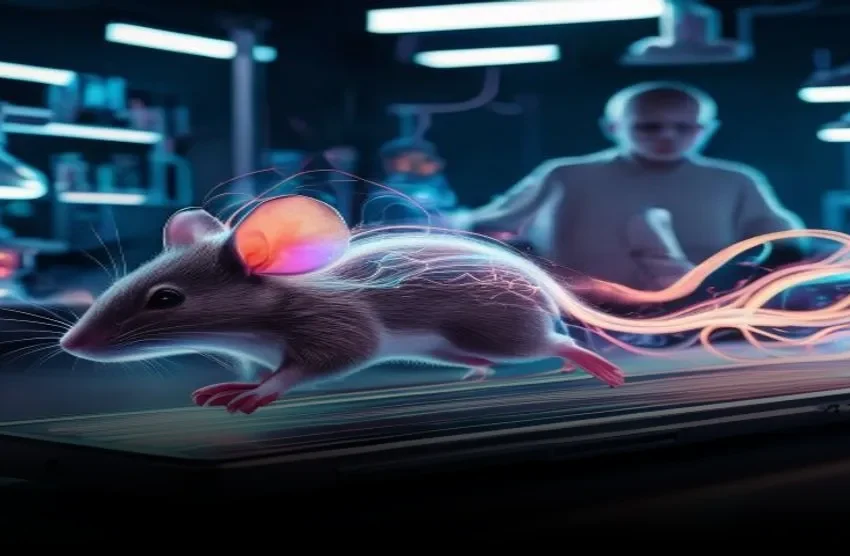
The Treadmill Test: Or, What Happens When Genes Aren’t the Whole Story
I’ve been covering tech and science long enough to have seen countless headlines promising a revolution. Genetically modified food, gene therapy, CRISPR – each arriving with a bang, followed by the quiet, often messy, work of reality. So when I read about a biochemist named Xin Yin in Jiangsu, China, setting mice on tiny treadmills, my first thought was, “Okay, what’s the angle this time?”
The angle, it turns out, is fascinating, and deeply unsettling to anyone who thought they understood how inheritance works. These aren’t just any lab mice; these are super-fit rodents, capable of running farther and faster, with less lactic acid burning their tiny muscles. What makes them exceptional? Not their DNA. Not some specialized training regime they underwent. No. Their athleticism appears to stem from their father’s exercise habits before they were even conceived.
Let that sink in for a moment. This isn’t a genetic inheritance in the classical sense, where a specific gene for speed is passed down. Yin, now at Nanjing University, openly admits he was “very surprised when I first saw the data.” And honestly, so am I. It flies in the face of decades of fundamental biology, or at least, the simplified version we all learned in school. What we’re looking at here is a potent, real-world example of epigenetics – the idea that environment can change gene expression without altering the underlying DNA sequence.
Beyond the Double Helix: RNA’s Quiet, Powerful Whisper
For years, DNA was king. The blueprint. The source code. Everything else was just scaffolding or machinery. But as we’ve dug deeper, a more nuanced, complex picture has emerged. We’ve known about epigenetics for a while — things like methylation, which essentially tags DNA to turn genes on or off, or histone modification, which dictates how tightly DNA is packaged. These mechanisms can be influenced by diet, stress, toxins, and yes, even exercise.
What Yin’s research suggests is a specific, potent pathway for this transgenerational transfer: RNA. Specifically, small non-coding RNAs, like microRNAs (miRNAs), are emerging as key players. Think of them not as the blueprints themselves, but as tiny, highly specific software updates that can reprogram how the hardware (DNA) runs. In this case, it appears the father’s exercise-induced miRNAs in his sperm were able to alter metabolic pathways in his offspring, leading to enhanced endurance and improved glucose metabolism. That matters.
I’ve watched companies try to leverage epigenetic insights for everything from anti-aging creams to personalized diet plans, often with more marketing hype than scientific rigor. But this isn’t some vague promise. This is a direct, measurable physiological change passed across generations, seemingly via a mechanism outside of the canonical Mendelian inheritance patterns. The implications for understanding everything from chronic disease susceptibility to athletic potential are vast, almost dizzying. It calls to mind the ghosts of Lamarckism – the disproven idea that acquired traits can be inherited – though this is far more sophisticated and mechanistically distinct.
The Human Question and Its Uncomfortable Echoes
When Lifestyle Becomes Legacy
So, what does a super-fit mouse on a tiny treadmill mean for us, the bipedal, smartphone-addicted primates? A lot, potentially. We know that paternal age, diet, and lifestyle choices can affect offspring health. But this study hints at a far more direct, functional inheritance of physical traits via non-DNA means. It suggests that a father’s commitment to fitness doesn’t just benefit him in the present; it could literally program his future children for better health and performance.
What I find fascinating here is the sheer weight of responsibility this concept could place on prospective parents. Imagine a world where your lifestyle choices aren’t just about your own health, but about optimizing your children’s epigenetic legacy. (and yes, that’s as scary as it sounds). The global reproductive technologies market is already projected to reach nearly $60 billion by 2030, driven by everything from IVF to genetic screening. Layering epigenetic ‘optimization’ onto this introduces a whole new dimension of ethical quandaries and potential societal pressure.
The Downside of Pre-Conception Optimization
Let’s be honest about this. The economics are brutal. If we discover concrete, reproducible ways to epigenetically ‘enhance’ offspring through pre-conception interventions, who gets access? Will this become another luxury good for the wealthy, deepening existing health disparities? I’ve watched companies try to commodify everything from genetic predispositions to gut microbiomes, and this feels like a slippery slope towards a new form of bio-privilege. Nobody’s talking about the real problem — which is not whether this works, but who controls the narrative and access when it inevitably does scale.
There’s also the risk of oversimplification and false promises. The human genome is vastly more complex than a mouse’s, and human lifestyles are infinitely varied. Reproducing these effects consistently, identifying the exact miRNA cocktail, and delivering it safely in humans is an Everest-sized challenge. We’ve seen similar hype around ‘gene editing for better babies’ only to realize the ethical and technical minefields. This, while different, carries similar weight. Moreover, scientific findings, especially in epigenetics, are notoriously difficult to replicate across labs and conditions. We need more than one surprising dataset before we start making grand pronouncements.
But even with all the caveats, the core finding remains: Dads, your treadmill habits might just be doing more than trimming your waistline. They might be setting the biological stage for the next generation, in ways we’re only just beginning to comprehend. The quiet whisper of RNA could be a louder call to action than any DNA sequence ever was.
